All posts by Philip Concannon

Unknown's avatar

About Philip Concannon

Philip Concannon is a freelance film writer who blogs at philonfilm.net and tweets as @Phil_on_Film

2011: A Film Odyssey

Philip Concannon previews More4’s history of film and cinematic innovation
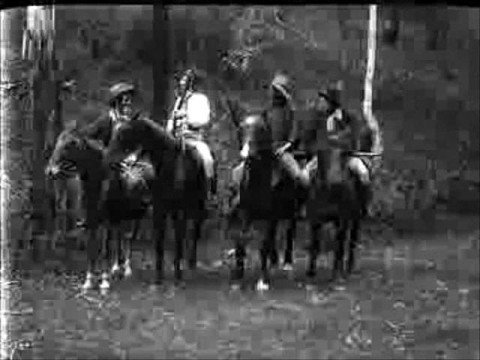
The Story of the Kelly Gang – the first feature-length film ever made

“At the end of the 1800s, a new art form flickered in to life. It looked like our dreams.”

The Story of Film is a story told through moments; images thematically linked to tell us how this art form, created by inventors and visionaries in the 19th century, exploded to become the industry that we know it as today. Mark Cousins has already told this story in his book of the same title, but this 15-part documentary series still feels like a significant film event. At a time when the art of cinema seems secondary to the business of moviemaking, and when public interest and awareness in films beyond the mainstream appears to be at an all-time low, The Story of Film is a valuable attempt to reconnect us with the essential magic at the heart of cinema. “Movies are multi-billion dollar global entertainment industry now,” Cousins admits at the start of episode one, “but what drives them isn’t box-office or showbiz. It’s passion, innovation.” Continue reading 2011: A Film Odyssey

The Passion of the Kinski

Philip Concannon

Just good friends: Werner Herzog and Klaus Kinski

The title of Klaus Kinski’s memoir is Kinski Uncut, but that’s not strictly accurate. When the actor first attempted to publish his autobiography in 1988, under the title All I Need is Love, a lawsuit from Marlene Dietrich (who had taken offence to his depiction of her as a lesbian) ensured the book was withdrawn from circulation until after her death. Since then, each subsequent edition of the book has carefully removed the names of anyone still living who may be feeling similarly litigious, so what we have here is not exactly the complete recollections of Klaus Kinski as the author intended. Nevertheless, it still feels like a pure, concentrated dose of Kinski; as if the actor’s brain spilled out onto the page and he left it there without making any attempt to organise his thoughts or check his darker impulses. Perhaps Kinski Unfiltered or Kinski Unhinged would have been more appropriate titles.

But is it Kinski Untrue? I don’t doubt that many of the events in the book took place in Kinski’s life, but the author’s hyperbolic description of them often gives us reason to doubt the veracity of what we’re reading. Everything in Kinski Uncut is extreme – his suffering is more intense than most ordinary souls could bear, his acting performances are received with either angry derision or tears and standing ovations, his sexual encounters (of which there were many) are all epic and orgasmic. When he talks about his childhood, he describes a period of Dickensian squalor, where he suffered permanently from starvation and frostbite and learned to steal in order to survive. Everything in the book seems designed to reinforce the idea that Kinski’s life was more dramatic, outrageous and depraved than that of any mere mortal who might be reading his story; that he is a tortured genius who has suffered nobly among the “idiots” and “riffraff” who make up the rest of the population. This is Klaus Kinski’s world, and the rest of us are just living in it. Continue reading The Passion of the Kinski

Looking Back into Darkness: Claude Lanzmann’s Shoah

By Philip Concannon

Mordechai Podchlebnik, one of the two known survivors of Chelmno-Schlosslager

Simon Srebnik should have died in 1945. As a teenager, Srebnik was a prisoner at the Chelmno extermination camp, where he managed to stay alive thanks to his agility and melodious singing voice, both of which pleased the SS guards. Two days before the Soviet troops arrived, the guards began killing all of the remaining Jews at the camp, shooting each in the head at close range. Incredibly, Srebnik survived, later regaining consciousness in the now-abandoned camp, surrounded by dead bodies. It is a miracle that he was still with us almost forty years later when Claude Lanzmann sought out stories for his epic documentary Shoah. He returned with Lanzmann to Chelmno, now a tranquil spot bearing no evidence of the horrors that once took place there. We only have the memories of people like Simon Srebnik to make us understand what it was like to be a Jew in this particular time and place, and to bear witness to unimaginable atrocities on a day-to-day basis.

For 9½ hours, Shoah presents these memories to us. Lanzmann spent more than a decade tracking down and interviewing people who had been involved in the Holocaust in some way – victims, perpetrators, witnesses – compiling over 350 hours of footage that he subsequently edited into one 567-minute monument to those who died as part of the Nazis’ “final solution.” Watching the whole film in one day, as I did recently, is an extraordinary, singular experience. Taking breaks and a lengthy Lanzmann Q&A into account (during the latter, Lanzmann coped well with the unbelievable crassness of a question comparing Holocaust deniers with climate change deniers), the event lasted for almost 12 hours and I have never been left feeling so exhausted – physically and emotionally – by a single film. Shoah is a torrent of words, and those words conjure images capable of breaking the heart many times over. Continue reading Looking Back into Darkness: Claude Lanzmann’s Shoah

Reopening Heaven’s Gate

BY PHIL CONCANNON

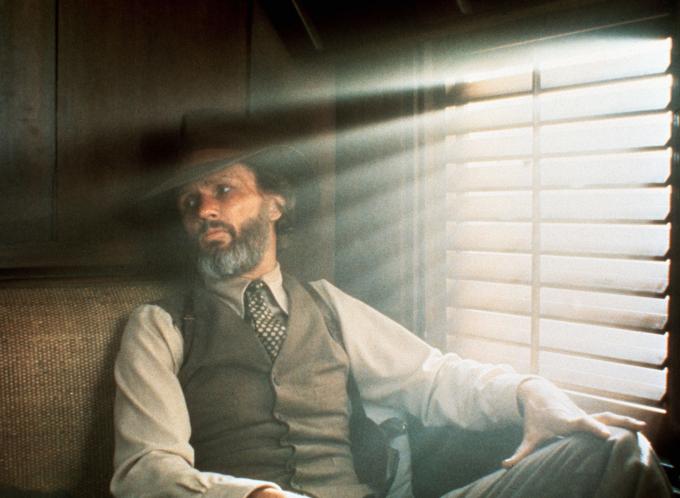
“Does anyone want to switch seats?” Kris Kristofferson wonders what he’s got himself into.

Can Heaven’s Gate ever be rescued from its reputation? For thirty years the film has been marked by the stench of failure, its production having passed into legend alongside Apocalypse Now as an example of how not to make a movie. In the case of Francis Ford Coppola’s film, at least he could cite circumstances beyond his control – a sudden typhoon, Martin Sheen’s heart attack – and the director somehow managed to find a powerful, spectacular film amid the chaos. Heaven’s Gate has no such natural disasters to hide behind and the scathing critical reaction upon its release sealed the film’s fate. This flop wasn’t just viewed as just another bad movie, it was viewed as an example of directorial self-indulgence run amok and the wastefulness of Hollywood studios, and neither United Artists or the film’s young director Michael Cimino (who had reached the peak of his career just two years earlier) ever recovered from the debacle.

That was all I knew of Heaven’s Gate before I first saw the film some six years ago, and given its notorious history, I was surprised at how much I enjoyed the experience of watching it. The film has problems, for sure, but it also has considerable virtues and a sense of ambition that is frequently thrilling. Recently watching the film for a second time on the big screen, it seemed inconceivable that this bold and strikingly beautiful film had been described in the press as “an unqualified disaster” (Vincent Canby) and “the most scandalous cinematic waste I have ever seen” (Roger Ebert). Even though this film found a few ardent defenders in those early days – Robin Wood, Kevin Thomas and Nigel Andrews among them – the damage had already been done. As recently as 2008, Joe Queenan (in an article inspired by the release of The Hottie and the Nottie) claimed that Heaven’s Gate was in fact the worst film ever made. Seriously, did we all see the same fim? Continue reading Reopening Heaven’s Gate

Kenji Mizoguchi – Japan’s Forgotten Master

by Philip Concannon

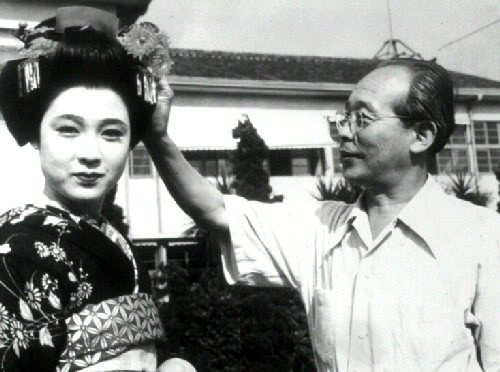
September 10th 2011 will mark the 60th anniversary of an auspicious event in the history of world cinema. On that date in 1951 Rashomon won the Golden Lion at the Venice Film Festival, introducing western audiences to not only Akira Kurosawa but to the riches of Japanese cinema in general. Rashomon went on to win an Academy Award and its director became an international figure, but he wasn’t the only Japanese filmmaker winning new admirers during this period. In 1952, Kenji Mizoguchi (who was apparently fiercely jealous of the younger director’s acclaim) won the International Award at Venice for The Life of Oharu and he later won back-to-back Silver Lions at the same festival with Ugetsu monogatari and Sanshô dayû. As the western world discovered Japanese cinema, these filmmakers were its twin leading lights.

At some point during the subsequent years, that perception changed. Mizoguchi died in 1956 and the stature of his work gradually seemed to fade with his passing. If you ask people to talk about the great Japanese directors today, Kurosawa will probably be their first answer with Yasujirō Ozu being the most likely second response. It seems they are now widely regarded as the two titans of that country’s cinema and as two of the most respected and influential filmmakers of all time, and while I’m not going to argue against that evaluation, I can’t help wondering why Mizoguchi’s own considerable body of work has quietly slipped out of view. I would suggest that his films are every bit as impressive and vital as anything else produced in Japan in this period. In fact, you could make a fair case for him being the greatest of all Japanese filmmakers.

Continue reading Kenji Mizoguchi – Japan’s Forgotten Master