All posts by Niall Anderson

Mostly Links – 1 July 2011

BY NIALL ANDERSON

Just good friends: Shia 'Shirley' LaBeouf and Megan 'Don't Call Me' Fox

Mostly Film spent last weekend at Glastonbury. Every year, millions of pixels are indiscriminately slaughtered to convince the public that it’s the best fun they never had. We will refrain. Let it just be said that your life will be made briefly but appreciably better if you watch Janelle Monáe’s astonishing performance from Saturday night. Viewers outside the UK will have to make do with edited highlights, but still, not since Prince in his absolute pomp, etc.

By coincidence, this week Mostly Film will be going to see Prince, but we promise not to mention it. Unless Tricky turns up again. Or Limahl. Or, you know, anyone who Prince bafflingly thinks is cool.

Stepping briefly away from the corporatisation of fun, we turn to taking the piss out of corporations. What should an advertisement for KFC look like? Peter Serafinowicz has an idea that I’m sure the Colonel will love. Continue reading Mostly Links – 1 July 2011
Great TV you’ve never seen: Val Falvey, TD

by Niall Anderson

In the writing career of Arthur Mathews, “Father Ted” is beginning to look like a detour. Mathews first surfaced in the mid-80s at “Hot Press” magazine in Dublin, where he began writing a seasonal pull-out called “The Border Fascist”. This was an elaborately loving, surreal and bitter account of life in provincial Ireland through the medium of mock newspaper stories and adverts: ‘Soap! – They use it in Dublin’; ‘Tranvestitism in Cavan has lost one of its most beloved characters with the sad death of Fintan McSweeney (73) …’

“The Border Fascist” was the first time Mathews worked with Graham Linehan, his writing partner on “Father Ted” and much else. It ran till 2004, by which time Mathews had published his first novel, “Well-Remembered Days”, an elaborately loving, surreal and bitter account of life in provincial Ireland through the medium of the memoirs of a retired public servant.

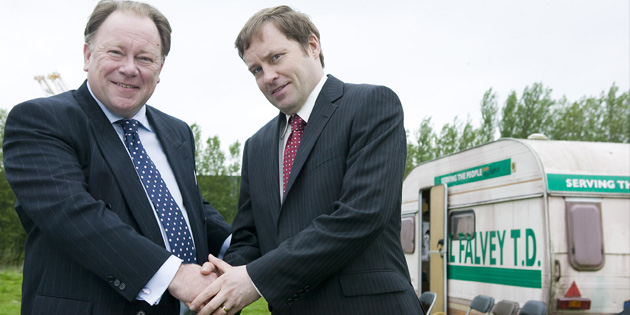
While, post-“Ted”, Linehan has stayed in London, where his comedy has acquired an advancingly placeless and metropolitan feel, Mathews now spends most of his time in Ireland and has squirreled back into the ideas that started him off in comedy. It may seem slighting therefore to point out that his 2009 RTÉ sitcom “Val Falvey, TD” (written with Paul Woodfull) is an elaborately loving, surreal and bitter account of life in provincial Ireland, but it also happens to be maybe Mathews’ best and most inventive treatment of the theme. All the more reason to lament that the show ran for just six episodes and died on its arse.

Continue reading Great TV you’ve never seen: Val Falvey, TD

Auto da Fé: The long life of Taxi Driver

by Niall Anderson

When we talk about iconic character shots in film, we’re generally talking about shots where something clever and technical happens. The simultaneous track-back and zoom when Roy Scheider sees Jaws at the beach. The puff of steam from the waiting train as Marilyn Monroe is revealed in Some Like It Hot. The subliminal flash of a skull on Anthony Perkins’s face at the end of Psycho. Taxi Driver is full of these sort of shots – full of elegant trickery and long fluid sequences that belie the rehearsal that must have made them possible – but the single scene that sticks in people’s minds couldn’t be simpler: the unbroken, unmoving shot of Travis Bickle taunting his imagined enemies in the mirror, goading himself into action.

Continue reading Auto da Fé: The long life of Taxi Driver

Killing the Dead: Revolution on Film

by Niall Anderson

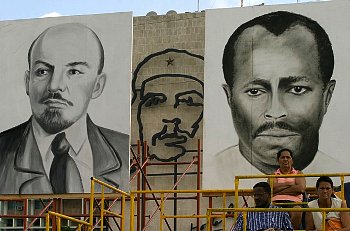
Cuban Revolution 50th anniversary celebrations, Havana, 2009 (Reuters)

For a brief period in the late 60s and early 70s, it looked as though the revolution would be televised, and not only that, it would be produced, directed and paid for by Hollywood. These were the years of Zabriskie Point (featuring Black Panther Kathleen Cleaver), Medium Cool (which wove into its story ground-level footage of the 1968 Chicago riots) and The Strawberry Statement (which featured author James Kunen as himself, re-enacting the Columbia University protests he’d experienced as a student). Adopting the verité styles of the French New Wave and a blithe moral seriousness all their own, the countercultural success these films enjoyed was buttressed by the much larger successes of The Graduate, Easy Rider and Bonnie & Clyde. For a short moment in cinema history it looked as though revolution had made its home on Sunset Boulevard.

Since then we’ve seen a lot of films like The Graduate, Easy Rider and Bonnie & Clyde, but we haven’t seen too many like Zabriskie Point – or at least not from the mainstream. The cinemagoer who likes transgressive politics along with their popcorn has been obliged to find it in the genres, or in films by auteurs whose expressed politics (Godard’s Marxism, for instance) lead to their films being pre-ghettoised. And the sad fact for cinematic revolutionaries is that you can’t have a real revolution without popularity.

Continue reading Killing the Dead: Revolution on Film