Category Archives: Classic Films

Smashing the Glass Slipper

by Emma Street

There is probably no film studio more closely associated with fairy tales than Disney. Since the release of Snow White and the Seven Dwarves in 1937 there has been a string of heroines in search of happily ever afters, although not without some barren spells, like the 30 years from the poor box office performance of Sleeping Beauty in 1959 until The Little Mermaid in 1989, the comeback which started a sequence that runs right up to 2010’s Tangled.

Disney heroines have changed a lot in seventy-odd years. Where once they were docile and obedient they’re now more headstrong and opinionated. If Snow White and the Seven Dwarves had been made in 2011 or The Princess and the Frog in the 1950s, the films would have turned out very differently.
Continue reading Smashing the Glass Slipper

Kenji Mizoguchi – Japan’s Forgotten Master

by Philip Concannon

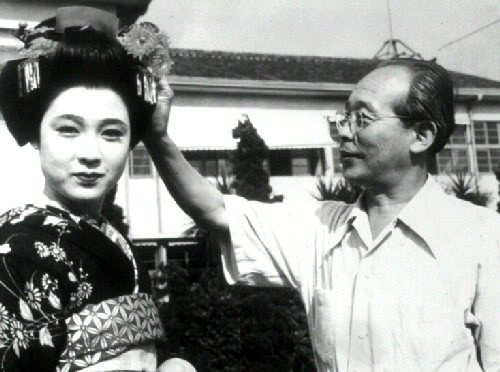
September 10th 2011 will mark the 60th anniversary of an auspicious event in the history of world cinema. On that date in 1951 Rashomon won the Golden Lion at the Venice Film Festival, introducing western audiences to not only Akira Kurosawa but to the riches of Japanese cinema in general. Rashomon went on to win an Academy Award and its director became an international figure, but he wasn’t the only Japanese filmmaker winning new admirers during this period. In 1952, Kenji Mizoguchi (who was apparently fiercely jealous of the younger director’s acclaim) won the International Award at Venice for The Life of Oharu and he later won back-to-back Silver Lions at the same festival with Ugetsu monogatari and Sanshô dayû. As the western world discovered Japanese cinema, these filmmakers were its twin leading lights.

At some point during the subsequent years, that perception changed. Mizoguchi died in 1956 and the stature of his work gradually seemed to fade with his passing. If you ask people to talk about the great Japanese directors today, Kurosawa will probably be their first answer with Yasujirō Ozu being the most likely second response. It seems they are now widely regarded as the two titans of that country’s cinema and as two of the most respected and influential filmmakers of all time, and while I’m not going to argue against that evaluation, I can’t help wondering why Mizoguchi’s own considerable body of work has quietly slipped out of view. I would suggest that his films are every bit as impressive and vital as anything else produced in Japan in this period. In fact, you could make a fair case for him being the greatest of all Japanese filmmakers.

Continue reading Kenji Mizoguchi – Japan’s Forgotten Master

Auto da Fé: The long life of Taxi Driver

by Niall Anderson

When we talk about iconic character shots in film, we’re generally talking about shots where something clever and technical happens. The simultaneous track-back and zoom when Roy Scheider sees Jaws at the beach. The puff of steam from the waiting train as Marilyn Monroe is revealed in Some Like It Hot. The subliminal flash of a skull on Anthony Perkins’s face at the end of Psycho. Taxi Driver is full of these sort of shots – full of elegant trickery and long fluid sequences that belie the rehearsal that must have made them possible – but the single scene that sticks in people’s minds couldn’t be simpler: the unbroken, unmoving shot of Travis Bickle taunting his imagined enemies in the mirror, goading himself into action.

Continue reading Auto da Fé: The long life of Taxi Driver