Category Archives: MF Recommends

MostlyChristmas: favourite Christmas movies, part 1

Mostly Film has come over a touch festive this week, and will be bringing you a Christmas-themed post every day. Today and tomorrow, some of our  contributors recommend their favourite movies for the festive season. Today, adopting the Santa Claus classification, the nice ones. Tomorrow, the naughty. Sort of. Don’t hold me to that.

It’s a Wonderful Life

By Ron Swanson
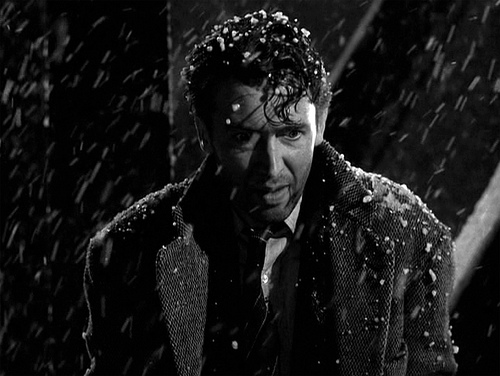
It’s fair to say that choosing It’s a Wonderful Life as a great Christmas movie isn’t a hugely original, or controversial stance. Sometimes it’s important to try and raise people’s awareness of a forgotten or neglected piece of art that could provide some hitherto unimagined joy. Equally, though, the pleasure in re-experiencing a masterpiece should not be discounted.

It’s a Wonderful Life is, for me, a perfect cinematic experience. It lionises kindness, solidarity, justice and hope, while also accepting that even the best of us can plumb the depths of frustrated ambitions, depression and self-pity.

It hangs around a marvellous performance from Jimmy Stewart, who never did more to disabuse audiences of the notion that he was a one-trick pony than he does here. George Bailey is a fully rounded human being: charming, decent, but with a quick temper and the potential for cruelty.

We see Bailey sacrificing his dreams of travelling the world to protect the future of his friends and neighbours by taking over his father’s business – a building and loan company, which is the only barrier to the predatory, pitiless Mr Potter (Lionel Barrymore) from controlling the town of Bedford Falls.

When people talk about It’s a Wonderful Life, they often use words like syrupy and schmaltzy, but there is real darkness to Frank Capra’s movie. George is on the brink of suicide, facing ruin and resenting all of the sacrifices he’s made, he laments his poor luck and vents his anger – claiming the world would have been better if he’d never been born.

As he realises the worth of his life (thanks to an unlikely angel), and goes on a voyage of self-discovery, one honest plea from his wife (the lovely Donna Reed) exercises all of the town to rush to his aid, providing him with the money he needs to save himself (and, therefore, themselves) from Potter’s clutches.

Although the film ends on Christmas Eve, the film manages to evoke festive feelings despite not being ‘about’ Christmas. Instead, it’s a film about loving your family, feeling grateful for what you have, and letting go of what you don’t. That’s what Christmas should be about, and for the 130 minute running time, that’s how it feels. I’m not sure you could ask for more than that. Continue reading MostlyChristmas: favourite Christmas movies, part 1

At the Mountains of the Night Garden

Mr Moth discusses CBeebies and the rational adult

We do step on bugs, really
MrMoth, third from right, goes for a nature walk

I am still on the island. Days pass, I have no idea how many, and they all seem the same. Every day brings fresh  madness, every day is my worst day ever, every day brings me closer to the source of that infernal music. The music! It haunts my sleep. I cannot dream.

When I became a father in May 2009, I thought I was at least slightly prepared for it. Like every parent before me, I found out very quickly that I was not. It’s not just the sleepless nights (not as bad as you’d think), or the dirty nappies (only sometimes as bad you’d think), or the endless worry (worse than you can imagine), it’s the time. There’s so much of it, and your child expects you to fill it for them. Hello, little creature. What do you want? Everything? Oh. Can I read you a book? Shall we play with these toys? Shall we sing songs? Oh god, I’m exhausted. More books? More toys? More songs? Can’t I just sit for … more books! More toys! More songs! Enough! I love you, but enough! Continue reading At the Mountains of the Night Garden

Assignment: Terror

Gareth Negus creeps from behind the couch to let us know about the best and worst of FrightFest 2011

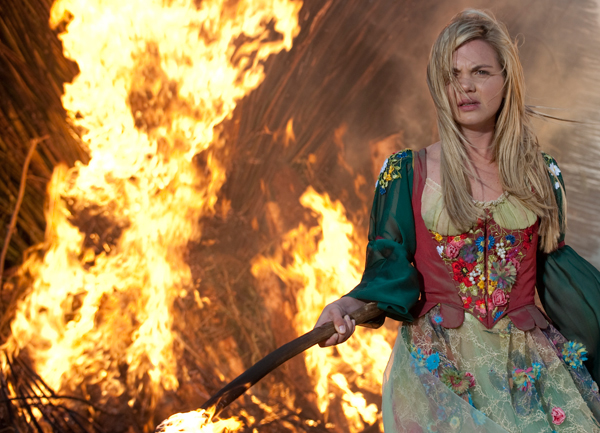
“But … but – where are the bees?” Britania Nicol in The Wicker Tree

Horror is a broad church, and the FrightFest 2011 programme reflected that.  37 films, mostly British or American in origin but with a solid international selection, meant most people could reasonably expect to find something to upset or repulse them. Continue reading Assignment: Terror

2011: A Film Odyssey

Philip Concannon previews More4’s history of film and cinematic innovation

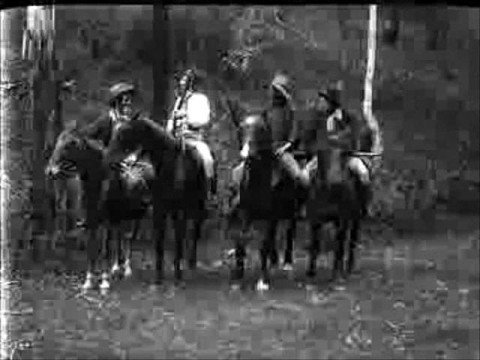
The Story of the Kelly Gang – the first feature-length film ever made

“At the end of the 1800s, a new art form flickered in to life. It looked like our dreams.”

The Story of Film is a story told through moments; images thematically linked to tell us how this art form, created by inventors and visionaries in the 19th century, exploded to become the industry that we know it as today. Mark Cousins has already told this story in his book of the same title, but this 15-part documentary series still feels like a significant film event. At a time when the art of cinema seems secondary to the business of moviemaking, and when public interest and awareness in films beyond the mainstream appears to be at an all-time low, The Story of Film is a valuable attempt to reconnect us with the essential magic at the heart of cinema. “Movies are multi-billion dollar global entertainment industry now,” Cousins admits at the start of episode one, “but what drives them isn’t box-office or showbiz. It’s passion, innovation.” Continue reading 2011: A Film Odyssey

Cult Australian Cinema

Fred Schepisi’s forthcoming The Eye of The Storm

September sees the release of The Eye of the Storm, directed by Fred Schepisi and based on the novel by Patrick White. It’s Schepisi’s first film in eight years (not including the award-winning HBO mini-series Empire Falls), and his first film made in Australia since A Cry in the Dark in 1988. MarvMarsh takes a look back at one of his best films, while other MostlyFilm contributors choose some of their own favourite Australian films. Sadly, The Crocodile Hunter: Collision Course didn’t make the cut. Continue reading Cult Australian Cinema

Cinema Week: Astoria7, Swiss Centre Nil

Spank The Monkey visits an old cinema come back from the grave

Click for room spoilers

What happens to old cinemas when they die? I’ve lived in London for over a quarter of a century, and I’ve seen a few go in my time. As discussed on this very site recently, the Scala has been a music venue for twelve years now (which, terrifyingly, is the same length of time for which it used to be a cinema). The EMD Walthamstow is in a state of limbo, as a battle rages between local cineastes and a church that prefers half-arsed property speculation to something that the community might actually enjoy. And God knows what the Curzon Millbank is now: most people were barely aware it opened in February of this year, and the company which co-owned it went bust just four months later.

If two instances count as a trend, then we could suggest that the next big thing will be the conversion of cinemas into luxury hotels. You could argue that this is what’s happened in the case of the newly opened W in Leicester Square, which is technically on the site of the old Odeon Swiss Centre. Except in this case, “site” is a euphemism for the entire city block that was demolished to make room for the hotel. There’s another example in San Sebastián in Spain, but at least that one is a little more respectful of its origins.

For The Belated Birthday Girl and me, I suspect the rot set in upon the publication of the first Mr and Mrs Smith guidebook. Up until then, we’d had maybe one or two experiences in hotels that were a little more swanky than we deserved. What the Smiths taught us was that it was all right to make the niceness of your accommodation an integral part of your holiday. Inspired by their books, we spent the next few years spending a couple of nights apiece in miscellaneous glamour palaces – Straf in Milan, Blanch House in Brighton, Pousada de Sao Tiago in Macau. By the time it got to our tenth anniversary, we were at the supremely decadent stage where we were prepared to choose the hotel first, and let that decide where we went on holiday. And from an afternoon spent randomly trawling through the Smith site, we ended up finding out about Astoria7.

Continue reading Cinema Week: Astoria7, Swiss Centre Nil

Scala Forever*

*(well, 1985-1993)

Spank The Monkey introduces the Scala Forever season by looking back at the history of one of London’s most-beloved fleapits

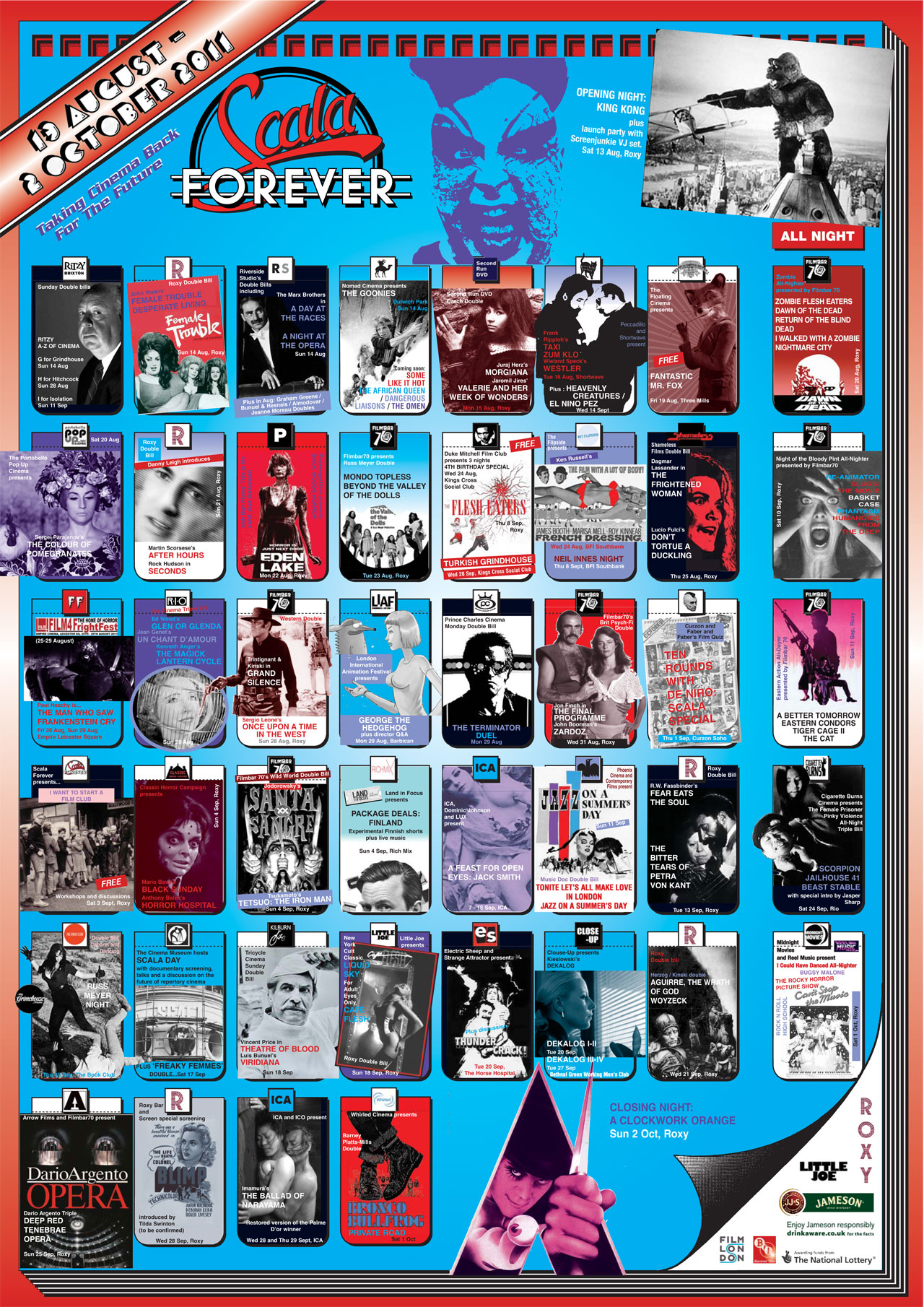
Trust me, this is one picture you really need to click on to enlarge

Screw Proust and his madeleines: that picture there takes me back a quarter of a century, and it doesn’t require a tea chaser in order to do it. Twenty-five years ago, I virtually lived at the Scala cinema in King’s Cross, and eagerly awaited the monthly arrival of a programme flyer very much like the one shown above.

The Scala was possibly the greatest of London’s repertory houses, back in the days when the capital had around a dozen of them. As the London-wide festival Scala Forever commemorates the opening of the cinema thirty years ago, I’ve been looking back fondly at the time I spent there watching all the underground greats. Russ Meyer. John Waters. Herschell Gordon Lewis. Jörg Buttgereit. Tsui Hark.

So it annoys me a little to be reminded that the first film I saw there was Garry Marshall’s The Flamingo Kid. Continue reading Scala Forever*

Looking Back into Darkness: Claude Lanzmann’s Shoah

By Philip Concannon

Mordechai Podchlebnik, one of the two known survivors of Chelmno-Schlosslager

Simon Srebnik should have died in 1945. As a teenager, Srebnik was a prisoner at the Chelmno extermination camp, where he managed to stay alive thanks to his agility and melodious singing voice, both of which pleased the SS guards. Two days before the Soviet troops arrived, the guards began killing all of the remaining Jews at the camp, shooting each in the head at close range. Incredibly, Srebnik survived, later regaining consciousness in the now-abandoned camp, surrounded by dead bodies. It is a miracle that he was still with us almost forty years later when Claude Lanzmann sought out stories for his epic documentary Shoah. He returned with Lanzmann to Chelmno, now a tranquil spot bearing no evidence of the horrors that once took place there. We only have the memories of people like Simon Srebnik to make us understand what it was like to be a Jew in this particular time and place, and to bear witness to unimaginable atrocities on a day-to-day basis.

For 9½ hours, Shoah presents these memories to us. Lanzmann spent more than a decade tracking down and interviewing people who had been involved in the Holocaust in some way – victims, perpetrators, witnesses – compiling over 350 hours of footage that he subsequently edited into one 567-minute monument to those who died as part of the Nazis’ “final solution.” Watching the whole film in one day, as I did recently, is an extraordinary, singular experience. Taking breaks and a lengthy Lanzmann Q&A into account (during the latter, Lanzmann coped well with the unbelievable crassness of a question comparing Holocaust deniers with climate change deniers), the event lasted for almost 12 hours and I have never been left feeling so exhausted – physically and emotionally – by a single film. Shoah is a torrent of words, and those words conjure images capable of breaking the heart many times over. Continue reading Looking Back into Darkness: Claude Lanzmann’s Shoah