All posts by Indy Datta

Unknown's avatar

About Indy Datta

Indy's opinions are not those of his employer, your mum, or Sir Van Morrison.

That Peter Strickland Feeling

Indy Datta reviews Berberian Sound Studio

On paper, Peter Strickland’s second feature looks like a departure from his first, Katalin Varga,  which he made on a shoestring budget funded by a family inheritance, after a lifetime of being ignored by the film business. Where Katalin Varga roamed the mountains and villages of Transylvania to tell the story of its title character’s quest for revenge against the man who once raped her, Berberian Sound Studio takes place entirely within the confines of the titular (and fictional) Italian studio, where Toby Jones’s sheltered British sound effects man Gilderoy has arrived in the 70’s to work on a lurid (and, sadly, fictional) giallo movie, The Equestrian Vortex. But what is striking, in the end, is how clearly the two films share the same voice, and how distinctive that voice is.

Continue reading That Peter Strickland Feeling

Samsara

by Indy Datta

Ron Fricke was the cinematographer of Godfrey Reggio’s 1982 film Koyaanisqatsi, and also one of its writers and editors. Reggio’s film, which takes as its title a Hopi phrase meaning “life out of balance”, is a non-verbal visual documentary essay about the impact of humanity on the planet (set to 90 minutes of parping Philip Glass). The title provides a clue to interpreting the images, should you need it, but it’s not as if Koyaanisqatsi is big on ambiguity or nuance – every human intervention into the natural world and every aspect of modern industrial society is depicted with the heaviest of hands as destructive and hubristic.

Fricke was not credited on Reggio’s sequels to Koyaanisqatsi , which progressively moved away from the documentary aspects of the first film – 2002’s (unfuckingwatchable)  Nagoyqatsi  featuring computer graphics as much as documentary footage, and with that documentary footage often heavily treated to play up its abstract qualities. Instead, Fricke has made three films somewhat in the mode of Koyaanisqatsi – the IMAX feature Chronos (1985), Baraka (1992) and now Samsara – which are so similar to each other that they are more like variations on a theme than separate films.

Continue reading Samsara

On Crap

by Indy Datta

Crap

I’ve made my fair share of pointless New Year’s resolutions in my life, but the novels have remained unfinished, the excess pounds unshifted. This year, I set myself what I thought would be an easily attainable goal. All I had to do was stop voluntarily paying money to see films that I knew in advance were very likely to be awful. I made it about halfway through the year before I cracked, on which more later, but I knew deep down I was never going to get through the whole year. The thing is, you see, I love crap.

Continue reading On Crap

London Indian Film Festival 2012

Indy Datta reviews of some of the highlights of the festival’s third year

Opening Night Film – Gangs of Wasseypur Part 1 (Anurag Kashyap, 2012)

Anurg Kashyap’s That Girl in Yellow Boots was by some way the most accomplished film I saw at last year’s festival, and after Gangs of Wasseypur played in the Director’s Fortnight at Cannes earlier this year, I was hopeful that it would show up at this year’s LIFF.  Frustratingly, what we got was just the first half of the 5-hour film, and with no news as yet of British distribution, I have no idea when, if ever, I’ll see the second half. This isn’t one of those complaints about small portions of terrible food; Gangs of Wasseypur is bold and ballsy film making that delivers and delivers and delivers.

Continue reading London Indian Film Festival 2012

Mostly Links (Slight Return) 22 June 2012

by Indy Datta

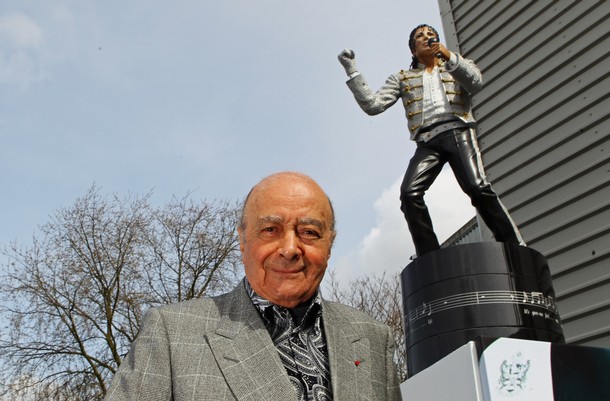
Nobody ever erected a statue to a critic

For reasons that will become clear in the fullness of time (or next Friday, whichever is sooner), Mostly Links will not be making a return to weekly fixture status on these pages, but is dropping by this week for old time’s sake. How’ve you been, readers? You look great. Yeah, I’m fine, you know. Same old…

Continue reading Mostly Links (Slight Return) 22 June 2012

Safe

by Indy Datta

Jason puts a brave face on the loss of a nice toasted hazelnut latte.

The new Jason Statham vehicle, written and directed by Boaz “Remember the Titans” Yakin, starts with not one but two solid premises.  In one plot strand, we meet Statham’s character Luke Wright – a NYPD detective turned binman/cagefighter – who angers the boss of a Russian gang by failing to throw a fight. These Russians have a taste for drama, so rather than killing Luke, they kill his wife, and promise him that anyone else he gets close to will get the same treatment, condemning him to a life of itinerant solitude.  Meanwhile, somewhere in China, the mathematical genius and eidetic memory of an 11 year old schoolgirl called Mei (newcomer Catherine Chan) catch the eye of New York City’s Chinese gangsters, who put her to work as the ultimate unhackable mob-accounting computer and Johnny-Mnemonic style data courier. In the early stages, as the film cuts restlessly back and forth between the two storylines before bringing them together, you might wonder if all this isn’t a bit overcomplicated for a Jason Statham movie – if it isn’t all going to rather get in the way of the simple business of lining up as many people as possible for The Stathe to kick in the head or shoot in the bollocks.

Continue reading Safe

La Grande Illusion

By Indy Datta

La Grande Illusion – which tells the story of a motley band of French POWs in captivity and on the run during the First World War – was Jean Renoir’s first major commercial success. In the early years of his career (after a short-lived flirtation with the idea of becoming a ceramicist) he had partially financed the string of loss-making silent films he made by selling paintings left to him by his father, the impressionist painter Pierre-Auguste Renoir. Although the advent of cinema sound had suited Renoir’s film-making almost from the start, with successes such as La Chienne and Boudu Sauvé des Eaux, La Grande Illusion – with its more expansive scope and scale and its cast of movie stars, including French man of the moment Jean Gabin – was a hit of a different order, and the first non English-language film to be nominated for the Oscar for Best Picture. Its success (along with the success of his next film, an adaptation of Zola’s La Bête Humaine) gave Renoir the kind of status as a film maker that couples freedom to money. He used that capital to make La Règle du Jeu, a scandalous failure that, the legend has it, drove Renoir out of the French film industry and into the arms of Hollywood. Continue reading La Grande Illusion

Once Upon a Time in Anatolia

by Indy Datta

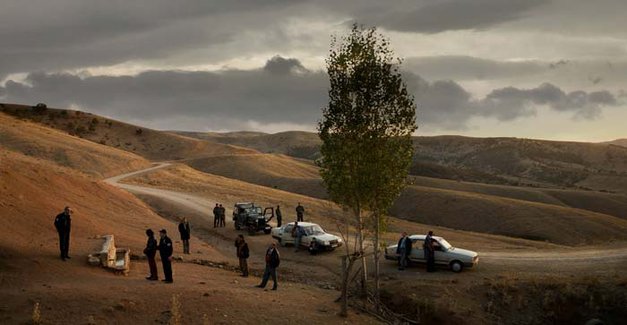
Turkish director Nuri Bilge Ceylan’s latest film was the joint winner – along with the Dardennes’ The Kid With a Bike – of the Grand Prix at last year’s Cannes film festival, and has since been widely  acclaimed as his masterpiece.  At the very least it is his most thematically expansive and formally ambitious work since his international breakthrough, 2002’s Distant. But as always with Ceylan, I find myself stranded uneasily between admiration and scepticism, dazzled by the technical mastery, unable to shake the suspicion that there’s less to the film than meets the eye, yet on some level aware that the failing is probably mine.

Continue reading Once Upon a Time in Anatolia

Mostly Links – 2 March 2012

by Indy Datta

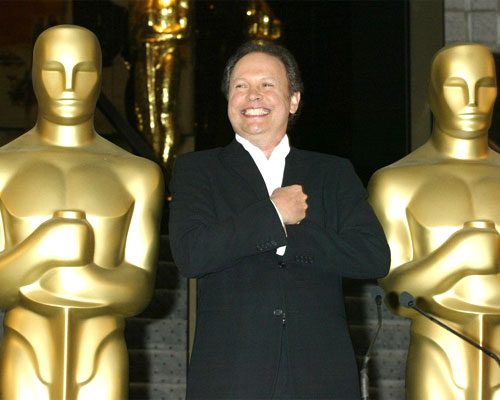
So, when Billy Crystal wasn’t blacking up, he was making mildly tasteless jokes about Kodak’s bankruptcy, thus giving hacks on right wing rags another weak excuse to write about how Hollywood hates America. The rumours of the death of film are, if not exaggerated, a little premature – 7 of this year’s 9 (nine) Best Picture nominees were shot on Kodak film, and next year’s batch could well include the latest from high profile digital refuseniks like PT Anderson, Steven Spielberg, Quentin Tarantino and Terence Malick. But it’s true that nobody’s making film cameras any more, and that almost all exhibition will be digital very soon (More than one studio is withdrawing archive film prints from circulation). David Bordwell, over on his blog, has an interesting series of entries about the massive transition that  the industry is undergoing, and the surprising challenges this generates (all the tagged posts don’t show up on the one page here, by the way, you need to hit “earlier posts” for the whole thing). Some of it, in my opinion, is unduly doomy and apocalyptic (and you’ll forgive me for not really caring if the future cockroach overlords of the Earth can’t figure out how to get the data off a DVD), but it’s an interesting read (and should keep you busy for hours; don’t ever tell me I don’t give you enough links, and that the title of this column is in some way misleading).

Continue reading Mostly Links – 2 March 2012