Category Archives: History

Happy Birthday to us

by MrMoth (and the people of MostlyFilm)
How did we get here? It really starts on the 25th of February 2011, when the Guardian pulled the plug on its talkboards, plunging without warning its userbase into the chilly waters of the internet at large. Several lifebelts were thrown; many users ended up aboard the good ship NotTheTalk, but a backup board created by a member of the film talkboard (who is now worshipped as a god, with sacrifices and everything) ensured the survival of the film community. Like shell-shocked post-apocalypse survivors, we needed to keep moving. Keep surviving.

A blog was proposed as a way of attracting new posters. It would reflect our diversity of interest, be written by us and would be the board (described in its Guardian days as ‘The most intelligent film community on the web’, oh yes) in blog form. This became a focus of action, and the group came together beautifully to pitch in. Just a few weeks later, on April 4th 2011, MostlyFilm launched.

A year on I thought that it would be good to go back to the board and ask them what their favourite post was from our first year as Europe’s Best Website.

Continue reading Happy Birthday to us

Yesterday’s Men

by FIONA PLEASANCE

George Valentin - Georges Méliès
The gorgeous Georges.

I know what you’re thinking.  You’ve clicked on a link, and now there’s a sinking feeling in the pit of your stomach.  “Oh no,” you sigh, “not another bloody article about those retro-juggernauts, The Artist (2011) and Hugo (2011) and what it all means for Hollywood.  That’s so last month!”

Well, perhaps.  But as a teacher of film history, I hope that I can offer a slightly different perspective on the films as far as their historical accuracy and their contemporary significance are concerned.

Let’s start with The Artist which, having fictional characters at its heart, brings fewer concerns with it.  George Valentin, Peppy Miller and Kinograph Studios never existed, but the film takes place at one of the most interesting and extensively documented periods in cinema history.  The conversion process from silent to sound cinema made – and, yes, broke – a number of careers, so it encompasses many elements which Hollywood itself loves so much, particularly meteoric rises and dramatic falls from grace.

Continue reading Yesterday’s Men

Feminine Iconology, Part Two

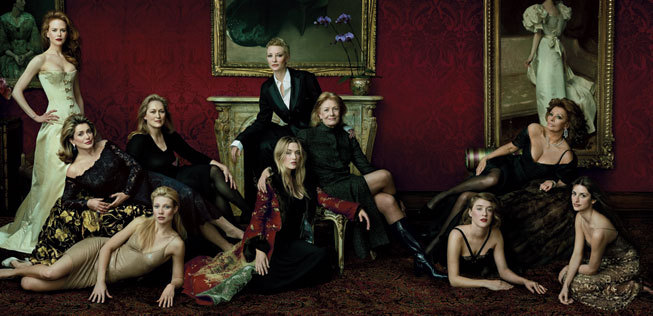
Image for Vanity Fair by Annie Leibovitz

Yesterday we brought you the icons of the silver screen from the Golden Age: one writer, one actress, one decade. You’ll have to imagine that a single person can represent an entire gender for an entire ten year span. Bear with us on that.

Today we move through Hollywood’s 1970s renaissance to the present day. How times have changed! Times have changed – right?

This post covers the 1970s, 1980s, 1990s, 2000s (and the 2000s – so fresh we did them twice!). If you haven’t read yesterday’s post, we covered the 1920s, 1930s, 1940s, 1950s and 1960s.

Continue reading Feminine Iconology, Part Two

Feminine Iconology, Part One.

Betty Grable, Lauren Bacall, Marilyn Monroe

It’s the 101st International Women’s Day! To mark this hugely important milestone, we have dedicated the next two days to some of the most iconic, glorious females in Hollywood. One writer, one actress, one decade. You’ll have to imagine that a single person can represent an entire gender for an entire ten year span. Bear with us on that.

Of course, the limitations of the brief mean that some big names have been missed. No Elizabeth Taylor, Louise Brooks, Jane Russell? Huge names, but that’s fine, it’s not a competition. There’s no thesis presented here, just personal choice. Each writer chose an actress they felt represented their decade, from the 1920s to the 2000s. You may draw your own conclusions of the evolution of the role and perception of women in the movies, of course.

We did not set out to create a definitive list – that would be absurdly arrogant – and no doubt you will have your own views on who best represents each decade. That’s why we have a comment box…

Come back tomorrow to see who we thought represented the spirit of the 1970s, 1980s, 1990s and 2000s (Twice), but today we cover the classics – Golden Era Hollywood. The 1920s, 1930s, 1940s, 1950s and 1960s start right after the jump.

Continue reading Feminine Iconology, Part One.

The Front Line

by Caulorlime

The Korean War is an historical obscenity so absurd that it feels like it was created for propaganda purposes. We are, in the west, well used to the hideous idea of people dying in the First World War right up to 11 o-clock on the eleventh of November, and the utter pointlessness of those deaths. In the Korean war (or as the Koreans call it, the war)* the same thing occurred, only the truce talks went on for two years after the fundamental desire for ceasefire was agreed, with the added piquancy that the fighting that occurred in the last few months and weeks was actually the most vicious, the most deadly of the entire conflict. Areas devoid of mineral richness or any natural strategic importance, hills too steep for farming and too bleak for settlement, became the focus of horrific and sustained fighting. Some small and pointless territories changed hands over 30 times in 18 months at the cost of countless Korean lives, as well as a significant number of Chinese, American and other troops. The perceived importance of these areas was due to their proximity to the 38th parallel, an entirely arbitrary line drawn at the end of WWII partitioning the country into North and South Korea, and sparking the inevitable war. In 1953, as the interminable armistice talks dragged on, these hills became a flash point merely because the owners of a hill could move the arbitrary border to the other side, gaining about three kilometers of extra territory. Thousands of people were killed and maimed fighting over them. The damn things are in the demilitarised zone now, and no one owns them.

Continue reading The Front Line

Birdsong

BY JOSEPHINE GRAHL

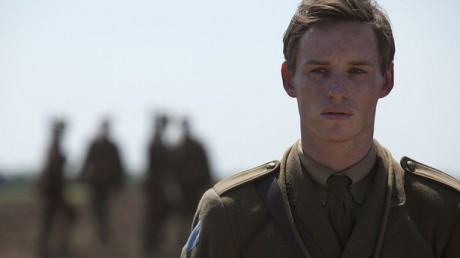
It’s now almost twenty years since Sebastian Faulks’s novel Birdsong was first published and it comes as something of a surprise to realise that it has never yet been brought to the screen. It seems like a tale that’s ripe for adaptation, with its potent combination of passionate sex, the horror of the trenches, and book sales in the millions. Several versions have been proposed but none had come to fruition until so-hot-right-now writer Abi Morgan (who has two films, The Iron Lady and Shame, out this month in addition to Birdsong) and director Philip Martin adapted the book into two ninety-minute television episodes, beginning this Sunday, filling what is already described as the ‘Sherlock’ spot.

Stephen (played by Eddie Redmayne) is a young man visiting factory owner René Azaire to advise him on his textile mills in Amiens, northern France. He falls in love with Azaire’s wife Isabelle (a luminous Clémence Poésy) and they have an affair. Six years later, Stephen is a lieutenant in the trenches of the Western front in charge of a company of tunnelers responsible for mining underneath German trenches. The film flips back and forth between 1910 and 1916, contrasting the beauty and serenity of bourgeois Amiens with life in the trenches.

Continue reading Birdsong

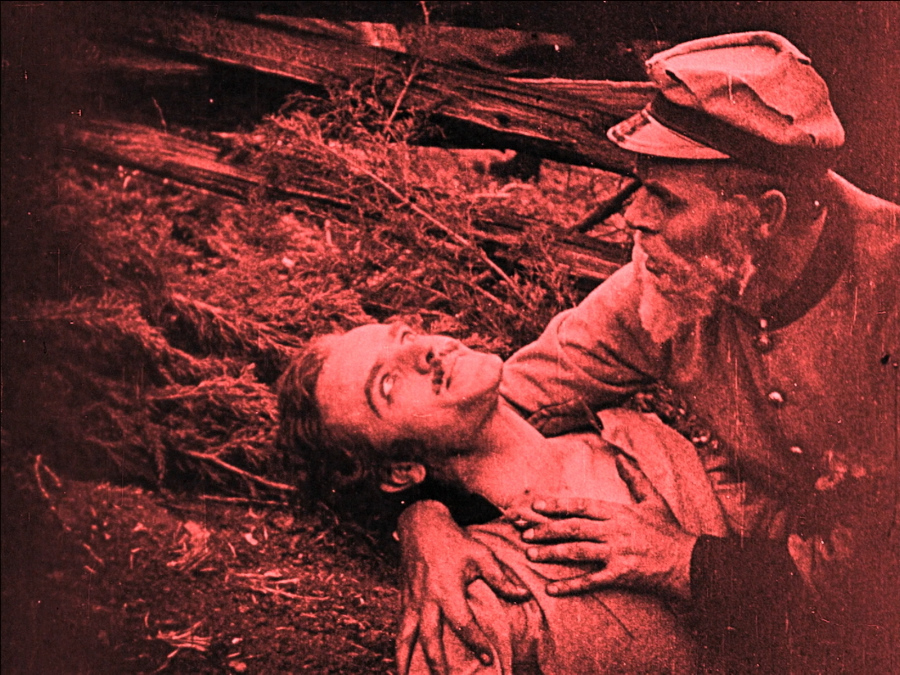
Rewriting History with Lightning – DW Griffith’s Birth of a Nation

by Philip Concannon

“In the brief span of six years, between directing his first one-reeler in 1908 and The Birth of a Nation in 1914, Griffith established the narrative language of cinema as we know it today.” – David A. Cook, a History of Narrative Film (2004)

“DW Griffith, when you come right down to it, invented motion pictures. As Lionel Barrymore says, there ought to be a statue to him at Hollywood and Vine, and it ought to be fifty feet high, solid gold, and floodlighted every night.” – Mack Sennett

If you believe some of the things that have been said about him, there was no cinema before DW Griffith. Sure, there were other innovators in the medium’s nascent years, but Griffith was the man who broke new ground and unified these techniques into a narrative that played out on a scale unprecedented in American cinema. The Birth of a Nation was the first film blockbuster, it is unquestionably one of the most influential pictures ever made, and it immediately launched the man behind it into the pantheon of great directors. Whether or not he should remain there is another matter entirely, however, as we consider the thorny question that faces everyone who sits down to watch The Birth of a Nation – should this epic be considered as one of American cinema’s greatest achievements, or its greatest shame?

Continue reading Rewriting History with Lightning – DW Griffith’s Birth of a Nation