by Philip Concannon
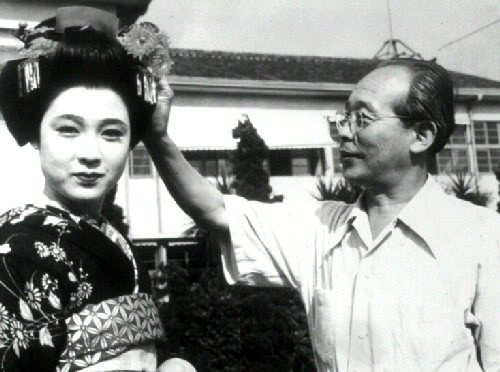
September 10th 2011 will mark the 60th anniversary of an auspicious event in the history of world cinema. On that date in 1951 Rashomon won the Golden Lion at the Venice Film Festival, introducing western audiences to not only Akira Kurosawa but to the riches of Japanese cinema in general. Rashomon went on to win an Academy Award and its director became an international figure, but he wasn’t the only Japanese filmmaker winning new admirers during this period. In 1952, Kenji Mizoguchi (who was apparently fiercely jealous of the younger director’s acclaim) won the International Award at Venice for The Life of Oharu and he later won back-to-back Silver Lions at the same festival with Ugetsu monogatari and Sanshô dayû. As the western world discovered Japanese cinema, these filmmakers were its twin leading lights.
At some point during the subsequent years, that perception changed. Mizoguchi died in 1956 and the stature of his work gradually seemed to fade with his passing. If you ask people to talk about the great Japanese directors today, Kurosawa will probably be their first answer with Yasujirō Ozu being the most likely second response. It seems they are now widely regarded as the two titans of that country’s cinema and as two of the most respected and influential filmmakers of all time, and while I’m not going to argue against that evaluation, I can’t help wondering why Mizoguchi’s own considerable body of work has quietly slipped out of view. I would suggest that his films are every bit as impressive and vital as anything else produced in Japan in this period. In fact, you could make a fair case for him being the greatest of all Japanese filmmakers.
 MostlyFilm