Monthly Archives: April 2013

Friends, Romans, Juno’s Countrymen

Spank The Monkey comes to praise Spartacus, not to bury him
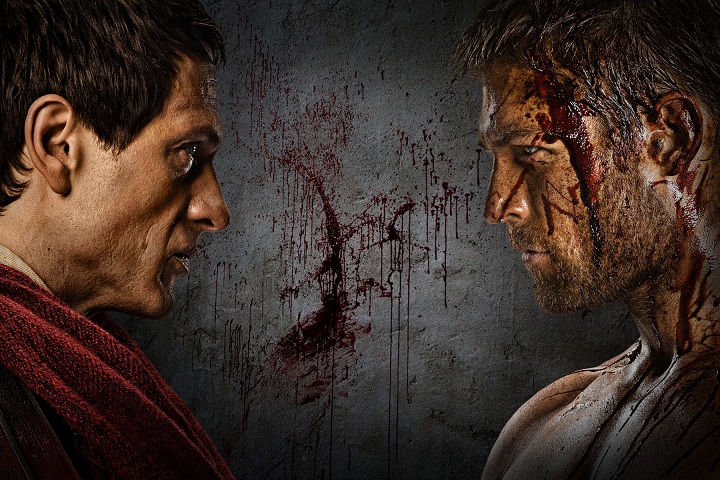
Crassus and Spartacus

Do we need spoiler alerts for this one?

When I wrote about the Starz TV series Spartacus for Mostly Film last year, we were three seasons into what we knew by then was a four season run. I tried to keep spoilers to the absolute minimum, just telling the bare bones of the familiar story: the one about the Thracian slave who ended up leading an army of the oppressed against the might of Rome.

But now we have the final season to consider – Spartacus: War Of The Damned, recently shown on television and just released on home video. The story of Spartacus is familiar, and its ending is even more so. One particular version of it has become so ingrained in our culture, it’s become a metaphor for a certain type of heroic sacrifice. And that’s not even the true version. As Steven S. DeKnight and his writers approach the final chapters of their tale, their retelling of it has to battle against all the baggage the viewer brings along to it. It’s been pre-spoiled. Is that going to be a problem?
Continue reading Friends, Romans, Juno’s Countrymen

The Look of Love

By Gareth Negus

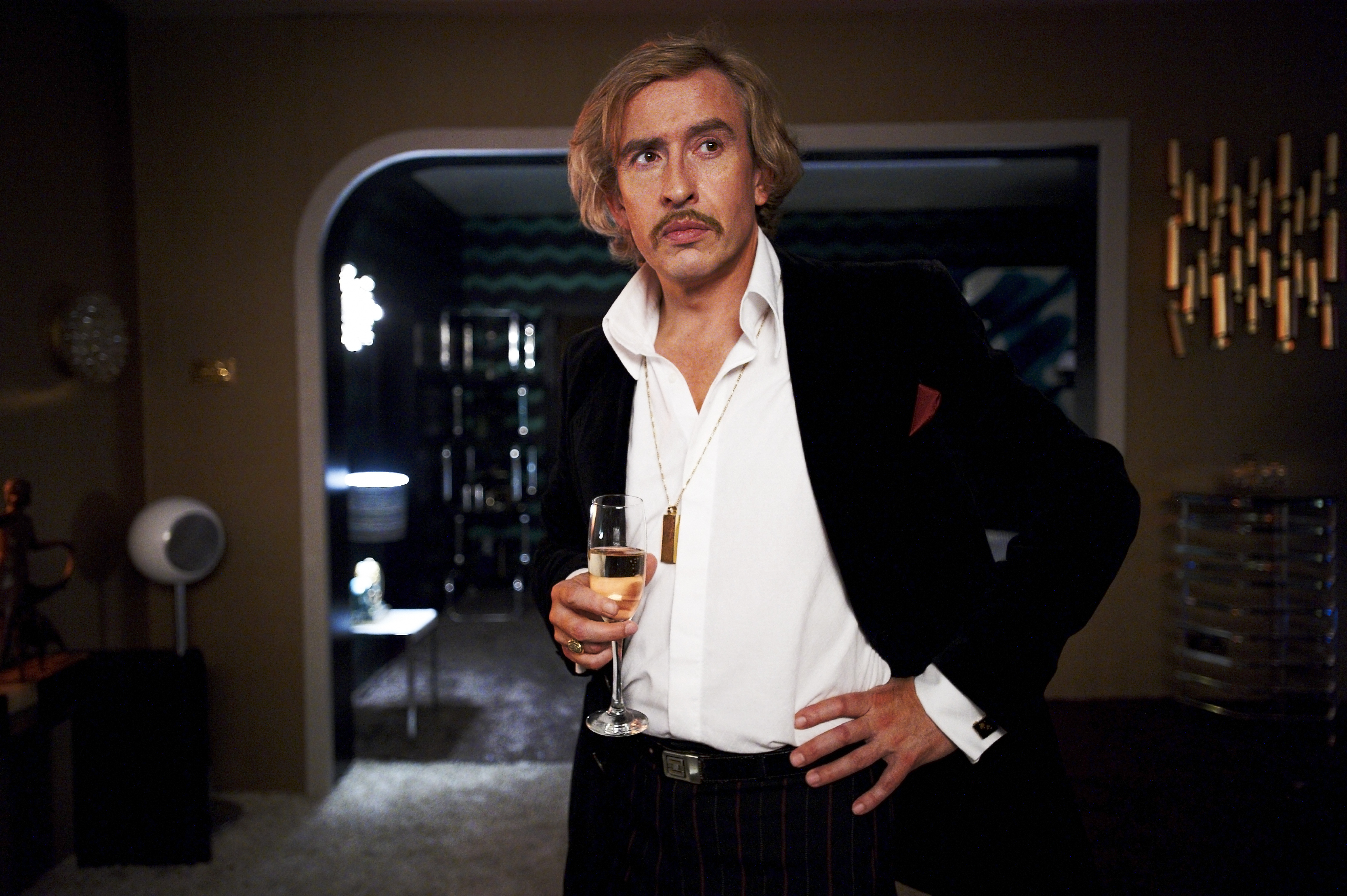
Steve Coogan as Paul Raymond

Paul Raymond was London’s King of Soho, an entrepreneur and publisher who made a fortune out of what he called erotica, and plenty of others called pornography.  Raymond was an astute businessman who worked his way up to a fortune, and something of a pioneer in his own field; there are plenty of stories to tell about a man like that. Michael Winterbottom’s new film, The Look of Love, opts for one: a tragedy about a man who had everything, yet lost what was most important to him.

Continue reading The Look of Love

Mostly Pop April 2013

Azealia Banks, yesterday.

Hello! Mostly Pop here again. This month we have artists looking back, looking forwards and some just staying right where they are, unable to do anything but repeat their horrific mistakes over and over. So prepare to dance like a fool, tap your foot like someone’s Dad and, if you’re anything like me, curl into a corner, gibbering at the shock of the genuinely new. How do you feel about disarranged body parts and pleather gimp cows? Nervous?

Continue reading Mostly Pop April 2013

Mad Love

Gareth Negus reviews the new biography of Doctor Who producer, John Nathan-Turner

jnt-final.600

Becoming, and more particularly remaining, a Doctor Who fan in the 1980s was – with hindsight – an odd and sometimes uncomfortable experience.  Of course, some might say being a Doctor Who fan at any time was rather odd, but the 80s were the decade during which the programme fell from public favour and was regarded as an embarrassment by the BBC.

A biography of John Nathan-Turner,  the man who produced the series throughout that decade, would seem to be about as niche as niche publications get.  It’s easy to imagine a book on Russell T Davies or Steven Moffat on the Waterstones shelves, but Nathan-Turner was known for producing Who and pretty much nothing else.  BBC lifers – of the sort which Nathan-Turner had apparently thought he would be – might enjoy the gossipy anecdotes and tales of the inner workings of Television Centre in decades past, but that’s probably not a large enough group to make a bestseller.

Yet Richard Marson’s new book, JN-T: The Life & Scandalous Times of John Nathan-Turner has had a fair bit of press coverage.  Unfortunately, that’s largely thanks to the chapters detailing the sexual exploits of Nathan-Turner and his partner, Gary Downie, which – though not, by any stretch of the imagination, in the Saville league – occasionally sound dodgy enough that you think people should have been disciplined, if not fired. The pair regularly propositioned Doctor Who fans for sex, including many who were under the then age of consent for homosexuals (though they would be legal under today’s laws).  One incident, described on page 194 of the book, is a clear case of sexual assault experienced by the author himself.

Continue reading Mad Love

Adventures in Nollywood

By CaulorLime

Demon in Law
Patience, I think.

So, it’s been a while. How’s it going? All good? Excellent. Yeah, no change here. Except I had a baby, quit my job and moved my family to sub-Saharan Africa. No, for real. It’s all here if you’re really interested, and by “all” I mean “almost nothing.” I’m Harry, by the way, the pseudonym thing seems a bit unnecessary now that I’m beyond the reach of your petty laws.

Malawi, where I now live, is the third (or eleventh, depending on who you ask, never in between though) poorest nation on earth. I’m not sure where’s poorer, but there must be a whole country living in a cardboard box somewhere, because this place is pretty damned poor. The life expectancy is shockingly low. The country has the one of highest HIV/AIDS infection rates in the world with a miserable chance to find a STD testing center. There are near constant power cuts and water shortages. You live in constant danger of malaria, bilharzia, meeting Madonna or plague. The real problem with Malawi, though, is that there is no way to watch the Junior Apprentice, nor whatever witless crap Jamie Oliver is currently foisting, with wet-lipped enthusiasm, on the peoples of the rest of the world. In short, this place is a cultural desert. My having no access to bad television, and therefore nothing to say on these pages, was an unintended consequence of our move to the Dark Continent, but it seemed to be an unavoidable one. At least, I thought so, until I stumbled across Demon-in-Law.

Continue reading Adventures in Nollywood

Evil Dead

By Sam Osborn

You're asking for trouble, making claims like that.
You’re asking for trouble, making claims like that.

It was inevitable that a remake of The Evil Dead would open itself up to criticism and comparisons from fans of Sam Raimi’s cult 1981 original.  Did we really need to be worried?  As it turns out the answer is no. The feature debut of Fede Alavarez, who was chosen for the task by Sam Raimi, the new film is simply titled Evil Dead.

As in the original, the story focuses on five college-aged friends who travel to a secluded cabin in the woods. However in this new adaptation, the isolated location has been chosen to support Mia’s attempts to detox.  The cabin is owned by the parents of siblings David and Mia and, although now dilapidated, contains lots of warm and comforting memories for Mia.  Or so it seems…  Fairly early on, after the discovery of something untoward in the basement along with a strange item, The Book of the Dead, it becomes apparent that things are not all that they seem – and that there is worse to come.

Continue reading Evil Dead

Vulgaria

By Spank The Monkey

VulgariaMules

You may be familiar with the cinema technology known as D-Box – a small number of screens in the UK have already been fitted with it. It’s one more way of reducing the film experience to a theme park ride: a cinema rigged with motion control seats that shake, tilt and vibrate in ways defined by the movement on screen. Generally, it’s used to add realism to action movies, wobbling the viewer as things crash and explode in front of them.

Later this year, a Hong Kong studio is set to release the first 3D pornographic film using the D-Box process. This should tell you everything you need to know about the territory’s attitude to sex on screen. Even more so when you discover that the film in question is 4D Sex & Zen, the latest entry in a franchise previously discussed in these pages. As I suggested back then, you get the feeling that erotic film in Hong Kong hasn’t really grown up yet. So when you discover that one of the biggest local hits of the past few years has been a bawdy comedy called Vulgaria (just released on home video in the UK), you begin to fear the worst. But you shouldn’t.  Continue reading Vulgaria

Digital Grading: cinema and the blue rinse brigade

By Dene Kernohan

O Brother Where Art Thou
O Brother, Where Art Thou?

The Digital Intermediate process, known as DI, has been around in cinema for over a decade now.  Basically, it is the transfer of filmed material to the digital realm, allowing for total control of the image in post production, especially with regards the colour palette.  Traditionally it is an expensive process (10 years ago, around $200,000 for a feature film) and involved scanning the film in its entirety.  But as film itself has become all but obsolete, this part of the process is unnecessary and digital grading has become more widespread.
Continue reading Digital Grading: cinema and the blue rinse brigade

“Count to five and tell the truth”

Laura Morgan watches the 50th-anniversary reissue of John Schlesinger’s Billy Liar

billy1
‘Genius – Or Madman?’ Billy Fisher as Hero of Ambrosia

There are lots of good things about going to the cinema alone. You can go and see anything you like without justifying your choice to someone else, and you don’t have to tell anyone what you thought of the film afterwards. You don’t have to share your snacks, or miss parts of a trailer – or, worse, the movie itself – because someone wants to have a conversation with you. Going to the cinema alone is a selfish and glorious way to spend a couple of hours. The only downside to it is that when a film makes you laugh until you weep – not the silent shoulder-shaking kind of laughter that you could just about get away with, but the hooting, spluttering kind that marks you out as a genuine lunatic – when that happens, being by yourself only makes matters worse. Fortunately for me I have only done this once: the first time I saw Billy Liar. Continue reading “Count to five and tell the truth”

The Host

By Emma Street

Warning: spoilers for The Host follow!

There are four of us in this relationship.

After the success of the Twilight franchise, movie execs must have been up to their eyeballs in pitches for The Next Twilight. “It’s like Twilight but with yetis instead of vampires”, for example. Or with Merpeople. Or Robotic Monkeys. Or Parasitic Aliens!

The Host, on general release at the moment, has a better claim than most as The Next Twilight given that it shares Twilight’s author, Stephenie Meyer and is squarely pitched at the same fan base.

Like Twilight, The Host has an attractive teenage female protagonist, weird goings on and dialogue so clunky that I’m not sure Meyer has actually ever heard people speak. It’s not so bad when her words are said by centuries old vampires or alien species new to our language (and possibly the concept of speaking altogether) but it makes no sense for human characters to sound like they learnt English from 18th century gothic novels translated into Japanese and back again.

The promotional posters have emphasised the film’s central love triangle. In this case, given that there are two people inhabiting the same body it’s more of a love square. Or a virtual love square contained within a physical love triangle. Love geometry becomes complicated when your planet has been taken over by alien parasites.

Continue reading The Host