All posts by Blake Backlash

Unknown's avatar

About Blake Backlash

Blake Backlash lives in Glasgow. If you're ever up there, he's the one with moustache.

Il Boom

By Blake Backlash

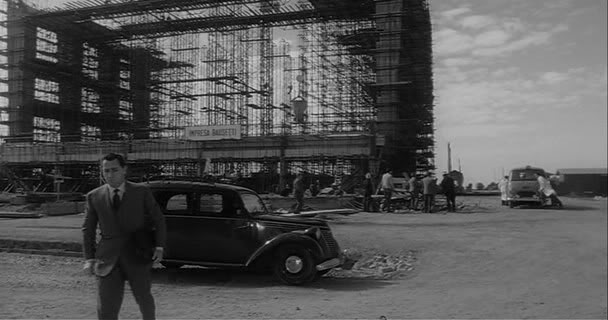
There is a scene in Vittorio De Sica’s Il Boom where a number of well-to-do Italians dance to a band who are performing the tackier sort of early 60s pop song. The lyrics are sung in English. That same quality of a cheap import is imbued in the title of the film. Whereas most European countries created a label in their own language to denote their rapid, post-war economic growth (it is hard to think of a word less German than Wirtschaftswunder), the Italian media co-opted their term from English. ‘Il Boom’ has connotations of something messy and uncontrollable, while at the same time seeming voguish and silly, perhaps even meaningless. Such associations suit De Sica’s satire – which is interested in showing us the empty spaces that might be concealed by the ostentatious sixties prosperity.
Continue reading Il Boom

Breathing

By Blake Backlash

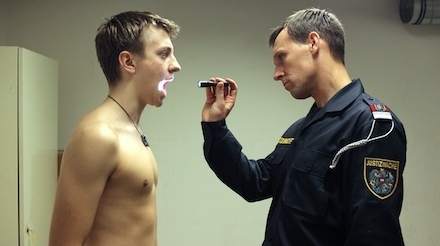
Breathing: the first thing you have to get the hang of when you stumble into the world, and the last habit you break before you go out of it. By calling his film Breathing, Karl Markovics is no doubt trying to alert us to the film’s thematic concerns with living and dying. However, the title also seems to me to be about the way the way those movements inside our chests serve to connect us. Not only is it something that we all do, it also the most immediate and ever-present way we have to meet the world around us. You might not be thinking about it much as you read this, but if the air around you changed in way that made breathing difficult, you’d soon start to pay attention to it. And that act, of noticing our breathing, also seems to bring the present moment into sharp focus – that’s why tapes that are supposed to help you sleep, or help you meditate in way that helps you forget your worries, start by telling you notice as you breathe in… and out. A breath is a moment. Continue reading Breathing

Black Coal Heart – Classic British Film Noir

By Blake Backlash

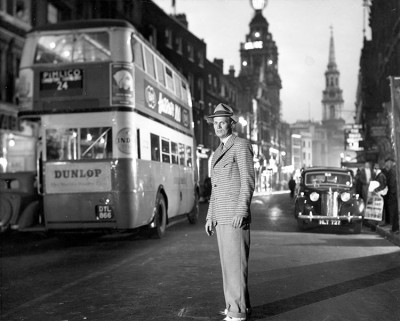
Let’s begin at the seaside with Grahame Greene. Imagine spending a wet Bank Holiday afternoon in Brighton and there’s a good chance you can already taste the atmosphere of damp, disappointment and danger that seeps through the films I want to tell you about. Graham Greene is important too. In the three years before World War II, he wrote A Gun for Sale, The Confidential Agent and Brighton Rock. All three are thrillers where there’s an attempt to bind the mechanics of a pulp plot to larger questions about fate and sin. Eccentric and desperate characters stumble through starkly atmospheric locations. Much of this is part of the template for all film noir – indeed A Gun For Sale became A Gun for Hire, with Alan Ladd and Veronica Lake. But Greene casts a long shadow over British noir in particular.

Continue reading Black Coal Heart – Classic British Film Noir

The Devil and George Bailey

By Blake Backlash

Snow falls into the black river beneath him. George knows how cold the water would be – he still has nightmares about going under to rescue his brother. As he remembers, the ear that the cold killed starts to tingle, and at first George thinks it’s because of the memories. But then he realises there’s a voice there. Intimately cradled among the useless workings of his dead left-ear, it speaks to him, and says:

We both know that you’re not going to jump. Continue reading The Devil and George Bailey

Doctors vs prophets

by Blake Backlash

Photographers take pictures of a protestor praying in Tahrir Square.
Photographers take pictures of a protestor praying in Tahrir Square (Belfast Telegraph)

I failed to make it past the introduction to Edward Said’s Orientalism when I first encountered it at University. Since then I have fingered and then abandoned more than one copy in second-hand bookshops, telling myself that I would need to make time for it one day.

A couple of months ago I came across it again on the ‘Cult’ shelf of my local library and, since Egypt was in the news, I decided it was time to stop flirting with the book and make a commitment. I had a half-formed idea that this was the right time to read Orientalism.

It is just as well that this notion of reading the book for insights into the Arab Spring was only half-formed, because Said repeatedly states that it is not his intention to describe, or speak for, the Orient. In fact the text is marked by scepticism about the motivations and methodologies of such descriptive projects, and calls into question the conceptual category of ‘the Orient’ itself. What Said is interested in is the way the East is represented in the West. Continue reading Doctors vs prophets