All posts by MostlyFilm

MostlyChristmas: favourite Christmas movies, part 1

Mostly Film has come over a touch festive this week, and will be bringing you a Christmas-themed post every day. Today and tomorrow, some of our  contributors recommend their favourite movies for the festive season. Today, adopting the Santa Claus classification, the nice ones. Tomorrow, the naughty. Sort of. Don’t hold me to that.

It’s a Wonderful Life

By Ron Swanson
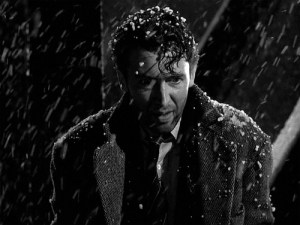
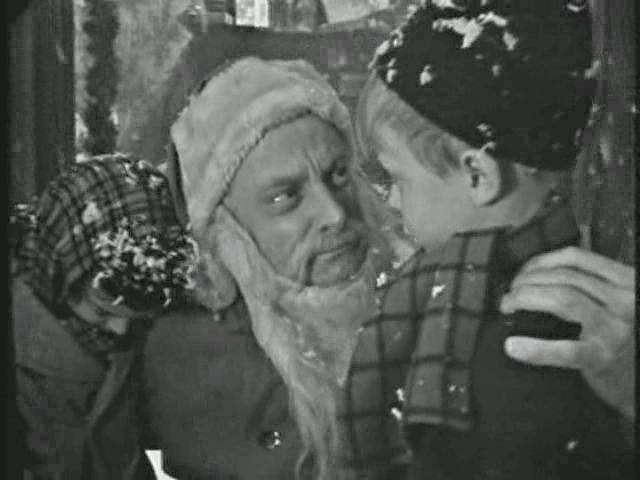
It’s fair to say that choosing It’s a Wonderful Life as a great Christmas movie isn’t a hugely original, or controversial stance. Sometimes it’s important to try and raise people’s awareness of a forgotten or neglected piece of art that could provide some hitherto unimagined joy. Equally, though, the pleasure in re-experiencing a masterpiece should not be discounted.

It’s a Wonderful Life is, for me, a perfect cinematic experience. It lionises kindness, solidarity, justice and hope, while also accepting that even the best of us can plumb the depths of frustrated ambitions, depression and self-pity.

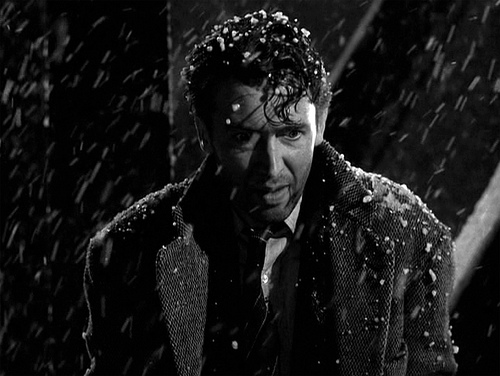
It hangs around a marvellous performance from Jimmy Stewart, who never did more to disabuse audiences of the notion that he was a one-trick pony than he does here. George Bailey is a fully rounded human being: charming, decent, but with a quick temper and the potential for cruelty.

We see Bailey sacrificing his dreams of travelling the world to protect the future of his friends and neighbours by taking over his father’s business – a building and loan company, which is the only barrier to the predatory, pitiless Mr Potter (Lionel Barrymore) from controlling the town of Bedford Falls.

When people talk about It’s a Wonderful Life, they often use words like syrupy and schmaltzy, but there is real darkness to Frank Capra’s movie. George is on the brink of suicide, facing ruin and resenting all of the sacrifices he’s made, he laments his poor luck and vents his anger – claiming the world would have been better if he’d never been born.

As he realises the worth of his life (thanks to an unlikely angel), and goes on a voyage of self-discovery, one honest plea from his wife (the lovely Donna Reed) exercises all of the town to rush to his aid, providing him with the money he needs to save himself (and, therefore, themselves) from Potter’s clutches.

Although the film ends on Christmas Eve, the film manages to evoke festive feelings despite not being ‘about’ Christmas. Instead, it’s a film about loving your family, feeling grateful for what you have, and letting go of what you don’t. That’s what Christmas should be about, and for the 130 minute running time, that’s how it feels. I’m not sure you could ask for more than that. Continue reading MostlyChristmas: favourite Christmas movies, part 1

MostlyFilm’s Best of 2011 – A Separation

by Adam Howard

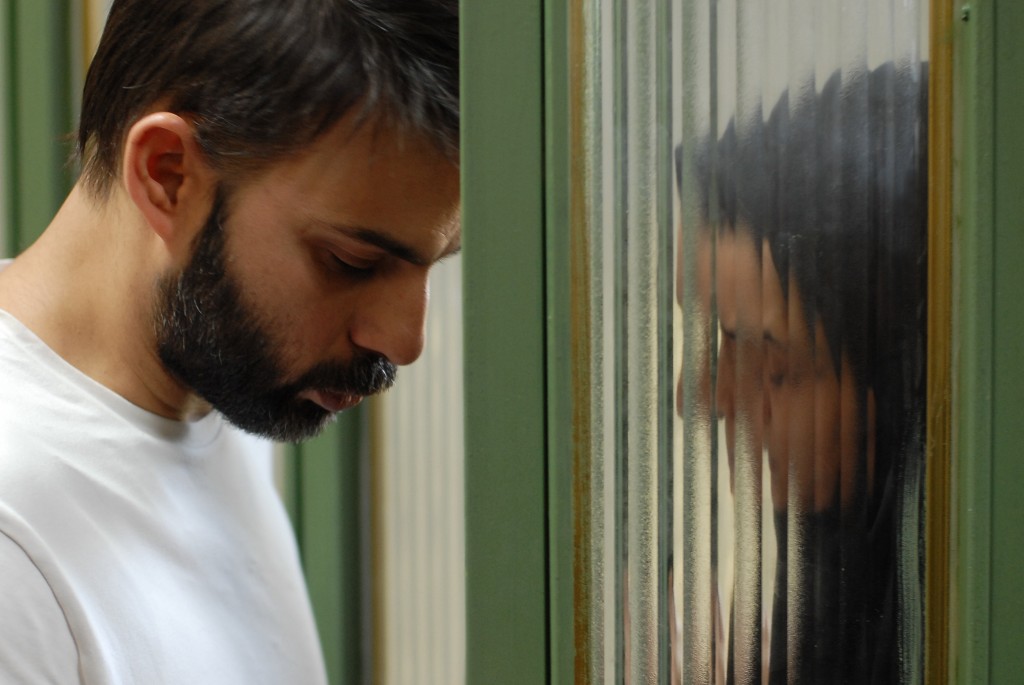
In a year full of big-name directors making big, messy, ambitious films – see The Tree of Life, Melancholia, Black Swan – I suppose it makes sense that one of the very best of the year would be a quiet little character piece, its ambitions only to capture life in all its complicated shades of grey. While watching A Separation for the first time, I remember thinking to myself that director Asghar Farhadi had created an entire universe for his characters to live in. It was only when I realised that that universe was the very same one that we’re living in now that I realised how truly special it is. It’s a film about an incredibly specific situation that touches on something universal, and while we in the West may not be able to relate to an awful lot of what happens to these people, the emotions that run through the film resonate far beyond the characters’ where and whats.

Continue reading MostlyFilm’s Best of 2011 – A Separation

MostlyFilm’s Best of 2011 – Submarine

by Paul Shuttle

In the largely subjective realm of film criticism, there can be few more useful barometers of quality than whether you were moved to again return to a film once your review had been filed. The process by which a critic arrives at their film of the year may be a tortuous one  but such retrospective analysis tends to lionize the important over the good. Rather than succumbing to the futile cross-referencing of colour coordinated lists, perhaps a critic should instead consider just one question: which film do they feel most compelled to watch right now? For my part, the answer has been the same for almost every day that has passed since I first saw it. The answer is Submarine.

Continue reading MostlyFilm’s Best of 2011 – Submarine

MostlyFilm’s Best of 2011 – Confessions

by Sam Inglis

Vengeance is mine, sayeth the Lord.  Not entirely, sayeth the movies.

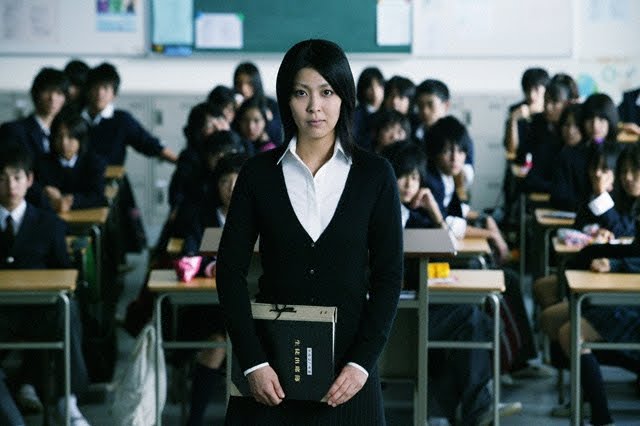
The vengeance film has a long, sometimes sordid, often fascinating history, and it’s a subgenre I have long found interesting due largely to the way that it allows filmmakers and actors to explore characters in extremis.  This year’s outstanding entry in this subgenre is Japanese, and comes from a perhaps unexpected source.

Continue reading MostlyFilm’s Best of 2011 – Confessions

onedotzero adventures in motion festival 11

onedotzero’s remit is to promote and showcase global digital culture and innovation in motion. Its 15th outing has just closed at the BFI Southbank. It was a festival of screenings, music events, installations, training and round tables on processes such as projection-mapping.

The work in this festival that could mostly be described as film, as opposed to installations using the BFI’s public spaces, was divided into strands.  I saw extended play 11 and future cities.
Continue reading onedotzero adventures in motion festival 11

Me and the Doctor

Thomas Pratchett marks the, er, 48th anniversary of Doctor Who with some personal reflections.

On an October evening in 1987 I wandered into our small brown living room, in which our aged, four-channel, push-button TV was on. It was past six o’clock, so cartoons were long gone for the day, and I was seven, so whatever was actually on at that time usually never interested me. But what I saw on screen that night was different. A man was being chased by a white robot. What cool craziness was this on during the boring TV hours? I remember little else about it, but this was my first exposure to Doctor Who.

Continue reading Me and the Doctor

Take Shelter

by Emma Dibdin

Michael Shannon has officially become Hollywood’s go-to Man On The Edge. Ever since he literally drove Ashley Judd insane as a disturbed war veteran in William’s Friedkin’s paranoid skin-crawler Bug, he’s played an impressive range of notes on the scale of crazy. From his Oscar-nommed performance as Leo and Kate’s outspoken, fresh-from-the-asylum neighbour in Revolutionary Road to buttoned-down federal agent Nelson Van Alden in HBO’s mobster drama Boardwalk Empire, “intense” is too quaint a term for the brand of simmering, quasi-alien danger Shannon conveys: there’s a sense that any of his characters could snap at the drop of a hat.

What’s surprising about his bravura turn in Take Shelter, then, is how completely human and recognisable it is, how un-alien. Much of the Shannon canon has fascinated and repelled in equal measure – you wouldn’t be best pleased to run into Van Alden, or Bug‘s Peter Evans, down a dark alley. Running into Take Shelter‘s tortured blue-collar family man Curtis, on the other hand, you’d probably be fine with. You might even be inclined to offer him a pint and a sympathetic ear.

And God knows he could do with one. We’re introduced to Curtis in the midst of what appears to be an apocalyptic storm: ominously dark clouds gather, a harsh wind blows, and (in case you’re thinking that sounds like a pretty average British summer’s day) viscous brown oil begins to fall in the place of rain. And though he wakes up, this is no “it was all a dream” cop-out – the sense of impending dread lingers with us, and with Curtis, from those haunting opening shots onwards.

Continue reading Take Shelter

London Korean Film Festival 2011

by Clare Dean

"SHINee SHINee, SHINee boots of leather"

Pandemonium and chaos.  When I arrive at the Odeon West End for the opening night of this year’s London Korean Film Festival, the queue is already around the block.  The foyer is a mass of confusion, camera crews and big, burly security men and it appears that Kim Han-min’s new film, War of the Arrows is quite the hot ticket.  So much so, that the boisterousness gives way to blagging, pleading and queue jumping.

As is often the case with festivals, the start is delayed a little.  The audience slowly take their seats, filling screen 2.  15 minutes pass.  Suddenly a wave of shrill screaming breaks out across the cinema.  It takes me a few seconds to remember that K-Pop band, SHINee played earlier in the day – and the reason for the delays, crowds and screaming becomes clear.  Every head in the room turns, cameras are out, people are standing on their seats.  Three girls make a break for it and clamber on the stage.  I stand up too, worried that I won’t know who to look at: but  it’s obvious –  five young Korean men with extravagant hair saunter down the aisle and coolly take their seats.  The screaming continues, the burly security men look fraught.  One even has his finger to his ear piece, (just like in the movies!).

Eventually, festival advisor Tony Rayns appears on stage to calm everyone down with a video introduction from Jonathan Ross and open the festival.  Finally, we watch a film.

Continue reading London Korean Film Festival 2011

Vince Gilligan – Talking TV Drama

by Paul Duane

Breaking Bad creator Vince Gilligan doesn’t look at all like I’d expected him to look. It’s a hardboiled name, and I was expecting somebody who looked more like the show’s barrel-chested DEA agent Hank Schrader. The man himself, however, is tall and bespectacled and looks uncannily like a Daniel Clowes drawing brought to life. He’s a Virginian and has a wonderfully slow, discursive way of talking – he calls it rambling, I’d call it expansive – and is prone to apologising if he feels he’s using a mildly offensive word or phrase, which – given the Irish propensity for using swear-words as noun, verb and adjective – I found terribly charming.

He was speaking as part of the Galway Film Centre’s Talking TV Drama seminar, a terrific initiative bringing together writers and producers from shows as distinctive as Waking the Dead, The Silence, The Body Farm, Mistresses, Beaver Falls and Being Human to talk about how they work, what inspires them and the problems they face.

I’m excerpting a few small items from several hours of discussion, but if you want to hear more (and more specific) insights, the Breaking Bad podcast on the AMC website is your next stop.

Need I explain that there are spoilers ahead?

Continue reading Vince Gilligan – Talking TV Drama