The Innocents, Jack Clayton’s haunting take on The Turn of the Screw, is back in cinemas. Viv Wilby plucks up the courage to get spooked all over again.
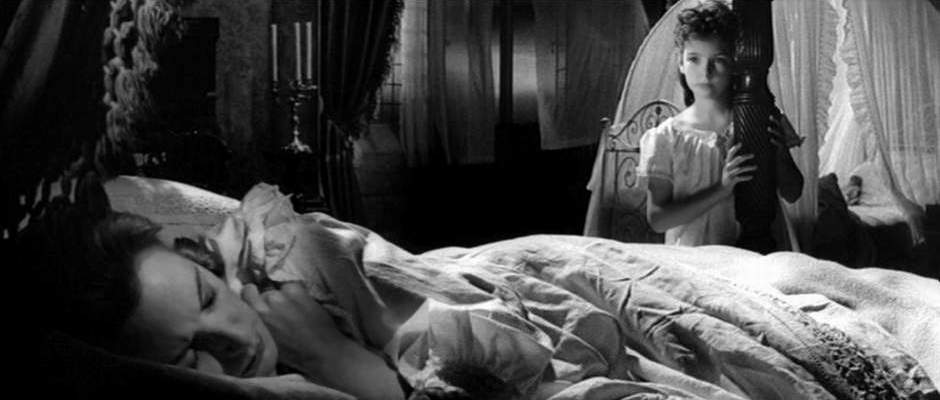 Continue reading Bly spirits: revisiting Jack Clayton’s The Innocents
The Innocents, Jack Clayton’s haunting take on The Turn of the Screw, is back in cinemas. Viv Wilby plucks up the courage to get spooked all over again.
Continue reading Bly spirits: revisiting Jack Clayton’s The Innocents
Sarah Slade reviews the book in a box “S” – conceived by JJ Abrams and written by Douglas Dorst

Paul Duane takes a look at Emmanuelle V, a late film by one of one of cinema’s strangest and most specific auteurs, Walerian Borowczyk, for Shadowplay’s Late Films Blogathon.

Your next box set? Philip Concannon spends a weekend with Fassbinder’s epic television masterpiece.
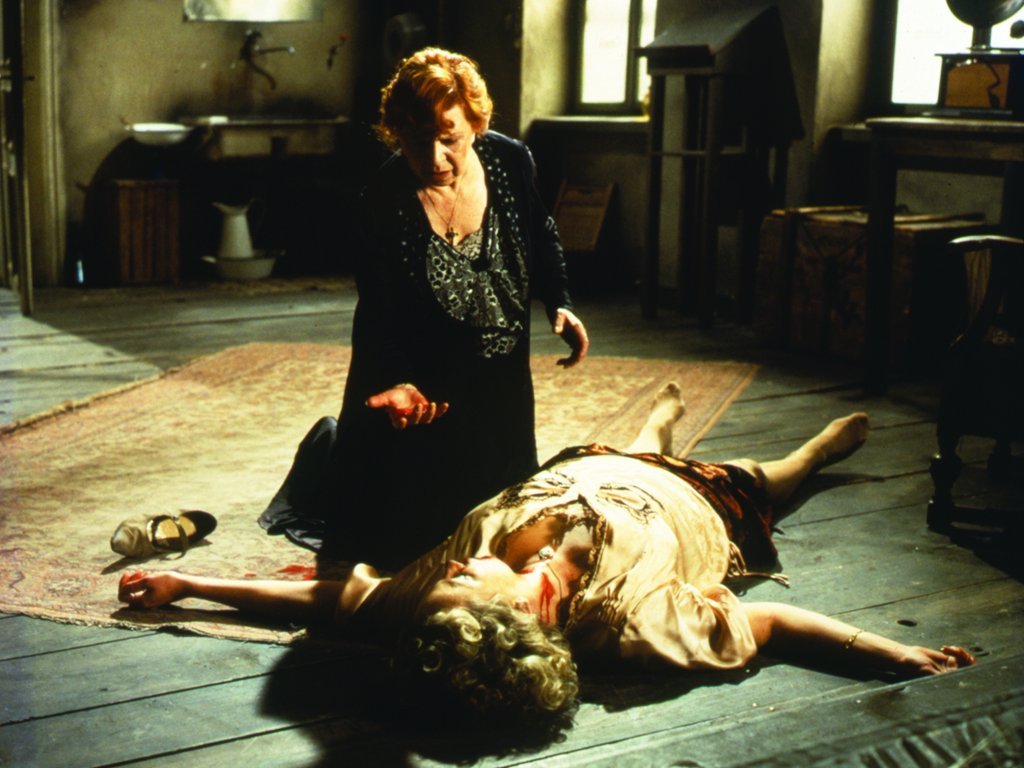
Indy Datta is about as much of a Wes Anderson fan as it’s possible to be but finds Matt Zoller Seitz’s new book about the director charming, but too slight, and too polite.

The Invisible Woman (Ralph Fiennes, 2013)
Ralph Fiennes’ second outing as director, following Coriolanus, sees him shift from one of the traditional choices of the serious thesp-turned-filmmaker, Shakespeare, to the other – costume drama. An adaptation of Claire Tomalin’s biography, The Invisible Woman is the story of Nelly Ternan, the actress who for many years was the mistress of Charles Dickens.
We initially meet Nelly (Felicity Jones) some years after Dickens’ death; now married with a family, she is directing a school production of a play by Wilkie Collins. This stirs up memories of how she first met Dickens when, aged 18, she performed in the same author’s play.
The Charles Dickens presented here is a showman who lives in the full glare of celebrity (in one scene, he is mobbed by adoring fans). He is larger than life, effusive if perhaps somewhat egotistical, and shows a warmth not generally associated with Fiennes. However, once you get over the shock that Dickens isn’t being played by Simon Callow, Fiennes is quite successful in the role; I particularly enjoyed his scenes with Tom Hollander as Wilkie Collins.
Unfortunately, I was less engaged in his relationship with Nelly, whose dilemma really should be the most interesting element of the film. Though the pair are swiftly attracted to each other, Nelly is reluctant to enter into a sexual relationship with a married man (though I was unclear exactly what she was expecting to happen). Her mother (Kristin Scott Thomas) is more conflicted, concerned for her daughter’s reputation but pragmatic enough to recognise a chance for economic security when she sees it. Dickens’ behaviour is also cause for concern; in at least one instance, he treats his family in an utterly unconscionable manner.
In a film about an illicit relationship, it is odd that it’s over 70 minutes before we get any sense of passion between the two leads. Whether this sense of restraint was the choice of Dickens or of Fiennes, I can only guess; either way, it makes this tasteful, well-performed film a colder affair than you feel it should be. – Gareth Negus
The Invisible Woman is due for release in the UK on 7 February 2014. Continue reading London Film Festival 2013: Closing Day Round-Up
Victor Field sees composer extraordinaire Danny Elfman cut loose at the Royal Albert Hall
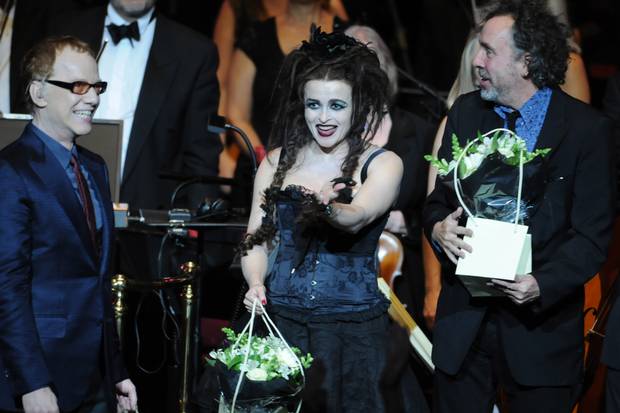
Until Monday 8 October 2013, I’d never have thought that I’d celebrate a first at the same time as Danny Elfman, but there you are. That night was the first time I’d ever attended a world premiere concert, and that night marked the first time he’d had a concert devoted to his music for film rather than as a member of the Mystic Knights of the Oingo Boingo.
Danny Elfman’s Music From The Films Of Tim Burton (surprisingly not sponsored by Ronseal) premiered to a packed audience at the Royal Albert Hall before going to Leeds, Glasgow and Birmingham, and hopefully the punters there had as glorious a time as most of those attending the RAH.
A round-up of some what’s been shown to date
Captain Phillips (Paul Greengrass, 2013)
The 57th BFI London Film Festival gets off to a cracking start with the Opening Gala screening of Captain Phillips. Adapted by Billy Ray (Shattered Glass) from the book “A Captain’s Duty: Somali Pirates, Navy SEALS, and Dangerous Days at Sea”, by Richard Phillips, telling the story of the hijacking of an American cargo ship; the first to be hijacked in 200 years, Captain Phillips sees Paul Greengrass behind the camera again for the first time since Green Zone in 2010.
Of course, adapting a film from the memoir of your lead character offers you some challenges as a filmmaking team, especially when working in the thriller genre. It’s harder to create suspense when the audience knows that when the ending comes, our main character is getting out of there alive. Greengrass dealt with the opposite problem, so brilliantly in United 93, when he took an ending we all knew all too well, and added swathes of raw, unavoidable human sorrow that made the film almost unbearable, so it should come as no surprise that Captain Phillips has an answer for the problem, by subtly subverting the traditional thriller structure.
That it can do so, so effectively, is largely down to a terrific central performance from Tom Hanks, who has never been better than he is here. It’s such a vanity-free performance from Hanks. Phillips’ heroism is certainly not obvious, nor the type that is traditionally sought out by Hollywood stars. In fact, in Hanks’ hands, Phillips is not a particularly likable character, phlegmatic to a fault, and hard on the men under his command. The majority of his actions are not motivated by a desire to be a hero, and as aspects of his character slip away in front of our eyes, his performance doesn’t waver at all.
He’s ably supported by a cast of mostly unknowns, with Barkhad Abdi as the leader of the skeleton crew of Somali pirates who board the ship, given the most rounded supporting character to work with, and impressing. It’s a tour-de-force performance, though, and in spite of Hanks’ unselfishness as an actor, it’s still almost impossible to take your eyes from him. With any justice, he’ll be a strong contender for an unprecedented third Best Actor Oscar come late February. Ron Swanson Continue reading London Film Festival: Day Three Update
Caulorlime watches out for smokies with a can on his back. Come on!

“I don’t know where to start with this” is a terrible cliché. It’s used by lazy writers to suggest bewilderment at the oddness of a concept that usually turns out, after a little unpacking, to be utterly mundane. It’s apt here, though, because trying to write about Convoy, the 1978 Sam Peckinpah movie about lorry drivers that was based on a novelty song, left me with, literally, too many choices about where to start.
I’m a smart-arse. That should really go without saying. Being a smart-arse is sort of my thing*. It didn’t serve me well here. Every time I started writing about this film I ended up ridiculing a different aspect of the weirdness, and that didn’t work. You can’t just pick this thing apart and mock its constituent pieces. You need to try and mock it as a whole. Convoy isn’t really a product of the paranoid seventies**, or a product of right-wing America***, or of an occasionally great director phoning it in****. It isn’t even a cautionary tale about attempting to construct a coherent narrative out of a three minute pop song sung/rapped in a baffling slang*****. I mean, it’s all of those things, but it’s also much, much less. Continue reading “Ain’t she a beautiful sight?”
Woody Allen takes on the financial crisis? Niall Anderson withdraws his savings.
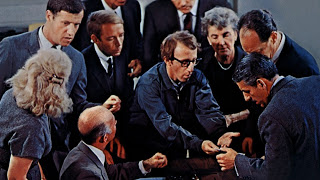
An idea for Woody Allen’s next film. An experienced and somewhat notorious director turns up at a film festival to tout his new film. The festival could be Cannes, it could be Venice, but this being a Woody Allen film, let’s make it Tribeca. The director’s new film centres on the step-by-step destruction of a central female character, with her destruction acting at least partly as a metaphor for some wider apocalypse. During the course of a press conference before the film’s premiere, the director muses out loud on his motivations and aesthetic. ‘I used to think I was a Jew,’ he says. ‘But now I realise I’m a Nazi.’ He says it again. ‘I’m a Nazi.’ There are gasps and nervous giggles, and the press conference putters on politely for the next ten minutes, but everyone in the room knows that a storm is coming.
I offer this plot to Woody because, in Blue Jasmine, he has made his first Lars von Trier film. It has everything: English dialogue that is somehow not quite English; insultingly whimsical plotting; the odd fancy-schmancy poetic interlude (just because); and above all a central female character who is insulted and toyed with by fate, before being utterly destroyed because – it turns out – she’s a total fucking bitch.
Cleaving still closer to the Von Trier template, the way in which she’s a bitch is supposed to say something about the failures of our common humanity. But where Von Trier would contrast the neurotic frailty of his protagonist with visions of profligate nature (talking foxes, haunted horses, blood-spunking penises), Woody has to find his own metaphor for the horrors of life. And find it he does: poor people. Continue reading Nebbish Say Nebbish Again
 MostlyFilm