Category Archives: Directors

Tabu: A Story of the South Seas

Fiona Pleasance watches Eureka’s new DVD release of Murnau’s classic.tabu1
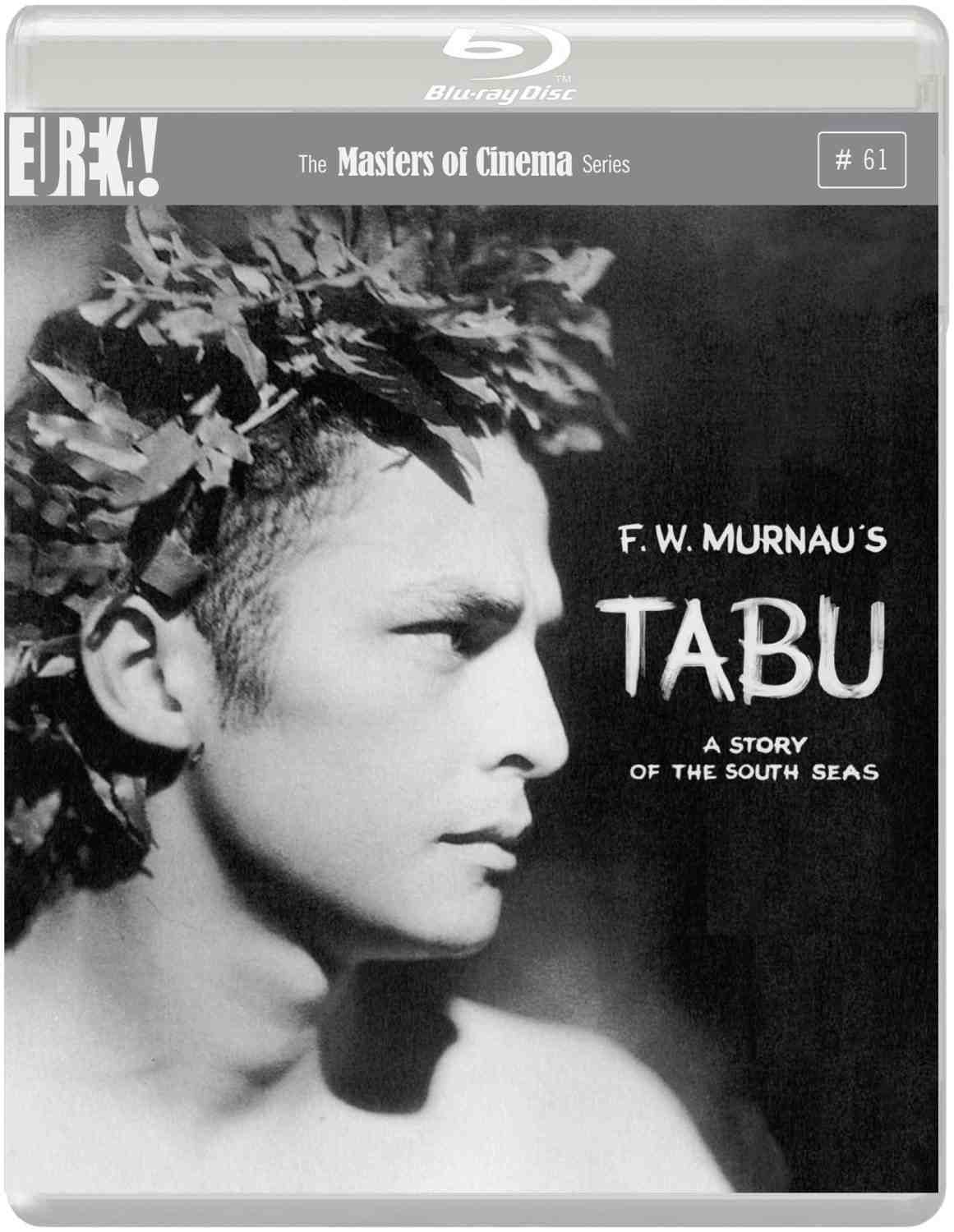
Tabu (1931) is a film which inhabits boundaries.  The crossing of social and religious barriers drives its plot.  Originally conceived as a colour picture, Tabu was released in black and white.  Despite appearing four years into the sound era, it is silent, albeit with a synchronised music score.  It is a fiction film containing documentary-like sequences, originally conceived as an investigation into the encroachment of modernity onto the traditional Polynesian way of life, but ending up as a melodrama straight from the Hollywood mould.  Independently (self-) financed in the first instance, the film was effectively bailed out when Paramount bought the distribution rights.  It was planned as a collaboration between two of the most important directors of 1920s cinema, but one took over and the other departed the project; film historians have been arguing about the relative influence of each ever since.

And, saddest of all, Tabu turned out to be the final film made by its credited director, F. W. Murnau, who died following a car crash one week before the film’s New York premiere.

Continue reading Tabu: A Story of the South Seas

For Love’s Sake

By Spank The Monkey

For Love's Sake

At the Cannes festival last month, you could see – and hear, thanks to some conspicuous booing – the breakdown of the love-in between Western critics and Japanese director Takashi Miike, as his latest thriller Shield Of Straw got very short shrift indeed. Does this mark the end of Miike’s career as the go-to director for Asian weirdness? I suppose it depends on whether you trust the judgment of the sort of wankers who think that yelling at projected images will improve them.

Perhaps it’s the end of the respectable phase of Miike’s career – after a couple of years of working on the sort of serious drama that attracts festival programmers, he’s going back to just doing whatever takes his fancy. That’s not to say the boo-ers are wrong, though: in a career that’s getting close to hitting the 100 feature mark, he’s made a couple of undeniable stinkers. But no single film in his canon gives you any idea what the ones either side of it will be like. We can go back in time just one year – to June 2012, and the Japanese theatrical release of For Love’s Sake, now available in the UK – for a good example of that.

Continue reading For Love’s Sake

Firing into a continent

By Viv Wilby aguirre_cannon

In the empty immensity of earth, sky, and water, there she was, incomprehensible, firing into a continent. Pop, would go one of the six-inch guns; a small flame would dart and vanish, a little white smoke would disappear, a tiny projectile would give a feeble screech – and nothing happened.

Heart of Darkness, Joseph Conrad

Aguirre: the Wrath of God is one of those movies that has almost become more famous for what happened on the set than what happens on screen. The tempestuous relationship between the young German director Werner Herzog and his wildman star Klaus Kinski is notorious and the story of how Herzog ended up threatening Kinski with a gun to get him to behave has been well rehearsed; there’s little point in going over it all again here.

Of course the parallels are irresistible: Europeans struggling to adapt to the tropical terrain; a mission hijacked by an insubordinate madman; problems communicating with the locals; logistics from hell. We could just as easily be talking about the making of the movie as the movie itself. Continue reading Firing into a continent

The MostlyFilm Director and Novel Supermatch Game

image

‘Oh, the film is never as good as the book’ – how many times have you heard that? How many times have you said that? Well, we at MostlyFilm have taken that bull by the horns; contemplating the films we’d really like to see, matching directors to novels and novels to directors to get the perfect mix and, just maybe, make a film to beat the book…

Continue reading The MostlyFilm Director and Novel Supermatch Game

Parting Shots

Michael Winner

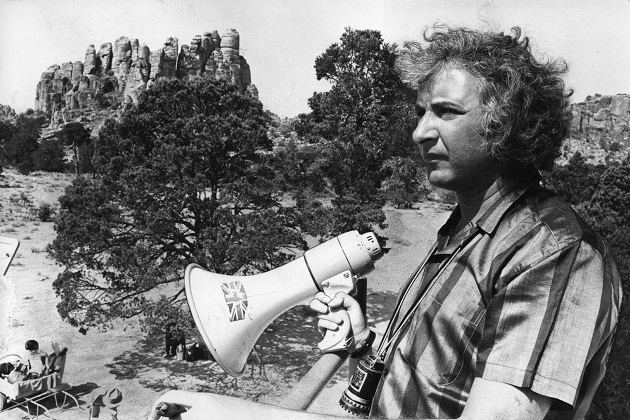
We’re not ones for obituaries here, but when news of Michael Winner’s death broke earlier this week, there was a bit more reminiscing than usual on the MostlyFilm forum. I can’t explain why it felt right to do so, but we decided to give a send off to this most eccentric of English directors. A man remembered for his notoriety as a restaurant critic, as the director of exploitative, violent trash like Death Wish or Dirty Weekend and, most damningly, for those bloody insurance commercials, Winner was also a director with great verve and wit. The below-discussed I’ll Never Forget What’s’isname, for example, is an overlooked gem, standing out from the wigged-out wallpaper of drearily off-the-wall Swinging Sixties films (yeah, Blow Up, I mean you), and, quite apart from his frequent collaborations with Oliver Reed and Charles Bronson, this is a man who has worked with some incredible names; Orson Welles, Sophia Loren, Anthony Hopkins, Joan Collins, Alain Delon and Lauren Bacall to name only a fraction. Clearly he did something right.

After the jump – as the cool kids call it, right? – we have contributions from our own Neil Hargreaves and a guest contribution from blogger and film-maker David Cairns. As David said in his note to me, it’s not the obituary he would’ve wanted. But, to me, it’s better than reducing him to a catchphrase (unless, perverse to the end, that would be exactly what he would want).

Continue reading Parting Shots

Trouble in Paradise

By Viv Wilby

Some years ago, the National Film Theatre (as it was then) asked members to nominate a little-seen film for a Christmas-showing. The winner was Ernst Lubitsch’s 1932 romantic comedy, Trouble in Paradise. Co-written with Lubitsch’s regular collaborator, Samson ‘The Jazz Singer’ Raphaelson, Trouble in Paradise takes full advantage of the permissiveness that abounded before the enforcement of censor Will Hays’ Motion Picture Production Code in 1934. The script, which is heavy with sexual innuendo and irony, was considered too racy during the code era and re-issues were refused. The film wasn’t discovered again until the late 1960s.

Like a lot of early Hollywood comedies, the setting is old Europe: chic, cultured, decadent, gloriously wealthy. But Lubitsch doesn’t waste any time in making a central point (and a good visual gag). The garbageman we see in the very first shot is also an aria-singing gondolier, punting a heap of festering rubbish down the Grand Canal. Glamour, romance and escapism goes hand-in-hand with rottenness and filth. Continue reading Trouble in Paradise

Flying Swords Of Dragon Gate

by Spank the Monkey

About a quarter of a century ago, I saw my first film featuring Chinese people flying through the air waving swords about, and it blew my goddamn mind. Zu: Warriors From The Magic Mountain was made by Tsui Hark in 1982, and was as wild an introduction to the delights of Hong Kong cinema as you could wish for. As I leapt onto every subsequent film from the territory that the Scala cinema could throw at me, I’d tell anyone who’d listen just how incomprehensible HK movies sometimes seemed to a Western viewer.

After a few years, I’d seen enough of them to realise that I was being unfair. It wasn’t that all HK movies were incomprehensible: if I was honest about it, it was really just Tsui Hark’s. And thirty years after Zu, his latest film Flying Swords Of Dragon Gate shows he can still provide that unique combination of eye-buggering visual spectacle and fantastically garbled storytelling. All that’s changed in the interim is the scale.

Continue reading Flying Swords Of Dragon Gate

Attack of the Killer Brummies: Ben Wheatley’s Sightseers

Steve Oram and Alice Lowe in Sightseers

Ben Wheatley’s eagerly anticipated new film, Sightseers, is a black comedy about a couple on a caravanning holiday across England who start a killing spree.  Written by its two stars, Steve Oram and Alice Lowe, the film is receiving regular comparisons to Mike Leigh and Natural Born Killers.  What’s interesting is that, although he did not originate the project, the film is so clearly the work of the man who last directed Kill List.

In September, Mostly Film’s Gareth Negus attended a press conference with Ben Wheatley, Alice Lowe and Steve Oram, who talked about the creation of the film, its production and their choice of eccentric tourist spots.

Continue reading Attack of the Killer Brummies: Ben Wheatley’s Sightseers

Are You Still Alive?

On the eve of the world premiere at the London Film Festival of his debut fiction feature Kelly + Victor – a raw and intimate romantic drama with a dark side, set in an evocatively captured contemporary Liverpool  Indy Datta interviews writer-director Kieran Evans.

On the genesis of Kelly  + Victor

I came into film during the early days of acid house.  I was studying fine art, and acid house had just sort of crash-landed, and in that kind of great way that the e culture made happen, you try something different, so I picked up a film camera and found myself enjoying that much more, so I became an art school dropout, and moved to London with the idea of making films rather than becoming an artist.

Continue reading Are You Still Alive?

It’s Alive!: Tim Burton’s creative resurrection

by Gareth Negus

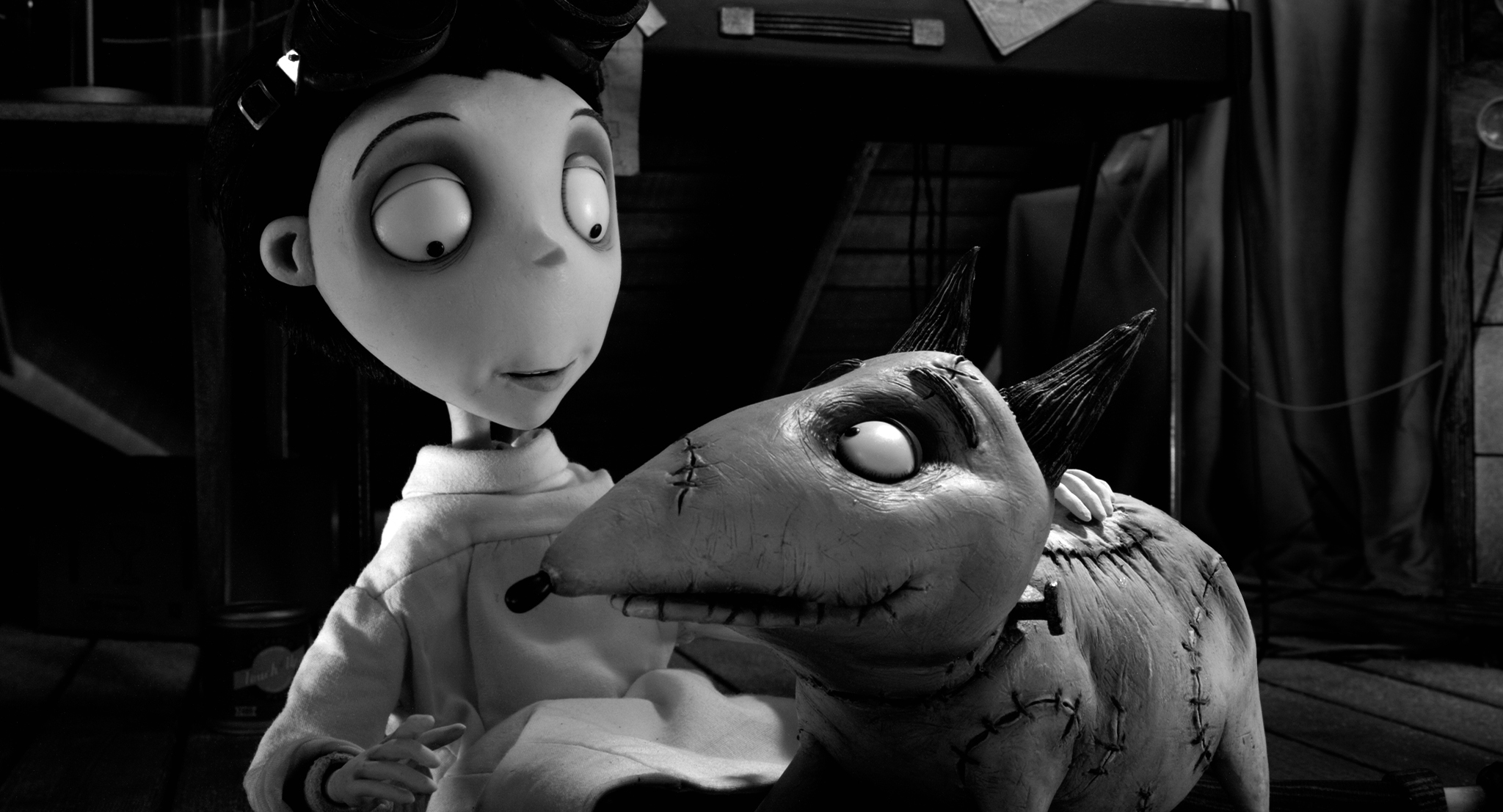
Among the many things for which Tim Burton can be held responsible is the fact that I am writing for this website.  His second feature, Beetle Juice (1988) was the one that, more than any other, ignited my interest in film.  I’m not suggesting it’s the greatest film ever made (that would be Tremors, clearly), but it was among the most imaginative and unusual I had seen up to that point in my life.  It introduced me to the idea that filmmakers could take a melange of influences and craft something new and personal from them, and sent me out into the street thinking: I want more like that. (It also introduced me to Winona Ryder, something else for which I remain grateful.)

Continue reading It’s Alive!: Tim Burton’s creative resurrection