Gareth Neguscreeps from behind the couch to let us know about the best and worst of FrightFest 2011
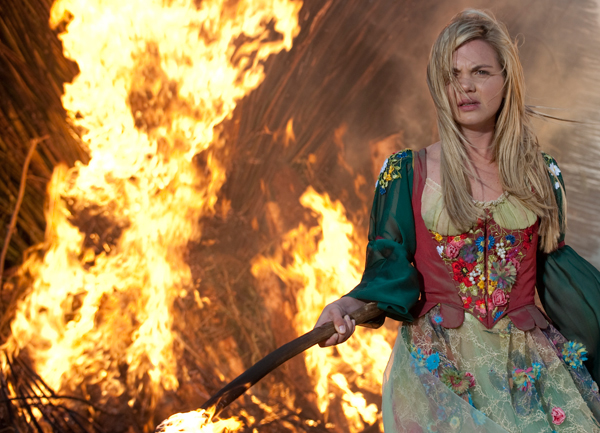
“But … but – where are the bees?” Britania Nicol in The Wicker Tree
Horror is a broad church, and the FrightFest 2011 programme reflected that. 37 films, mostly British or American in origin but with a solid international selection, meant most people could reasonably expect to find something to upset or repulse them. Continue reading Assignment: Terror→
At the time of writing this piece, just before another Orange Wednesday evening swells the coffers further, The Inbetweeners Movie has taken about 28 million pounds at the box office in its first two weeks on release, making it the most successful launch ever for a live-action comedy in the UK. This also puts it on course to outgross films, such as Transformers 3, that probably cost a hundred times as much to produce. Rigorous statistical analysis proves that these figures show that every teenager in the country has seen it twice, and that it probably stopped the August riots. Newspaper journalists can’t see something unusual without pronouncing it a new trend, so we’ve seen a breathless rush of speculation that the British film industry will “learn the wrong lessons” from the success of Inbetweeners and unleash upon us a baleful tide of unwanted adaptations of sitcoms and teen telly shows. This would at least mean that they could take next summer off from whining about the preponderance of sequels and comic book adaptations to instead complain that the multiplexes were being monopolized by the likes of My Family: the Movie, Misfits: the Movie and/or Roger & Val Have Just Got In: the Movie.
But how much of an outlier, really, is the success of Inbetweeners, viewed in the context of British comedy film?
Mostly Film noticed a few years ago that a lot of what was coming into the cinema and onto TV was strongly retrospective in tone. There were lots of beards and frock coats. There were a surprising number of films (well, two) about fin de siècle magicians. There were violently bollocky reworkings of ancient history (300, Apocalypto). Period dramas – from Far From Heaven up to Mad Men – became lavishly bourgeois and finicky: the pleasure was in the detail or nowhere at all. We had just begun a new century and here we were, as a culture, looking back all the time.
2011 has been a kind of apotheosis of this trend. You can hardly move for birth-of-a-civilisation type films: whether in the fantastical mode of Rise of the Planet of the Apes, or the metaphysical mode of The Tree of Life. And you can hardly breathe for idle, bean-flicking examinations of the recent bourgeois past – like the Spielberg pastiche of Super 8 or one of this week’s big hitters, One Day. Remember when life was, like, innocent?
Indy Datta ponders what The Guard means for Irish cinema
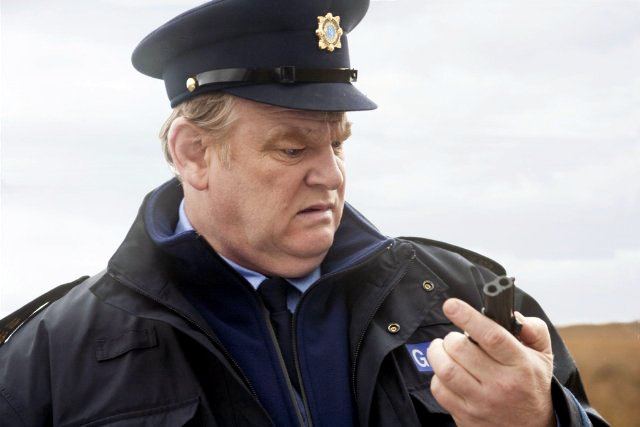
"You know what they say about a man with big hands. Big pockets." Brendan Gleeson in The Guard
Irish cinema is almost as old as the medium itself – the Lumière Cinematographe played in Dublin mere months after its Paris debut in 1896 – but viewed from the other side of the Irish sea, the history of Irish cinema has always seemed to be largely defined by Ireland’s complex relationship with Britain, and by its relationship (through its diaspora, and through the cultural power of Hollywood) with America and American film. That narrative, which is evidently partial in both senses, provides a consistent story stretching from the 1918 historical epic Knocknagow (cited as Ireland’s own Birth of a Nation and a significant box office success in America) to the Hollywood success of Neil Jordan.
John Michael McDonagh’s feature debut The Guard fits into this broad history. McDonagh is a Briton of Irish extraction, and his film – a verbally dextrous comedy thriller not tonally that different from his brother Martin’s In Bruges – is studded in stimulating ways with the slipstream detritus of American popular culture. This goes from the broadest strokes (the local lawman gets together with the slick big-city cop to run some bandits out of town) to the most peripheral details (an argument about just what Billie Joe and the girl were throwing off the Tallahatchie Bridge). But there’s another story to be told here. The Guard has grossed close to three million pounds at the Irish box office: a sum not far shy of what the latest Harry Potter instalment has racked up. And The Guard is not an isolated case. It only this week surpassed the Irish box office tally for In Bruges, and has some way to go to catch the cumulative gross of Ken Loach’s The Wind That Shakes the Barley.
Warning: This post contains SPOILERS for Captain America: The First Avenger and is intended to be read after you’ve seen the film.
Having written comics-to-screen pieces for this blog on both Thor and X-Men: First Class, it seemed only fair to give Captain America the same treatment. I talked at length in the Thor piece about the challenges faced by filmmakers in transferring a lesser-known superhero to the big screen for the first time and, in my opinion, Captain America director Joe Johnston (who made The Rocketeer, which is very close to my heart) has done the best possible job, both in terms of introducing the character to a new audience and in giving pre-existing fans everything they could possibly want from a Captain America movie. Continue reading Comics to Screen: A Look at Captain America – The First Avenger→
Striding through a wasteland of bloated sequels and wasted comic book adaptations comes this blockbuster season’s one true warrior of originality. Ignore the name; Super 8 is not a (seventh) sequel to Rainn Wilson’s twisted comic book movie. Instead, it’s a collaboration between one of the finest young filmmakers to be embraced by the Hollywood mainstream and one of the all time greats. Yes, that’s right: Super 8 is going to change the way Hollywood does summer blockbusters!
Now, if Mostly Film had the budget, that would all have been voiceover, and following that there would be a record scratch, and the picture would flash across images from seminal films like Jaws, Close Encounters of the Third Kind, ET (all directed by Super 8 producer Steven Spielberg), Stand by Me and The Goonies. Super 8 may not be a sequel. It may not be an adaptation. What JJ Abrams’ new film is, though, is an unashamed homage to the films of the 1980s films that I, for one, grew up adoring. Continue reading Attack of The Clones: Hollywood’s new originality→
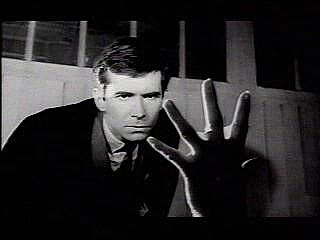
"You want me to do Psycho FOUR?" Tony Perkins decries remakes
As every Cineplexer knows, summer is the season of revamps and remakes, and this summer is as full of them as any. But there are revamps and then there are revamps. Choose, for example, from the following: Continue reading Mostly Links – 22 July 2011→
Down in one! Denzel struggles to digest that octopus
If last week was the week of dodgy cover-ups, then this has been the week of big revelations. We now know, for instance, that Spike Lee has been confirmed to direct that remake of Oldboy, where before we could only speculate. But does the confirmation honestly make you feel any better? Sure, we can now anticipate seeing Denzel Washington eating a live octopus and developing an unhealthy crush on a waitress young enough to be his daughter (Jaden Smith), but is that really good news? Continue reading Mostly Links – 15 July 2011→
NOTE: THIS REVIEW CONTAINS SPOILERS FOR THE HARRY POTTER SERIES
Strangers in the night: Daniel Radcliffe and Ralph Fiennes
This is the end. Of course, it’s not the end, what with Pottermore and the inevitable afterlife any cult fantasy endures, but it’s the end of something, a cycle of, without wishing to sound like too much of a wanker, mythology. What started with a novel entitled Harry Potter and the Philosopher’s Stone in 1997 has finally ended with a film called Harry Potter and the Deathly Hallows – Part 2. As the books grew darker and less whimsical, so the films have found their palette drained of the flat Technicolor and daylit hi-jinks of Chris Columbus’s first two efforts. Even by the end of Chamber of Secrets, Columbus was struggling with the tone. One dreads to think how he would have coped with the grim tortures, doomy politics and centaur gang-bangers of the fifth book. Maybe he’d fling in a bit where Ron gets hit with a bucket of paint and that would lighten the mood for everyone.
I came to Potter at book two, just as the fever was building. I knew nothing about it – a friend of a friend of my flatmate had written a book and it was sitting on our bookshelves looking short and fun. I read it in a day and immediately went out and bought the first one, and the newly-published third. Never looking back, I bought each successive book at launch (but not, like, at midnight the first day or anything; I’m not a weirdo, I promise). I’ve loved them all, even the overlong and undereventful Order of the Phoenix, which has its own ponderous charm.
I saw the first film at a public preview screening in a packed Odeon in Oxford. The atmosphere was unlike any I’ve experienced before or since in a cinema, the auditorium humming with excitement, grown men dressed as wizards brushing past tiny children dressed as slightly less convincing (though much cuter) witches. The film, it’s fair to say, was a slight disappointment, but the sheer goodwill of the crowd was enough to lift my opinion of it. Since then we’ve had bad (Chamber of Secrets, Goblet of Fire), passable (Half-Blood Prince, Order of the Phoenix) and genuinely great (Prisoner of Azkaban, Deathly Hallows – Part 1) films. Deathly Hallows – Part 2 has a huge weight on it, not just the expectation of rounding off the film series in triumph, but of closing the book on the creation of Harry Potter’s world.
Jessica Chastain in the Tree of Life. Also pictured: a panentheistic god
It’s not the most obvious reference point from which to start thinking about The Tree of Life and how it fits into Terrence Malick’s filmography, but I keep coming back to what John Peel said about The Fall: always different, always the same. Malick has worked in the same distinctive mode at least since 1978’s Days of Heaven. He builds sequences from fragmentary and extended moments rather than from dramatically discrete scenes. He forages for indelible images in the margins of his setups, turning the restless eye of the steadicam into a participant in the story. More and more, he prefers non-expository voiceover to dialogue. He has returned to similar themes repeatedly throughout his career, but the specific narrative strategy of each film is distinct. He is always different, always the same. Continue reading The Tree of Life→



 MostlyFilm