Category Archives: Television

Vince Gilligan – Talking TV Drama

by Paul Duane

Breaking Bad creator Vince Gilligan doesn’t look at all like I’d expected him to look. It’s a hardboiled name, and I was expecting somebody who looked more like the show’s barrel-chested DEA agent Hank Schrader. The man himself, however, is tall and bespectacled and looks uncannily like a Daniel Clowes drawing brought to life. He’s a Virginian and has a wonderfully slow, discursive way of talking – he calls it rambling, I’d call it expansive – and is prone to apologising if he feels he’s using a mildly offensive word or phrase, which – given the Irish propensity for using swear-words as noun, verb and adjective – I found terribly charming.

He was speaking as part of the Galway Film Centre’s Talking TV Drama seminar, a terrific initiative bringing together writers and producers from shows as distinctive as Waking the Dead, The Silence, The Body Farm, Mistresses, Beaver Falls and Being Human to talk about how they work, what inspires them and the problems they face.

I’m excerpting a few small items from several hours of discussion, but if you want to hear more (and more specific) insights, the Breaking Bad podcast on the AMC website is your next stop.

Need I explain that there are spoilers ahead?
Continue reading Vince Gilligan – Talking TV Drama

Feckinpah, or the Irish Straw Dogs

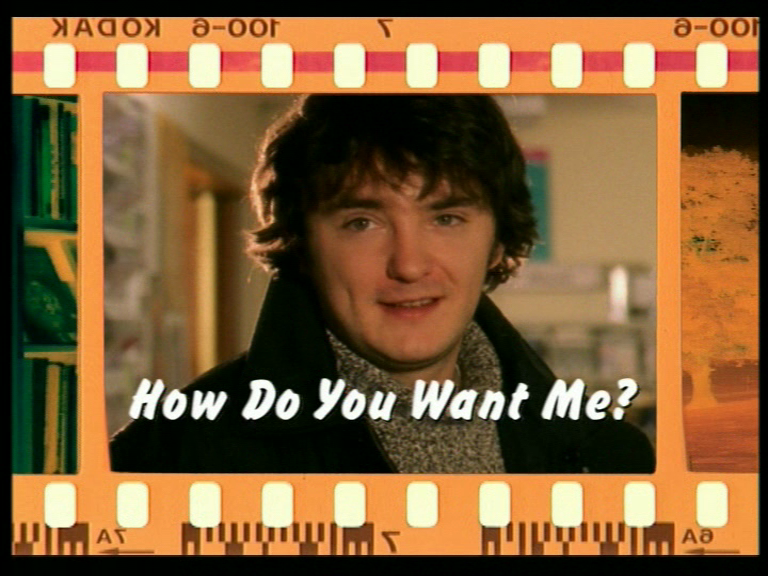
Paul Duane on how Simon Nye’s How Do You Want Me? Refashioned a vile classic into a poison-pen paean to Englishness.

Twee

To start with, let’s take two things as given: first, that the 2011 remake of Straw Dogs by Rod Lurie is an irrelevance and an embarrassment, and useful only as a peg on which to hang this poorly-thought-out but long in gestation article; and second, the original Straw Dogs is in itself a problematic, troublesome turd in the punchbowl of Sam Peckinpah’s crazed career. (If you disagree with either of these givens, that’s the comments section right over there ——->).

Now then. Back in the late ’90s, the sitcom genre was quite a different beast. The League of Gentlemen were a successful but oddball bunch of sketch comedians just trying out their talents on television, buried on BBC2. The Boosh and the Conchords were not yet born. Situation comedies tended to be a gentle battle of the sexes, or a lightly humourous clash between different varieties of working-class people and homosexuals. And the king of all he surveyed was Simon Nye. His series Men Behaving Badly was a battle between two men, one jug-eared, one not, to remain childish, irresponsible monsters well into adulthood. It was hugely successful.

Continue reading Feckinpah, or the Irish Straw Dogs

The Audience Who Waited

By Ricky Young

It's not as good without Les Dennis.
Rory wonders if he set the video for Family Fortunes.

The last time MostlyFilm talked about Doctor Who, I expressed a hope that the second half of the series would be more fun, less annoying, and feel slightly less like it was heading up its own time-tunnel. Did it succeed? If I were to follow the recent Who template, the answer would have been heralded in the article before last, with tantalising hints spread around the rest of Europe’s Best Website – most of which would turn out to be red herrings – and after I’d spent weeks talking it up as the shiznit, you’d finally read it with a bit of ‘oh, that’s quite clever’ and a bit of ‘yeah, but hang on – is that it?’

So, avoiding all that; it was more fun, it was less annoying, and it looks like the next series will veer away from its own time-tunnel at the last minute. Although if it then crashes headlong into its own time-perineum, it’ll only have itself to blame. Continue reading The Audience Who Waited

Educating the Daily Mail

Caulorlime watches a real British hero in action and is dismayed by the press response

Everyone in this photo, see me after.

Regular readers (hi, Dave) will be aware that I don’t really like much. My longer pieces for this blog tend to consist of me ranting about one of the many things that have annoyed me. I write pseudonymously because the school that employs me, the students I teach and the parents that entrust me with their offspring will all sleep better in their beds if they don’t know what a bile-fuelled, potty-mouthed misanthrope I am. Who would benefit from the knowledge that I am so irritated by advertising and reality TV that I regularly find myself shouting, in another room, after a rage induced black-out? What does it profit a man to discover that I truly believe my greatest achievement in life is that I have never used the word “Cunt” in a classroom*? No-one and nothing, that’s who and what. Information like that will only lead to funny looks in the staff room (and I get enough of those) and ultimately to my losing my job. And I like my job. As I said, I don’t really like much, but my job’s alright.

Obviously, it isn’t perfect. Every good job has its downsides. I believe that soap actors object to people calling them by their character’s names, for example, and fashion photographers often describe a sense of ennui at being fellated, once again, by a selection of the world’s most beautiful women. For teachers the downside is being universally derided. The teaching profession is one of the British media’s favourite whipping boys. If the right-wing press is to believed there is barely an educator in Britain that isn’t tedious, incompetent, sleazy or lazy, or all of the above. Teachers are portrayed as politically-correct, sex-obsessed, illiterate, cowardly, doctrinaire, over-paid, under-worked individuals whose pensions are a personal insult to every hard-working family of middle England. We are what is wrong with this country.
Continue reading Educating the Daily Mail

Unleash Your Enthusiasm!

By Ron Swanson

Here at Mostly Film, we love American TV, but I hate the fact that rubbish like Two and a Half Men is stuffed down your throats for hours a day in the UK while 30 Rock and The Office are left to flounder in their one half-hour spot on Comedy Central. Still, at least there’s a chance to see the oft-neglected, forgotten gem that is Friends. E4 are so concerned you might miss out on this slice of the current cultural zeitgeist that they kindly repeat each night’s episode, um, three hours later.

Given that cultural landscape in the UK, I, and two of our regular contributors, am going to espouse the virtues of a handful of US TV comedies that haven’t received enough acclaim in the UK. Continue reading Unleash Your Enthusiasm!

Perfect 10

Philip Concannon revisits Krzysztof Kieslowski’s Dekalog

Thou shalt not break the fourth wall

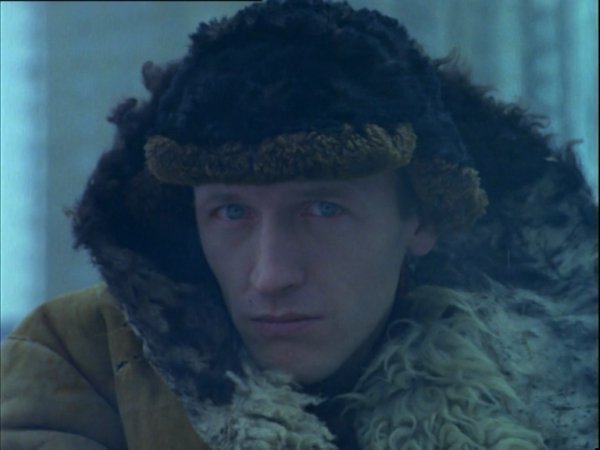
The camera moves slowly across the surface of a frozen lake. On its bank, hunched in the snow, we find a young man warming himself against a fire. The man raises his head and then slowly turns to look directly at us, wearing an expression that is hard to read; it could be a look of curiosity, perhaps, or one of reproach. The camera then cuts to another location, where a woman cries as she watches silent footage of a smiling child on television, before it brings us back to the young man who appears to be wiping a tear from his eye.

This is the opening scene from Krzysztof Kieslowski’s Dekalog, a ten-part miniseries the director made in Poland in 1988. The young man, played by Artur Barciś, appears in eight of the ten episodes, always in a slightly different guise and always observing the drama as it plays out but never intervening, like an omnipotent angel of fate. As Dekalog progresses, we might expect some clarification on this character’s true identity, but Kieslowski was not a man who liked to provide answers.
Continue reading Perfect 10

At the Mountains of the Night Garden

Mr Moth discusses CBeebies and the rational adult

We do step on bugs, really
MrMoth, third from right, goes for a nature walk

I am still on the island. Days pass, I have no idea how many, and they all seem the same. Every day brings fresh  madness, every day is my worst day ever, every day brings me closer to the source of that infernal music. The music! It haunts my sleep. I cannot dream.

When I became a father in May 2009, I thought I was at least slightly prepared for it. Like every parent before me, I found out very quickly that I was not. It’s not just the sleepless nights (not as bad as you’d think), or the dirty nappies (only sometimes as bad you’d think), or the endless worry (worse than you can imagine), it’s the time. There’s so much of it, and your child expects you to fill it for them. Hello, little creature. What do you want? Everything? Oh. Can I read you a book? Shall we play with these toys? Shall we sing songs? Oh god, I’m exhausted. More books? More toys? More songs? Can’t I just sit for … more books! More toys! More songs! Enough! I love you, but enough! Continue reading At the Mountains of the Night Garden

Death, where is thy sting?

Thomas Pratchett is neither scared nor excited by Torchwood.

The pain! The pain!

“I’m sick of Torchwood acting like amateur clowns!” – Rex Matheson

 So, once again the Torchwood juggernaut… hmm, too strong a word. The Torchwood pick-up truck? Smart car? No, definitely not smart. Let’s say the Torchwood clownmobile – because the Extra-Terrestrial Intervention Community’s most stupid and bungling group are back, and it’s been a bigger and more global shambles than ever before.

After two series of discrete episodes with only a loose overall arc, Torchwood changed course for its third series, 2009’s Children of Earth, telling a single story in five hour-long episodes over five consecutive nights. Torchwood had become proper event television, at least in its own mind. With the fourth series, Miracle Day, this self-conscious sense of being event TV has been amped up even further, and with it the level of self-delusion. Ten episodes, over ten weeks, telling the same story. Wasn’t there a risk of the plot not being thick enough to cover that many hours? As it turns out, it was more than a risk. Continue reading Death, where is thy sting?

Kill BBC4

By Niall Anderson

Do you remember the furore when BBC Knowledge was axed? Were you part of the protest?

Here was a channel dedicated to the purest Reithian ideal. It had science documentaries, serious arts coverage, challenging first-run drama and comedy. It ran twenty-four hours a day. It had recognisable anchors and presenters. Now its budget and personnel were going to be slashed by two-thirds.

Its replacement would be a mere eight hours of programming every night. Most of that would be repeats and imports. BBC Knowledge had won a small but committed audience that was growing month by month. It was surely too soon to pull the plug.

This was 2002. Continue reading Kill BBC4

Friends Like These . . .

In the second of an occasional series of what is basically an angry man baying at the moon, Caulorlime, the foul-mouthed English teacher, turns his attention to television advertising.

My wife once bought me a Fawcett Society “This is what a feminist looks like” T-shirt. It doesn’t fit any more, which is good as I have reached, and passed, the age where writing across your flabby man tits is not acceptable, no matter how ideologically sound the message. However, I stand by the sentiment. It is partly in this guise as PC Brigadier and partly as an old man that shouts at the television that I have come to a new, and depressing, realisation.

Adverts hate us all. We know this. They hate all races, socio-economic classes, ages, sexualities and genders. They hate Londoners. They hate the Welsh. They probably hate kittens. There isn’t a single stratum of society that the advertising industry doesn’t vomit contempt over. But they really hate women.

This might seem an odd proposition in 2011, after all, adverts really hate men, don’t they? Men are the ones portrayed as selfish, child-like appurtenances who, on their best day, serve only to irritate and hinder their female masters, right? It’s men who are shown misunderstanding vitamin supplements; men who are weak and hypochondriac; men who, even when the advert wishes to appeal to them, are portrayed as cock-led sex pests. The advert a year or so ago (for some shit, I can’t remember what) that had the tagline “So simple even a man could use it” would never have been screened had the gender been reversed.* Right? Right, but file all this under “Adverts Hate Us All.” Yes, men are portrayed as arseholes, but if you want to see really sinister stuff have a look at the way women are portrayed in ads. Continue reading Friends Like These . . .