Category Archives: Asian Cinema

#KeepAsianCinemaInUKCinemas

by Spank the Monkey

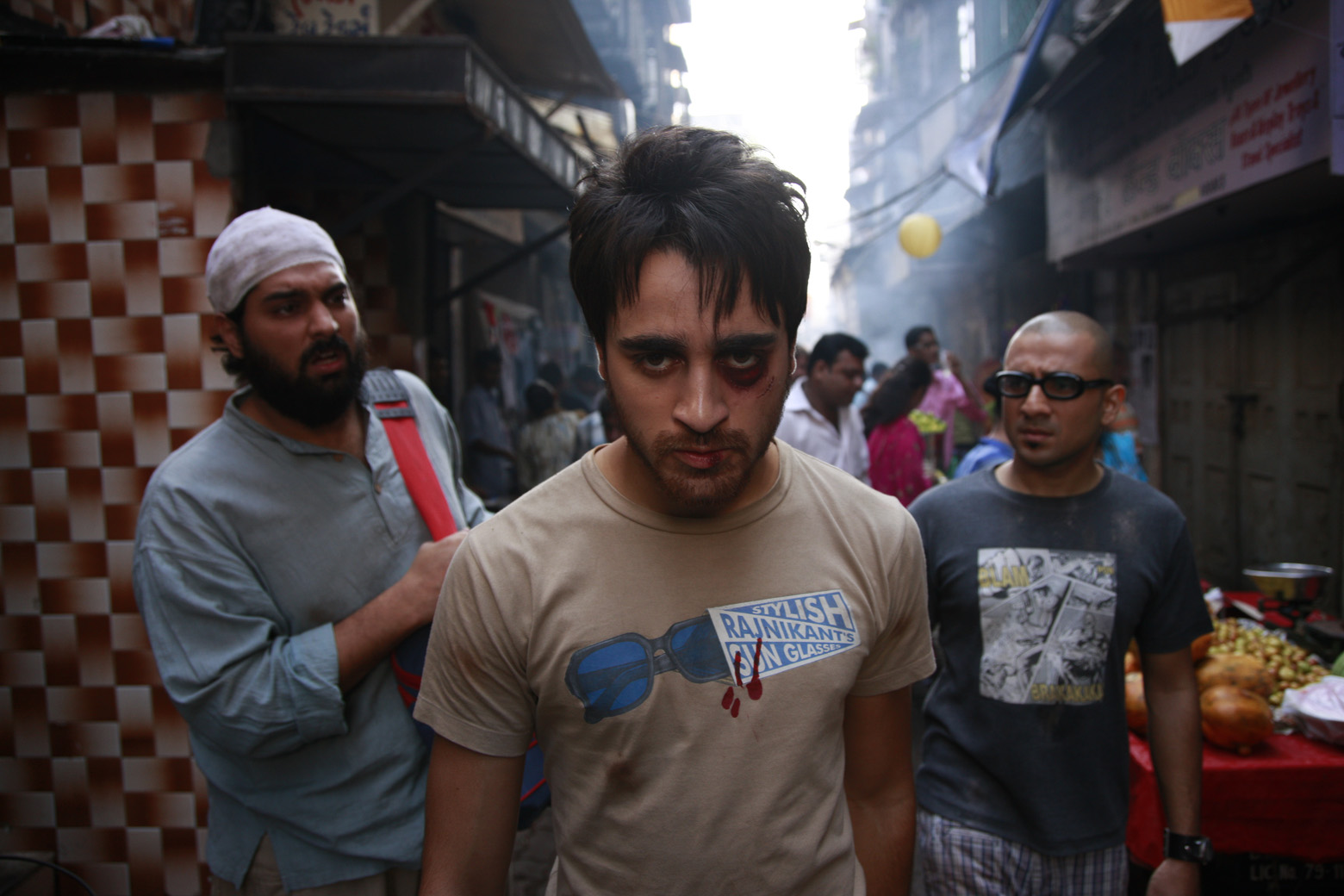
Himizu

Last month in London, the HK15 Film Festival provided a rare opportunity to see old and new Hong Kong movies on the big screen. It was organised by the people behind the Terracotta Far East Film Festival, which I’ve previously covered for this site. At the Closing Gala, festival boss Joey Leung insisted that the profile of Asian cinema needed raising in this country. To that end, he gave the audience a Twitter hashtag to use: #KeepAsianCinemaInUKCinemas.

There are a few problems with that. Firstly, it’s a hashtag that could easily be misremembered in a variety of ways, which reduces its effectiveness as an indexing tool. Secondly, at 27 characters it takes up around one-fifth of the maximum length of a tweet, and doesn’t leave much room for anything else. But even if we ignore those concerns, it’s possible that what we’re dealing with is too big for a mere hashtag. Continue reading #KeepAsianCinemaInUKCinemas

London Indian Film Festival 2012

Indy Datta reviews of some of the highlights of the festival’s third year

Opening Night Film – Gangs of Wasseypur Part 1 (Anurag Kashyap, 2012)

Anurg Kashyap’s That Girl in Yellow Boots was by some way the most accomplished film I saw at last year’s festival, and after Gangs of Wasseypur played in the Director’s Fortnight at Cannes earlier this year, I was hopeful that it would show up at this year’s LIFF.  Frustratingly, what we got was just the first half of the 5-hour film, and with no news as yet of British distribution, I have no idea when, if ever, I’ll see the second half. This isn’t one of those complaints about small portions of terrible food; Gangs of Wasseypur is bold and ballsy film making that delivers and delivers and delivers.

Continue reading London Indian Film Festival 2012

Monoglot Movie Club: Japanese Screens

Part of an occasional series in which Spank The Monkey travels to foreign countries, watches films in unfamiliar languages, and then complains about not understanding them

Hello Kitty Sadako. Yes, it’s an actual thing.

I’m full of Asahi in a Tokyo restaurant, and I’m drunkenly attempting to explain the concept of Monoglot Movie Club to one of The Belated Birthday Girl’s Japanese mates. If Miki is pretending to be interested, she’s doing it incredibly well, to the extent that she asks me a question I’ve never been asked before: “If you don’t understand the language, how do you choose which films to see?”

Regular readers will know that most of the time, that isn’t a problem. In the last few countries I’ve visited, it’s actually been a struggle to find one or two local films to watch. Japan, however, is another story. Their film industry is as busy as ever, although you’ll find many people – myself included – are concerned at just how much of their production slate is taken up with remakes, adaptations and sequels. During the two weeks I spent there on holiday, there were over a dozen Japanese films in cinemas vying for a spot in this article. And really, the procedure’s the same as it would be back home: start with the trailer.

Continue reading Monoglot Movie Club: Japanese Screens

Monoglot Movie Club: LOLs of Arabia

Part of an occasional series in which Spank The Monkey travels to foreign countries, watches films in unfamiliar languages, and then complains about not understanding them

Some countries make this job easy. When I’m travelling, I usually have to rely on a combination of Google Movies and individual cinema websites to get a decent idea of what local films are playing. Time Out Abu Dhabi, however, does all the work for you: its film listings allow for filtering by cinema, genre and language. So all I need to do is ask the site to show me the places and times where Arabic language films are being shown, and I’m home and dry.

Unfortunately, that’s where they stop making this job easy.

Continue reading Monoglot Movie Club: LOLs of Arabia

Terracottadammerung 2012

by Spank The Monkey

Mostly Film’s coverage of the 2011 Terracotta Far East Film Festival contained more than its fair share of drama. Aside from the concentrated dose of Asian cinema that Joey Leung and his programming team reliably deliver, there was also the element of jeopardy which came out of my watching 11 movies in 50 hours, immediately after a transatlantic long haul flight. Still, I stayed awake. Unless I didn’t and dreamed all those films I wrote about, of course.

No such issues for the 2012 festival: I’ve rearranged my work schedule so that I’m not going to miss any of the films this year. However, there’s a downside to that: I’m not going to miss any of the films this year. Between Thursday night and Sunday night, I’m now committed to sixteen movies, several masterclasses and a party. What the hell was I thinking? I’ll barely have time to finish this introduction before I

Continue reading Terracottadammerung 2012

The Front Line

by Caulorlime

The Korean War is an historical obscenity so absurd that it feels like it was created for propaganda purposes. We are, in the west, well used to the hideous idea of people dying in the First World War right up to 11 o-clock on the eleventh of November, and the utter pointlessness of those deaths. In the Korean war (or as the Koreans call it, the war)* the same thing occurred, only the truce talks went on for two years after the fundamental desire for ceasefire was agreed, with the added piquancy that the fighting that occurred in the last few months and weeks was actually the most vicious, the most deadly of the entire conflict. Areas devoid of mineral richness or any natural strategic importance, hills too steep for farming and too bleak for settlement, became the focus of horrific and sustained fighting. Some small and pointless territories changed hands over 30 times in 18 months at the cost of countless Korean lives, as well as a significant number of Chinese, American and other troops. The perceived importance of these areas was due to their proximity to the 38th parallel, an entirely arbitrary line drawn at the end of WWII partitioning the country into North and South Korea, and sparking the inevitable war. In 1953, as the interminable armistice talks dragged on, these hills became a flash point merely because the owners of a hill could move the arbitrary border to the other side, gaining about three kilometers of extra territory. Thousands of people were killed and maimed fighting over them. The damn things are in the demilitarised zone now, and no one owns them.

Continue reading The Front Line

Whose Film Is It Anyway?


by Spank The Monkey

 As far as I’m concerned, it was my pal The Belated Birthday Girl who spotted it first. In 2008 she spent three months in Japan studying the language, and while she was there she got in some additional practice by seeing a Japanese film at the cinema every week. (Yeah, it’s kind of a thing in our household.) When she looked back at the movies she’d seen, she noticed that almost every Japanese film on release was a remake, or an adaptation from another source, or a spinoff from a TV show. There were very few original stories out there that had been written specifically for the screen. Continue reading Whose Film Is It Anyway?

Comin’ At Ya! (A Brief History Of Sex & Zen)

by Spank The Monkey


The stars and directors of Hong Kong cinema used to have a huge worldwide following, back in the day. But that day was probably prior to July 1st 1997. The return of the territory to Chinese control resulted in a cinematic brain drain, which would ultimately lead to Jet Li getting third billing and heaps of racist abuse in The Expendables. Meanwhile, those filmmakers who were left back in Hong Kong found themselves at a bit of a loss. Apart from the odd surprise like the Infernal Affairs series, very little of their work makes much of an impression outside Asia.

But in Spring 2011, a film came out whose performance was spectacular enough to make global headlines: a 3D production whose opening weekend effortlessly outgrossed that of Avatar. How did it do that? Well, a title like 3D Sex & Zen: Extreme Ecstasy definitely helps. The film had a reasonably solid theatrical run worldwide, including here in the UK, where it’s just been released on DVD in smudgy red/blue 3D. Western viewers may not realise, though, that this is merely the most recent entry in a Hong Kong movie franchise that’s been running for two decades now. In Asia, they’ve been wildly popular and successful: but here, the Sex & Zen movies are barely known outside of a small audience of grimly masturbating fanboys.

Um, hello.

Continue reading Comin’ At Ya! (A Brief History Of Sex & Zen)

Undiscovered Country: the Films of Edward Yang

by Philip Concannon

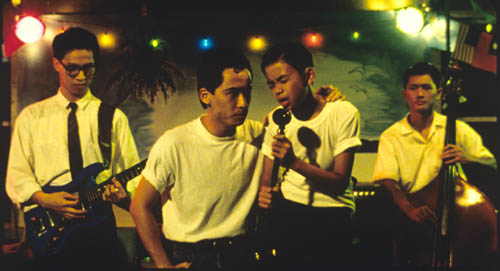
A Brighter Summer Day

When Edward Yang died in 2007, I didn’t feel the sense of loss that I often feel when a notable filmmaker passes. At the time, I had only seen Yang’s last film Yi Yi, and as much as I adored that picture, I had no idea that it was merely the tip of the iceberg. I had no idea that we were losing in Edward Yang one of the most remarkable directors of his generation, and I wasn’t the only one unaware of the richness of Yang’s oeuvre either, because aside from his internationally acclaimed Yi Yi, the director’s films are largely unavailable for viewers in Europe and America. Prints and DVDs remain intractably bound up in complex rights issues, with the funding of some Taiwanese films by the country’s gangsters complicating the matter further. Few would quibble with Yang’s status as a great filmmaker, if only they were given the opportunity to see his body of work in its entirety.

Continue reading Undiscovered Country: the Films of Edward Yang

London Indian Film Festival 2011

by Indy Datta

Although it has always been wrong to characterise Indian film as a monoculture, the western perception that there’s nothing more to it than Bollywood and Satyajit Ray is understandable. Although there are regional film industries, most notably working in the Kannada, Tamil and Bengali languages, few arthouse filmmakers from the “parallel cinema” tradition have broken through to international acclaim. Other than the work of Ray, Indian art film has not been widely released on home video in the West. And while India’s commercial cinema has historically been competitive with Hollywood in the developing world, it’s never been more than a niche concern in the West.

But as India changes, consciously growing into its role as one of the economic powers of the coming century, Indian film is changing. As the population becomes more urban, as the censorship regime progressively relaxes (although it remains capricious, and there is still the rather archaic presumption enshrined in the law that film needs to be more strongly censored than other art forms, for the good of the populace), as multiplexes replace the grand picture palaces where masala classics like Sholay and Naseeb played to audiences of over a thousand (rickshaw-wallahs and doctors in the same theatre), as satellite TV and the internet massively increase the exposure of Indians to everything from Harry Potter to pornography, the increasing diversity, frankness and boldness of Indian films reflects the increasingly fractured and unpredictable experience of modern India.
Continue reading London Indian Film Festival 2011