All posts by Indy Datta

Unknown's avatar

About Indy Datta

Indy's opinions are not those of his employer, your mum, or Sir Van Morrison.

London Film Festival 2011 – Day 1

by Indy Datta

The festival opener, Fernando Mereilles’ 360 – a reimagining of La Ronde written by Peter Morgan and starring an embarrassment of top global thesping talent (Eminem and Jude Law, together at last! Or cosmically connected at last, or something) is digitally unspooling to the first night audience right about now (I’m writing this the evening before publication).

We should be bringing you a review of 360 in the next few days, along with reviews of other films playing in the first days of the festival. In addition, you can follow our Twitter feed for our instant reactions to films and retweets of other writers’ reactions throughout the festival. In additional addition, we’re still on the lookout for people to send in their own reviews, as previously noted. And in addition to that, why not join in in our comments section? You know you want to.

Continue reading London Film Festival 2011 – Day 1

Raindance Film Festival 2011

By Indy Datta

Up front, an apology for the films, I didn’t see at this year’s Raindance Film Festival, whether because I couldn’t get in to the screening, because I got the time of the screening wrong by two hours, because I got stuck at the office, or because Westminster City Council decided at the last minute that that freaky Cuban movie would warp my fragile little mind. It takes, you might argue, some kind of special incompetence to spend the bulk of one’s spare time at a film festival for a week and yet not see a single one of the festival prize winners, but this is the hand I have to play.

With that out of the way, let’s get to the reviews, in the order I saw the films.

Continue reading Raindance Film Festival 2011

A Wax Museum With a Pulse

Indy Datta revisits Pulp Fiction

1.

In a clever postmodern/wanky touch, this post will be presented out of chronological order.

2.

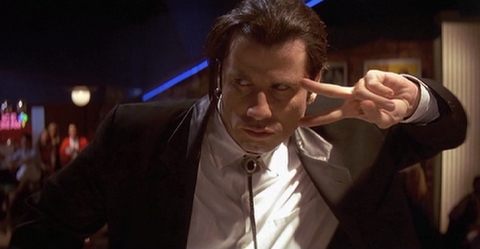
Recently, I attended a screening of Quentin Tarantino’s 1994 breakthrough movie at the Soho Square offices of the British Board of Film Classification. Before the film, Craig Lapper, senior examiner at the board, told us a little bit about the classification history of the film at the BBFC. In 1994, with the murder of James Bulger a recent memory, that old BBFC standby, “imitable behaviour” was a contentious issue in film censorship in Britain, due in large part to fabricated tabloid reports that Bulger’s killers had had their minds murderously warped by repeat viewings of Child’s Play 3 (as quaint and faintly hilarious as that sounds now). Although the film had been passed uncut for theatrical exhibition, when it came to home video, one particular shot particularly disturbed James Ferman, who was then the board’s director: the shot of a hypodermic needle piercing the skin of John Travolta’s smackhead hitman Vincent Vega. Ferman’s belief was that there were certain trigger images that had a quasi-hypnotic effect on drug users, causing them to lose control to their addiction, and that this was one of them. Accordingly, the shot was optically reframed so that home video viewers couldn’t see needle break skin.

Continue reading A Wax Museum With a Pulse

Citizen Clunge

Indy Datta puts The Inbetweeners Movie in context

Simon Bird remembers he has points on this movie

At the time of writing this piece, just before another Orange Wednesday evening swells the coffers further, The Inbetweeners Movie has taken about 28 million pounds at the box office in its first two weeks on release, making it the most successful launch ever for a live-action comedy in the UK. This also puts it on course to outgross films, such as Transformers 3, that probably cost a hundred times as much to produce. Rigorous statistical analysis proves that these figures show that every teenager in the country has seen it twice, and that it probably stopped the August riots. Newspaper journalists can’t see something unusual without pronouncing it a new trend, so we’ve seen a breathless rush of speculation that the British film industry will “learn the wrong lessons” from the success of Inbetweeners and unleash upon us a baleful tide of unwanted adaptations of sitcoms and teen telly shows. This would at least mean that they could take next summer off from whining about the preponderance of sequels and comic book adaptations to instead complain that the multiplexes were being monopolized by the likes of My Family: the Movie, Misfits: the Movie and/or Roger & Val Have Just Got In: the Movie.

But how much of an outlier, really, is the success of Inbetweeners, viewed in the context of British comedy film?

Continue reading Citizen Clunge

The Last Policeman

Indy Datta ponders what The Guard means for Irish cinema

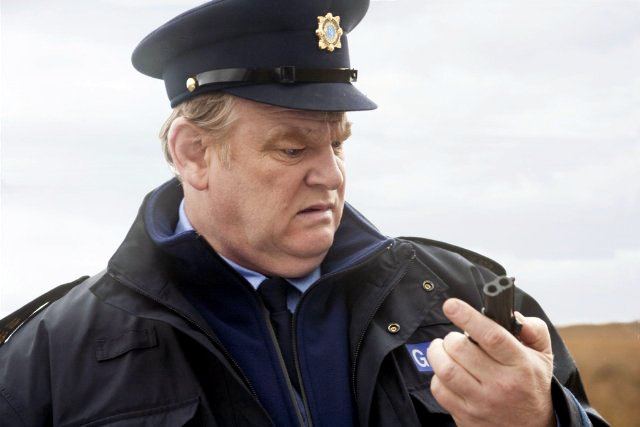
"You know what they say about a man with big hands. Big pockets." Brendan Gleeson in The Guard

Irish cinema is almost as old as the medium itself – the Lumière Cinematographe played in Dublin mere months after its Paris debut in 1896 – but viewed from the other side of the Irish sea, the history of Irish cinema has always seemed to be largely defined by Ireland’s complex relationship with Britain, and by its relationship (through its diaspora, and through the cultural power of Hollywood) with America and American film. That narrative, which is evidently partial in both senses, provides a consistent story stretching from the 1918 historical epic Knocknagow (cited as Ireland’s own Birth of a Nation and a significant box office success in America) to the Hollywood success of Neil Jordan.

John Michael McDonagh’s feature debut The Guard fits into this broad history. McDonagh is a Briton of Irish extraction, and his film – a verbally dextrous comedy thriller not tonally that different from his brother Martin’s In Bruges – is studded in stimulating ways with the slipstream detritus of American popular culture. This goes from the broadest strokes (the local lawman gets together with the slick big-city cop to run some bandits out of town) to the most peripheral details (an argument about just what Billie Joe and the girl were throwing off the Tallahatchie Bridge). But there’s another story to be told here. The Guard has grossed close to three million pounds at the Irish box office: a sum not far shy of what the latest Harry Potter instalment has racked up. And The Guard is not an isolated case. It only this week surpassed the Irish box office tally for In Bruges, and has some way to go to catch the cumulative gross of Ken Loach’s The Wind That Shakes the Barley.

So The Guard is off to a good start commercially, which is more than can be said for the film itself.
Continue reading The Last Policeman

London Indian Film Festival 2011

by Indy Datta

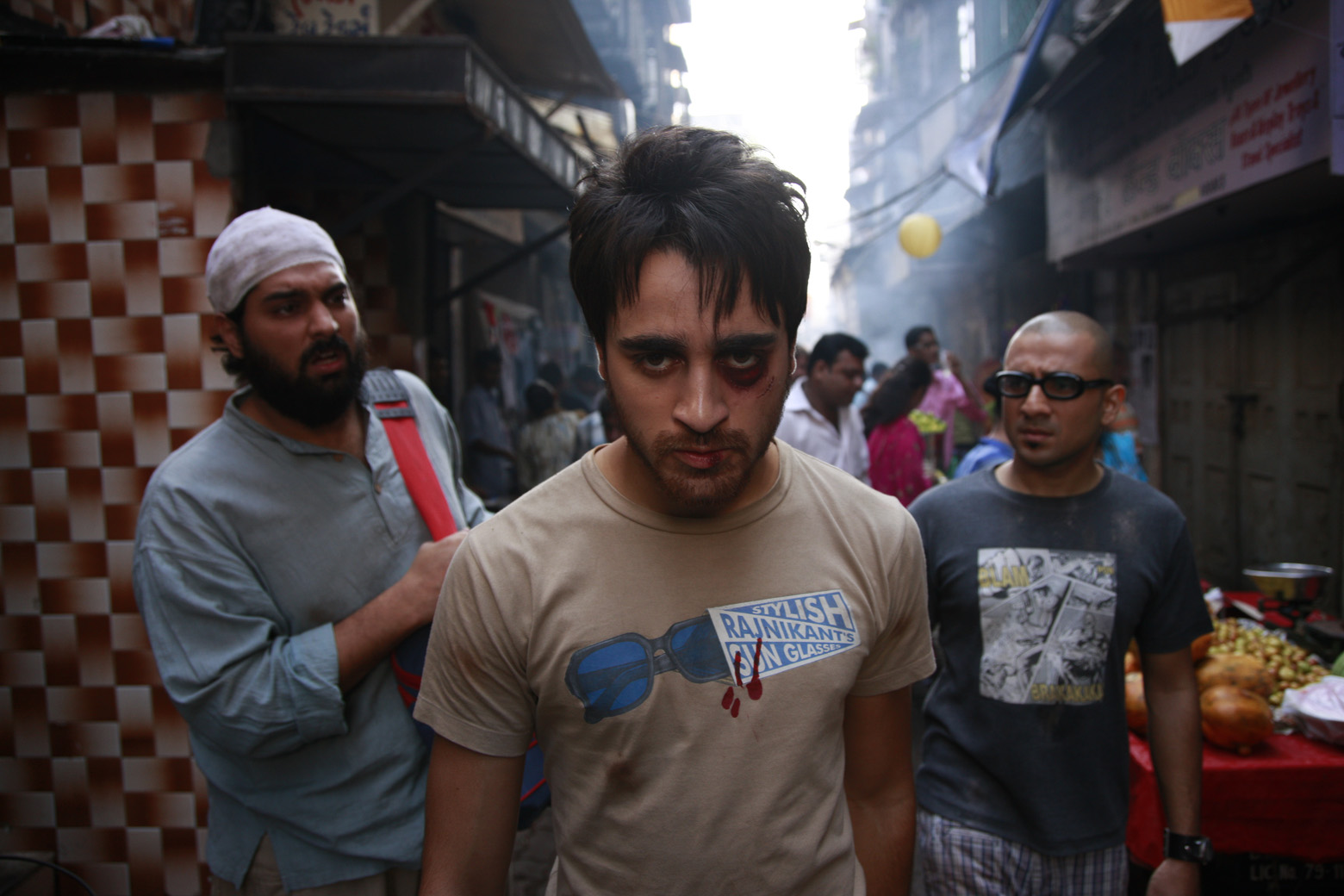
Although it has always been wrong to characterise Indian film as a monoculture, the western perception that there’s nothing more to it than Bollywood and Satyajit Ray is understandable. Although there are regional film industries, most notably working in the Kannada, Tamil and Bengali languages, few arthouse filmmakers from the “parallel cinema” tradition have broken through to international acclaim. Other than the work of Ray, Indian art film has not been widely released on home video in the West. And while India’s commercial cinema has historically been competitive with Hollywood in the developing world, it’s never been more than a niche concern in the West.

But as India changes, consciously growing into its role as one of the economic powers of the coming century, Indian film is changing. As the population becomes more urban, as the censorship regime progressively relaxes (although it remains capricious, and there is still the rather archaic presumption enshrined in the law that film needs to be more strongly censored than other art forms, for the good of the populace), as multiplexes replace the grand picture palaces where masala classics like Sholay and Naseeb played to audiences of over a thousand (rickshaw-wallahs and doctors in the same theatre), as satellite TV and the internet massively increase the exposure of Indians to everything from Harry Potter to pornography, the increasing diversity, frankness and boldness of Indian films reflects the increasingly fractured and unpredictable experience of modern India.
Continue reading London Indian Film Festival 2011

The Tree of Life

BY INDY DATTA

Jessica Chastain in the Tree of Life. Also pictured: a panentheistic god

It’s not the most obvious reference point from which to start thinking about The Tree of Life and how it fits into Terrence Malick’s filmography, but I keep coming back to what John Peel said about The Fall: always different, always the same. Malick has worked in the same distinctive mode at least since 1978’s Days of Heaven. He builds sequences from fragmentary and extended moments rather than from dramatically discrete scenes. He forages for indelible images in the margins of his setups, turning the restless eye of the steadicam into a participant in the story. More and more, he prefers non-expository voiceover to dialogue. He has returned to similar themes repeatedly throughout his career, but the specific narrative strategy of each film is distinct. He is always different, always the same. Continue reading The Tree of Life

Mostly Links – 24 June 2011

by Indy Datta

It’s not like I don’t remember how insanely duff John Lasseter’s original Cars was. It’s not like I have no sympathy for all my friends who’ve had kids in the years since it came out and have had to contend with its surprise emergence as the Mouse’s irresistible merchandising juggernaut. But its just such a nice change for the release of a Pixar movie (Cars 2, out in the US this week)  not to come accompanied by the usual wave of idiotic hyperbole (“When those toys were getting sucked  into the incinerator, I thought, could Pixar actually do this to us? This is the most death-confronting sneakily adult masterpiece since Schindler’s List! I would have cried but after Wall*E I have no tears left.”). So I’m kind of rooting for it here, it’s an underdog thing. Although it’s presumably going to get murdered at the box office next week by Transformers 3, the trailer for which, I am slightly ashamed to admit, is possibly the most exciting thing I have seen since, in fact, I first opened my eyes.

Continue reading Mostly Links – 24 June 2011

Mostly Links – 17 June 2011

by Indy Datta

Even as we speak, Mostly Film’s roving reviewers Matthew Turner and Uncle Frank (not, as far as I know, Matthew’s actual Uncle Frank) are subjecting themselves to a punishing screening, partying, and Nando’s eating schedule that will ensure that our forthcoming coverage of the Edinburgh International Film Festival 2011 will be second to none available on the world wide web.

Continue reading Mostly Links – 17 June 2011