Category Archives: Classic Films

Citizen Clunge

Indy Datta puts The Inbetweeners Movie in context

Simon Bird remembers he has points on this movie

At the time of writing this piece, just before another Orange Wednesday evening swells the coffers further, The Inbetweeners Movie has taken about 28 million pounds at the box office in its first two weeks on release, making it the most successful launch ever for a live-action comedy in the UK. This also puts it on course to outgross films, such as Transformers 3, that probably cost a hundred times as much to produce. Rigorous statistical analysis proves that these figures show that every teenager in the country has seen it twice, and that it probably stopped the August riots. Newspaper journalists can’t see something unusual without pronouncing it a new trend, so we’ve seen a breathless rush of speculation that the British film industry will “learn the wrong lessons” from the success of Inbetweeners and unleash upon us a baleful tide of unwanted adaptations of sitcoms and teen telly shows. This would at least mean that they could take next summer off from whining about the preponderance of sequels and comic book adaptations to instead complain that the multiplexes were being monopolized by the likes of My Family: the Movie, Misfits: the Movie and/or Roger & Val Have Just Got In: the Movie.

But how much of an outlier, really, is the success of Inbetweeners, viewed in the context of British comedy film?

Continue reading Citizen Clunge

Cult Australian Cinema

Fred Schepisi’s forthcoming The Eye of The Storm

September sees the release of The Eye of the Storm, directed by Fred Schepisi and based on the novel by Patrick White. It’s Schepisi’s first film in eight years (not including the award-winning HBO mini-series Empire Falls), and his first film made in Australia since A Cry in the Dark in 1988. MarvMarsh takes a look back at one of his best films, while other MostlyFilm contributors choose some of their own favourite Australian films. Sadly, The Crocodile Hunter: Collision Course didn’t make the cut. Continue reading Cult Australian Cinema

Shake Your Money Maker

MarvMarsh looks at the history of big finance on screen

Gordon was very happy with his 'free calls on the beach at sunset' plan

Gordon Gekko; Larry the Liquidator; the Duke brothers. They may sound like professional wrestlers but what they actually are is nothing like as honest and noble. They are cinema’s money men. The people at the top of the writhing pile of maggots that is the financial industry. It is not an industry that Hollywood understands, or if it does then that does not translate into a willingness to portray it accurately. A few broad strokes give us a man on the edge, betting the firm in a desperate attempt to save his drink-soaked skin; a few more give us his boss, who spends his days in his gigantic office or the back of his limousine, drinking whiskey and handing out lessons on what life is really like. A final few more gives us the young Turk who realises something is badly wrong and saves his soul by bringing down the firm and walking away. And that, pretty much, is the financial industry on film.

Given that we now live in a post-apocalyptic landscape after our dreams were all laid to waste by the feckless actions of some greedy banker scum, or so the story goes, perhaps that is all the financial industry really deserves. Films have a difficult relationship with work as it is, so to accurately and interestingly cover the work of people it is going to be hard to portray as human, let alone sympathetic, is a big ask. Also, is there really an audience for a film about an individual diligently carving out a good reputation for himself in the Compliance department of an international bank? Perhaps, but I wouldn’t want to be the one pitching it. Actually, of course I would because what if it sold? I’d be a millionaire! But it wouldn’t. I can’t even get that to fly in my dreams.

Here’s an idea for an exciting scene in a film, Producer Guy. Continue reading Shake Your Money Maker

The Passion of the Kinski

Philip Concannon

Just good friends: Werner Herzog and Klaus Kinski

The title of Klaus Kinski’s memoir is Kinski Uncut, but that’s not strictly accurate. When the actor first attempted to publish his autobiography in 1988, under the title All I Need is Love, a lawsuit from Marlene Dietrich (who had taken offence to his depiction of her as a lesbian) ensured the book was withdrawn from circulation until after her death. Since then, each subsequent edition of the book has carefully removed the names of anyone still living who may be feeling similarly litigious, so what we have here is not exactly the complete recollections of Klaus Kinski as the author intended. Nevertheless, it still feels like a pure, concentrated dose of Kinski; as if the actor’s brain spilled out onto the page and he left it there without making any attempt to organise his thoughts or check his darker impulses. Perhaps Kinski Unfiltered or Kinski Unhinged would have been more appropriate titles.

But is it Kinski Untrue? I don’t doubt that many of the events in the book took place in Kinski’s life, but the author’s hyperbolic description of them often gives us reason to doubt the veracity of what we’re reading. Everything in Kinski Uncut is extreme – his suffering is more intense than most ordinary souls could bear, his acting performances are received with either angry derision or tears and standing ovations, his sexual encounters (of which there were many) are all epic and orgasmic. When he talks about his childhood, he describes a period of Dickensian squalor, where he suffered permanently from starvation and frostbite and learned to steal in order to survive. Everything in the book seems designed to reinforce the idea that Kinski’s life was more dramatic, outrageous and depraved than that of any mere mortal who might be reading his story; that he is a tortured genius who has suffered nobly among the “idiots” and “riffraff” who make up the rest of the population. This is Klaus Kinski’s world, and the rest of us are just living in it. Continue reading The Passion of the Kinski

Scala Forever*

*(well, 1985-1993)

Spank The Monkey introduces the Scala Forever season by looking back at the history of one of London’s most-beloved fleapits

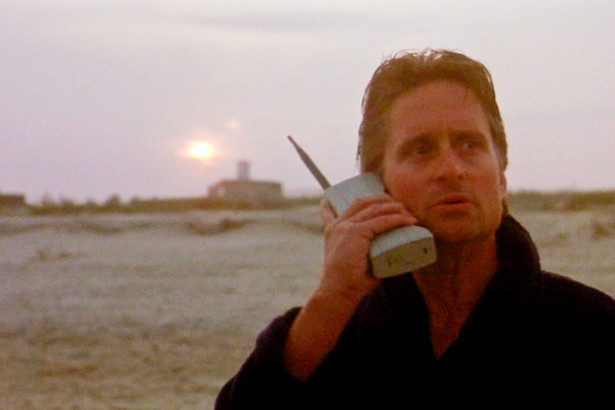
Trust me, this is one picture you really need to click on to enlarge

Screw Proust and his madeleines: that picture there takes me back a quarter of a century, and it doesn’t require a tea chaser in order to do it. Twenty-five years ago, I virtually lived at the Scala cinema in King’s Cross, and eagerly awaited the monthly arrival of a programme flyer very much like the one shown above.

The Scala was possibly the greatest of London’s repertory houses, back in the days when the capital had around a dozen of them. As the London-wide festival Scala Forever commemorates the opening of the cinema thirty years ago, I’ve been looking back fondly at the time I spent there watching all the underground greats. Russ Meyer. John Waters. Herschell Gordon Lewis. Jörg Buttgereit. Tsui Hark.

So it annoys me a little to be reminded that the first film I saw there was Garry Marshall’s The Flamingo Kid. Continue reading Scala Forever*

CAMERA OBSCURER: The Return of the Mostly Film Book Club

By Niall Anderson

Christian Bale in Empire of the Sun, filmed at Shepperton Studios

“Next time you see a Spitfire in a museum, run your fingers over its skin… you might be touching a vanished masterpiece.”

When producer Cecil Hepworth went bankrupt in 1924, his entire stock of film negatives was melted down and turned into waterproof resin for military aircraft. Many of these negatives were unique, and some 80% of all British films from 1901 to 1929 were lost forever as a result. Shepperton Babylon: The Lost Worlds of British Cinema is Matthew Sweet’s attempt to reconstruct this forgotten history, and the other forgotten histories of British cinema: the artistic, industrial and folkloric achievements that always seem to get overshadowed by those in Hollywood. Continue reading CAMERA OBSCURER: The Return of the Mostly Film Book Club

Looking Back into Darkness: Claude Lanzmann’s Shoah

By Philip Concannon

Mordechai Podchlebnik, one of the two known survivors of Chelmno-Schlosslager

Simon Srebnik should have died in 1945. As a teenager, Srebnik was a prisoner at the Chelmno extermination camp, where he managed to stay alive thanks to his agility and melodious singing voice, both of which pleased the SS guards. Two days before the Soviet troops arrived, the guards began killing all of the remaining Jews at the camp, shooting each in the head at close range. Incredibly, Srebnik survived, later regaining consciousness in the now-abandoned camp, surrounded by dead bodies. It is a miracle that he was still with us almost forty years later when Claude Lanzmann sought out stories for his epic documentary Shoah. He returned with Lanzmann to Chelmno, now a tranquil spot bearing no evidence of the horrors that once took place there. We only have the memories of people like Simon Srebnik to make us understand what it was like to be a Jew in this particular time and place, and to bear witness to unimaginable atrocities on a day-to-day basis.

For 9½ hours, Shoah presents these memories to us. Lanzmann spent more than a decade tracking down and interviewing people who had been involved in the Holocaust in some way – victims, perpetrators, witnesses – compiling over 350 hours of footage that he subsequently edited into one 567-minute monument to those who died as part of the Nazis’ “final solution.” Watching the whole film in one day, as I did recently, is an extraordinary, singular experience. Taking breaks and a lengthy Lanzmann Q&A into account (during the latter, Lanzmann coped well with the unbelievable crassness of a question comparing Holocaust deniers with climate change deniers), the event lasted for almost 12 hours and I have never been left feeling so exhausted – physically and emotionally – by a single film. Shoah is a torrent of words, and those words conjure images capable of breaking the heart many times over. Continue reading Looking Back into Darkness: Claude Lanzmann’s Shoah

Mostly Minor Characters

Mostly Film writers pause and reflect on the blink-and-you’ll-miss em parts that make the film work.

Kronsteen – From Russia With Love.

By Paul Duane

“Congratulations, sir. A brilliant coup.”

In a vast hall, a creepy, languid character resembling Ren the cartoon chihuahua plays chess against somebody who seems to be called Canada MacAdams. Kronsteen has only one word of dialogue here – “Check” – but it’s impossible to look away from him. See him manipulate chesspiece and cigarette in one hand with movements that hint he’s skilled in horrible varieties of martial arts. Observe the way his mouth opens impossibly wide to receive the cigarette, as if he was a deep-sea fish that somehow, eerily, smokes. Watch the impossibly slow movement of his head, then his eyes, as they register the fact that some lackey has brought him an unrequested glass of water. See the thought form as if in a bubble of noxious gas above his head – “he will suffer before I allow him to die” – while his eyes slide to the glass. And now look – who in the history of drinking has ever drunk like that, holding up the little paper napkin that sits under the glass as he drinks? The next shot explains why, but there doesn’t need to be an explanation – this is just part of the ineffable creepiness of Kronsteen. He probably eats his mashed potatoes with one single black obsidian chopstick. Reading the message on the napkin, he mops his fishlips, then – without warning – that cigarette is back, perched, languid. How the FUCK did he do that? Never mind, soon he’ll be dead. Continue reading Mostly Minor Characters

The land of the Bolsheviks: early Soviet cinema at the BFI

BY JOSEPHINE GRAHL

Eisenstein's Fantasia: a scene from Ivan The Terrible Part I

How would you go about making film propaganda in support of a new, revolutionary state? The Russian revolution coincided with the rise of the cinema as mass entertainment, a cultural development which didn’t escape the attention of Lenin or the Soviet bureaucracy. In the 1920s, the Soviet film industry was state-sponsored and subject to state interference, its propaganda function for the new Soviet state accepted as a matter of course. But surprisingly, most of the films in the BFI’s Kino season of early Soviet films transcend the sort of didactic political preaching you might expect from that set-up. Continue reading The land of the Bolsheviks: early Soviet cinema at the BFI