Category Archives: History

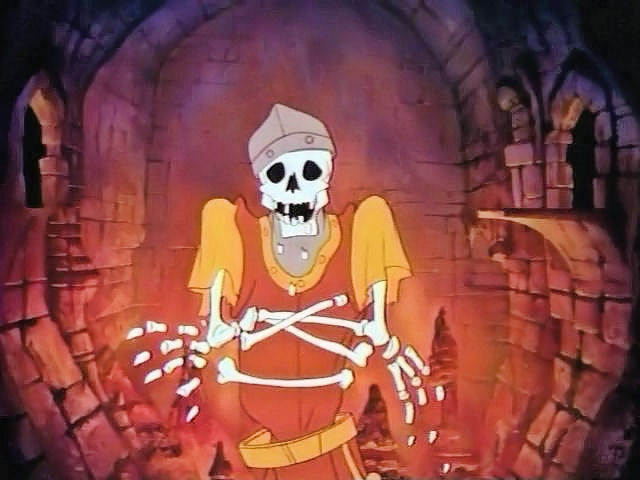
Continue/Quit?

by MrMoth

Let me start with a confession, and head off comment-based accusations at the pass: I have never completed a videogame on a difficulty setting higher than ‘Normal’, and even then the number that I have completed on higher than ‘Easy’ doesn’t exceed single digits. So, yes, I’m not that kind of player. I will, in all honesty, never be that kind of player. But let’s come back to that later.

First, as with my earlier article, I’d like to look at videogame history (from my point of view) and the evolution of hardness. I am, in gaming terms, a fairly old hand. The first electronic entertainment gadgeridoo in our house was a Pong ripoff by Grandstand, the Game 2000, back in the dawn of the 80s. It was pretty much the worst thing ever in terms of gameplay – one player hit the square ball, the other player hit the square ball, and so on until one player failed to hit the square ball, at which point the score increased. Imagine air hockey, but without the risk of a broken finger* adding that frisson of danger. But this was the Dark Ages, before the advent of real home gaming, and it seemed like some crazy electric dream. Was it difficult? Impossible to say. Is tennis difficult?
Continue reading Continue/Quit?

Time and Patience

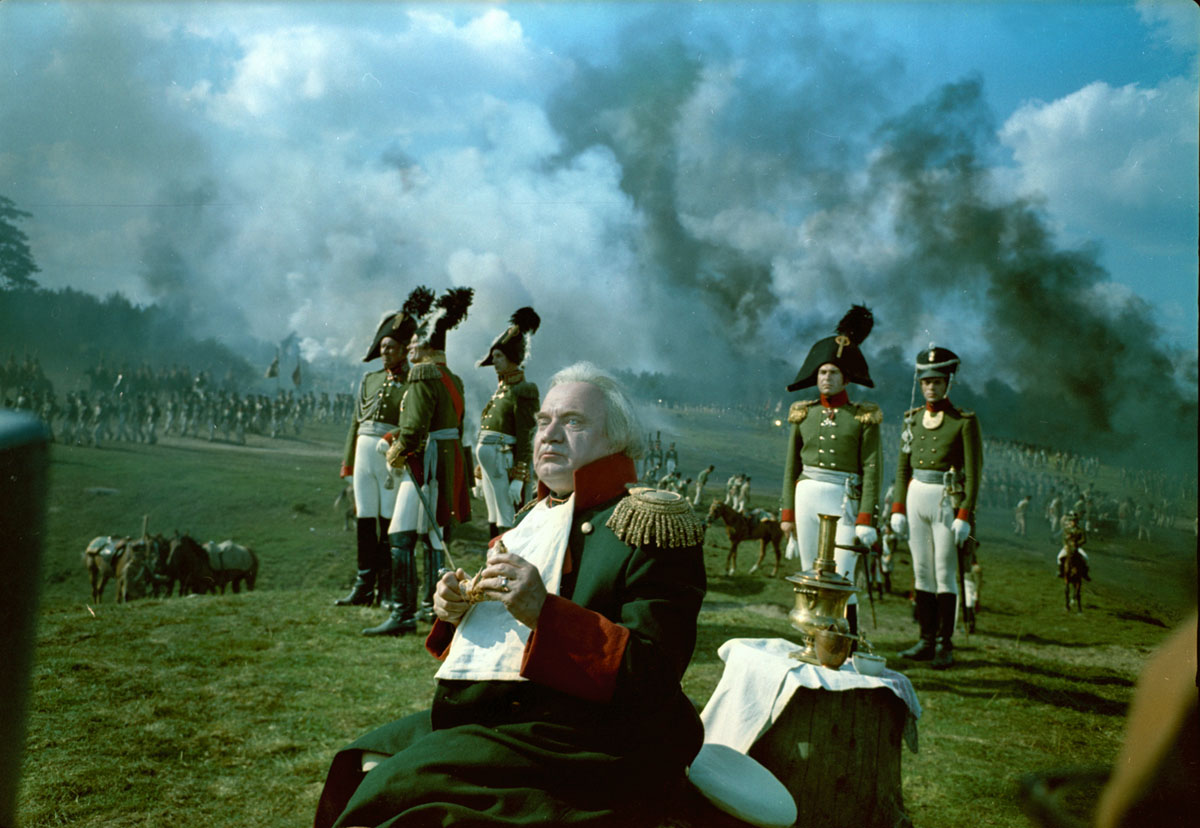
Niall Anderson looks at Sergei Bondarchuk’s epic 1967 recreation of War and Peace, which is showing at London’s Renoir cinema on 7 October at 10am.

War!

Like the novel it adapts, the single most extraordinary thing about Sergei Bondarchuk’s War and Peace is that anybody had the nerve, skill and patience to bring it off. Granted, Bondarchuk had a technically unlimited budget and the full coercive weight of the Soviet Ministry of Culture behind him (he could, and did, call in 15,000 mounted cavalry to restage the Battle of Borodino), but the politics of the film’s production don’t get close to explaining the surreal attention to detail of the resulting film – nor the fervour with which it tries to animate even the smallest of Tolstoy’s fancies.

Take, for instance, the bear. Readers of the novel will recall that one strand of the plot begins with a policeman being strapped to the back of a bear and thrown into the Neva River as part of a bohemian jape. It would have been easy for the film to just refer to this incident in passing, or to do away with the bear altogether (surely a drenched copper proves the point, whatever he’s strapped to). This is not Bondarchuk’s way. Tolstoy wrote that there was a bear, so there must be a bear. And indeed there he is, unremarked at a dining table during a loud party: one extra among a hundred.

A scene like this could easily be dismissed as a stunt, or – maybe worse – as evidence of a slightly crazed literalism. But there are too many such stunts across the film’s seven-and-a-half hours for that word to carry the necessary weight, and the literalism comes to seem like a shrewd recognition that an epic is really just the magnification of the intimate. So it was in Tolstoy’s hands, anyway, and Bondarchuk seems to have realised that to compromise on the small details would have been to compromise the whole Tolstoyan vision – and his own. Continue reading Time and Patience

Back Issues

Spank the Monkey and Clio attempted to review the BFI’s new digital archive for Mostly Film. With mixed results…

An advert from the Winter 1972/3 edition of Sight and Sound.

Spank The Monkey:

I love Sight and Sound magazine, even though I hold it personally responsible for the mediocre 2.2 degree I attained at university. It’s true. Much of my final year at Manchester was spent in the campus library, desperately trying to undo the results of two previous years of hedonism largely based around the university’s excellent Film Society. But during a break in studies one day, I discovered that the library had bound volumes of Sight and Sound (and its companion review magazine, Monthly Film Bulletin) going back several decades. The study breaks got longer and longer after that, ultimately leading to the Desmond that blights my academic record to this day.

I had a massive Proustian rush when I recently visited the new library at BFI Southbank, and found those same bound volumes taking pride of place on its shelves. So imagine my delight when I discovered shortly afterwards that it was now possible to access every issue of S&S and MFB online, through the newly-created Sight & Sound Digital Archive. Well, that’s the theory, anyway.

Continue reading Back Issues

You’ll never guess what happened next

Niall Anderson pleads for people to lighten up about spoilers

Kirk responds badly to being spoiled for Friday Night Lights

The first recorded use of the term SPOILER ALERT is from 8 June 1982. It occurred in a Usenet film group (net.movies) and related to Star Trek II: The Wrath of Khan, which had been released the previous Friday. A group member called Hamilton from the University of Chicago employs the term as a warning to other users before speculating [SPOILER ALERT!] on whether Spock is genuinely dead or if he could be brought back for the sequel.

It feels strange to see a meme so fully formed a good twenty years before it hits the mainstream. But it’s all basically here, including the tendency of spoiler etiquette to skew towards cultish material. Look further in the Usenet archives and you’ll see the term being adopted as a simple matter of course and courtesy. A spoiler hierarchy also develops. Minor plot points are preceded by a throat-clearing SPOILER ALERT, while complex or major plot points tend to be translated into a substitution cypher like ROT13 (which replaces a letter with the one thirteen places after it in the alphabet). This way, you couldn’t be spoiled inadvertently.

It’s all nice and civilised, in other words, and it seems to have developed within Usenet without friction: that is to say from a commonsense recognition that not everybody who’s reading will have seen the film that you’ve seen, and would just like to know whether you thought it was good or not. The Usenet archive isn’t exhaustive or particularly easy to navigate, but of the 300 uses of the word “spoiler” I was able to find from the 1980s, none was preceded by a complaint, a tantrum, or a threat of excommunication from the community for apparently saying something too revealing. The anger and the aggression surrounding spoiler etiquette in the Net age simply aren’t there. I don’t often wish I was living in the past, but for this one topic I do.

Open a TV or film discussion thread on just about any online forum these days and the following things will happen. Someone will cry firsties, someone will call foul on the firstie, someone will propose an alternative firstie that makes an oblique jokey reference to something that happened in the thing under review. At which point someone else will appear threatening to kill you and your children if you even think of spoiling the plot. A dozen similar messages will appear at intervals until your scrollwheel goes elastic from the effort and your eyebrows knot themselves into a permanent V at the sheer bad-tempered entitledness of these people. The unintended consequence being that I now read more complaints about spoilers than I do actual spoilers. Continue reading You’ll never guess what happened next

Betting On Red

Niall Anderson looks at the loudness war in cinema

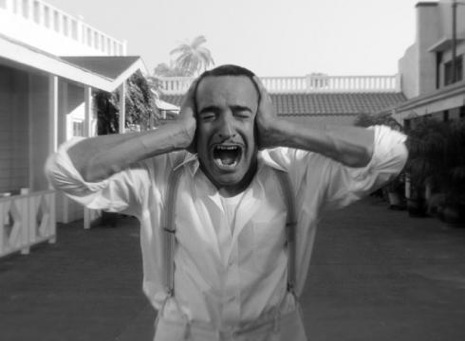
Noise annoys: Jean Dujardin has a terrible dream

A famous technical innovator, Stanley Kubrick was defiantly behind the curve in one regard. He always mixed the sound of his films in mono. His reasoning was simple: you can’t predict the sound environment of a movie theatre. You can’t predict the size of the room, the output or placement of the speakers, the number of channels in a theatre’s mixer or the competence of the projectionist. A complicated stereo mix would leave too much to chance. So just make sure the dialogue is audible, mix the whole shebang in mono, and get the film out there. It will sound pretty much as good in a suburban fleapit as it did on the sound stage.

This may seem like a mere technical consideration, but it has artistic consequences, the major one being that with only one audio track to play with, you have to think carefully about your approach to volume. Working in mono, you can’t have a sudden violent explosion in a viewer’s right ear while the rest of the soundtrack potters on at its usual level. Big surges in volume have to be carefully planned or the entire sound mix will be destabilised. The result being that the loud parts of Stanley Kubrick’s films are rarely objectively loud (in terms of decibels); they’re just loud in relation to the other bits. Mono means that you have to pay equal attention to the quiet stuff.

Of course, it’s entirely possible to achieve this kind of careful audio balance in stereo. Indeed, given the advances in sound recording and mixing afforded by digital technology, it should be easier now than ever. Digital sound recordings have a much wider frequency spectrum than analogue recordings, which means, first, that a larger range of sounds can be captured and reproduced, and, relatedly, that there is now less need to rely on sheer volume to distinguish between – for example – an explosion and dialogue. In addition, the technology gap between what a sound designer hears on the sound stage and what the moviegoer can expect to hear in the theatre has drastically narrowed since Kubrick’s heyday. Even the worst suburban fleapit now has Dolby Digital stereo sound, and even the most careless or high-handed sound designer will have this minimum standard in mind when mixing and mastering the sound for a film. For all these reasons, we should be living through a golden age of sound: crisper, cleaner and more dynamic than before. So why are people leaving IMAX screenings of The Dark Knight Rises, for instance, complaining both that the whole thing is too loud and that the dialogue is inaudible? Surely a purpose-built IMAX theatre is the perfect environment to see it? More generally: why hasn’t the golden age come to pass? Continue reading Betting On Red

Love games

by MrMoth

The height of sexual sophistication, circa 1988.

In attempting to examine how and why there is such a huge streak of sexism and misogyny in videogame culture – and there is, let’s just take that as read, shall we, and press on – it helps to look not at sexism in games, but sex. There are bigger societal pictures to take into account, but that’s for someone else to give you.

Continue reading Love games

If My Calculations Are Correct: The Next Generation

by Ricky Young

If MostlyFilm was a giant robot, and the 1983 BBC2 Sci-Fi season was an unsuspecting Californian coastal town, then the former’s recent march through the latter may have left some wreckage behind.

‘Curse you, M05tlyF1lm!’ the surviving townspeople would shout at the departing metal colossus, fists aloft. ‘These were good ideas you’ve just trashed! Some of them were great ideas! Yes, not every production was a gem, granted, but how will we nourish our imaginations now?’

M05tlyF1lm would stop in his tracks, swivel his giant robot bonce around 180°, and bark out an order in a distressing grate:

###-REMAKE THEM-###

‘But there are surprisingly few straight remakes of the fifteen films on the list, M05tlyF1lm! Alright, Invasion of the Body Snatchers has been remade three times, and some argue that Innerspace could be regarded a technical remake of Fantastic Voyage, but we tried sitting through that recently and there’s no way it’s going on the list. It’s actually nothing like the original’

###-ALSO, SCHTICK OF MARTIN SHORT TOO TOXIC TO TOLERATE ON BIG SCREEN-###

‘Phew, ain’t that the truth. So, that’s the only way to rebuild our town, is it? By taking a discursive and flippant look at how three of our cherished sci-fi landmarks were later treated by other film-makers? Because, I have to say, this metaphor’s stretched enough as it is.’

###-IT IS EITHER YOU OR IAIN LEE-###

‘Really? Christ, better get on with it then.’

Continue reading If My Calculations Are Correct: The Next Generation

This Was One Of My Records Of The Week

By Ricky Young

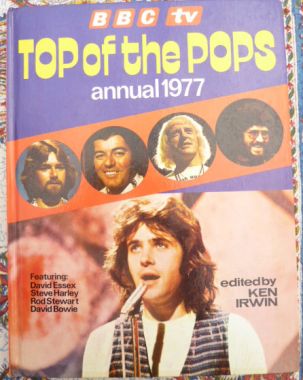
Europe’s Best Website plunges into the world of telly only rarely, (as goodness knows every single show that goes out over the ether gets recapped up the wazoo these days, for good or bad) but for this correspondent, the very best thing on the box in the last twelve months has been the weekly 35-years-ago Top of the Pops repeats on BBC4. Pre-’76, the archive was swiss-cheese at best, with dozens and dozens of shows lost to the ages, but when we joined what looks like a considerable on-going project , the gaps were narrowing down to insignificance.

The ‘Pops gets a hard time from the Nostalgia Police, thanks to the gruesome later incarnations and Steve Wright’s voiceovers on the generally-emetic TOTP2. But there was a time when it was always there, always grinding out the chart on a Thursday and heralding the weekend in the best fashion possible. Back when its broadcast rules (highest climber, highest new entry, number one, non-movers only after four weeks, no fallers unless they rose again and beat the previous position etc) emanated from the old-school Light Entertainment honcho who had no agenda other than reflecting the pop singles of the day. Unfettered pop!

Continue reading This Was One Of My Records Of The Week

In Night and Ice

On the occasion of the 100th anniversary of the sinking of the Titanic, we look at just a few of the many screen portrayals of one the most infamous* disasters of the 20th Century. Spoiler warning – we do reveal details of the fate of the RMS Titanic.

Continue reading In Night and Ice

The Gospel According to Pasolini

by Viv Wilby

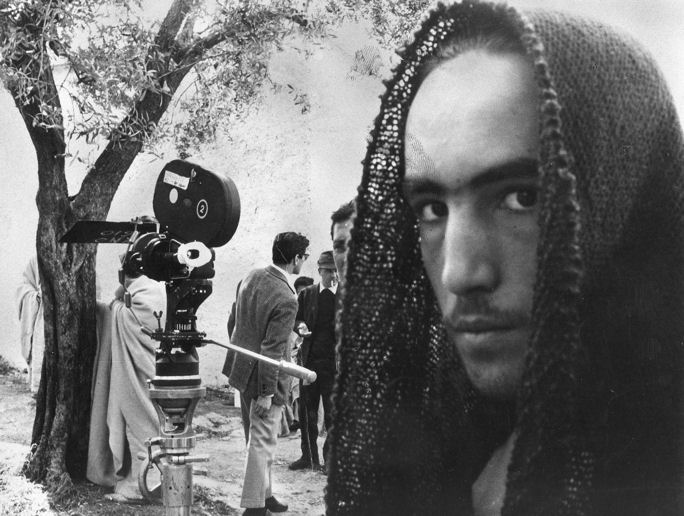
It’s not hard to see Pier Paolo Pasolini’s 1964 film, Il Vangelo Secondo Matteo (The Gospel According to St. Matthew), as a deliberate shift away from, perhaps even rebuke to, the style of religious filmmaking that had poured out of Hollywood in the 1950s and early 1960s. These were gaudy, technicolor affairs, stuffed with earnest matinee idols, hammy character actors and hundreds of extras. Starlets draped in wisps of chiffon would flash kohl-rimmed eyes at pained looking holy men. And just in case we were in danger of forgetting, a stentorian voiceover would remind us that This Is The Word Of The Lord.

In contrast, Pasolini’s film is simple and spare. Shot in stark black and white with a cast of non-professionals, it follows the linear narrative of Matthew’s gospel. We move through the familiar beats of Christ’s life: the visit of the three wise men and flight into Egypt; the baptism in the river Jordan and temptation in the wilderness; the calling of the apostles; the preaching and miracles; culminating in Christ’s arrival in Jerusalem, his betrayal by Judas Iscariot, arrest, trial, crucifixion and resurrection. Continue reading The Gospel According to Pasolini