All posts by Ann Jones

Unknown's avatar

About Ann Jones

London-based artist and educator who somehow seldom gets time to actually make any work, who writes about art, somewhat irregularly, at ImageObjectText.com and occasionally contributes to MostlyFilm.com – writing about art, mostly.

One face, a thousand lives: Cindy Sherman at MoMA

by Ann Jones

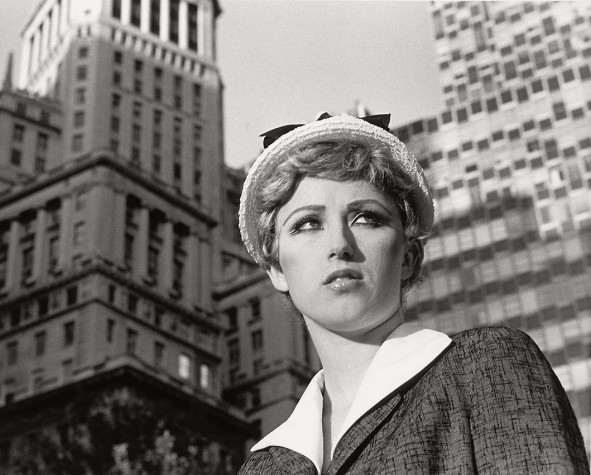
I can never quite decide about Cindy Sherman. I’ve seen countless photographs of her but none that really counts as a portrait; all I really know about her is that she’s a very good actress. I know roughly what she looks like of course, but as she’s something of a chameleon even that knowledge is woefully approximate. Sherman has made plenty of work that I really love but in amongst the great stuff there’s also plenty that leaves me cold, and even the work I like has a habit of downgrading itself in my head when it’s out of sight so that I always suspect I’m misremembering it. All this is probably why a couple of months after seeing her retrospective at the Museum of Modern Art in New York, I’m still working out quite what I want to say about it and simultaneously thinking I really should have written about it sooner. Hmmm.

Continue reading One face, a thousand lives: Cindy Sherman at MoMA

End Piece

by Ann Jones

Forgive the cliché, but it’s the end of an era. Today the analogue television signal gets switched off. I know it’s long gone from some parts of the UK but the final stage of the switch-off is upon us and I live in London which is part of the last wave so I’ve been blithely ignoring the gradual loss of the analogue channels that’s been making its way across the country area by area for a few years. And okay, so it’s hardly the end of days. Telly will continue. For most of us, apart from the minor inconvenience of having to retune, and maybe install a digibox so that that old TV that we’re not quite sure why we still have keeps working, nothing much will change. But even so, it feels important somehow. And what better way to mark the occasion than to cram in as much analogue telly as possible while I have the chance? Fortunately David Hall’s exhibition End Piece … at Ambika P3 offers the perfect opportunity.

Continue reading End Piece

New(ish) art galleries: the ever-expanding White Cube

by Ann Jones

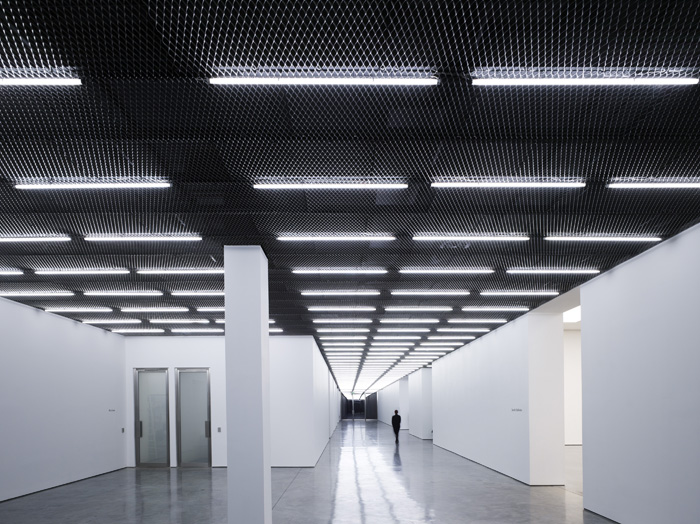
Inside the White Cube.

When White Cube opened its doors on Duke Street, St James’s in 1993 it was to a small first floor room – a perfect white cube. One of the smallest gallery spaces in Europe, but one which quickly became one of the most influential. The gallery functioned as a project space and artists showed there only once. At the time West End galleries were stuffy places, traditional art dealers selling the work of long-established and often long-dead artists on the secondary market. Video installations by Gary Hill or large scale, colourful assemblages by Jessica Stockholder didn’t go with the territory. With Victoria Miro Gallery, then on Cork Street, being perhaps the most notable exception, contemporary art happened elsewhere (sometimes elsewhere in the West End or thereabouts, but nonetheless, elsewhere).

Within a few years, White Cube expanded east to Hoxton Square but retained the Duke Street space, and went on to construct a purpose-built space in Mason’s Yard, the first new free-standing building in St James’s in over three decades. White Cube then has defied expectations from the start. But even so, the space is Bermondsey opened in October 2011 is in another league.

Continue reading New(ish) art galleries: the ever-expanding White Cube

Lis Rhodes: Dissonance and Disturbance

Dresden Dynamo

by Ann Jones


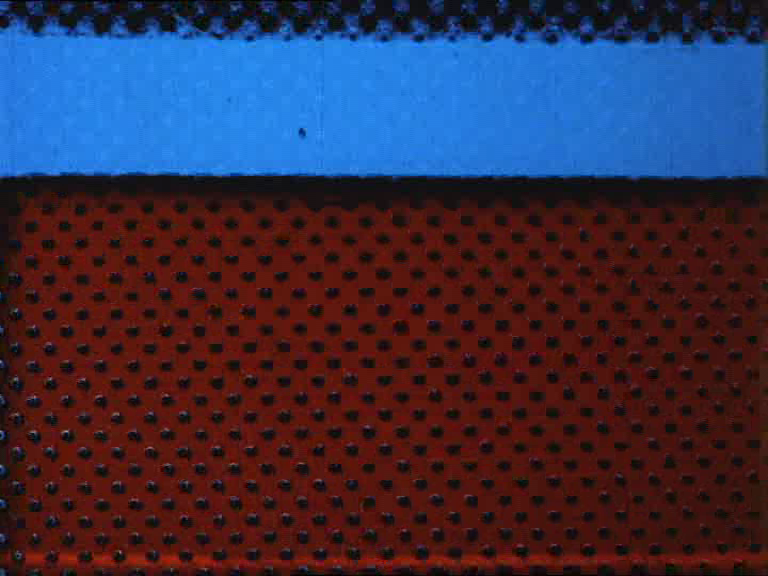
Lis Rhodes isn’t an easy artist to write about. That the exhibition Dissonance and Disturbance at the ICA represents her forty-year career in seven films doesn’t help. There is a world of difference between the abstraction and pattern of Dresden Dynamo, Rhodes’s 1972 cameraless film in which sound and image come from disrupting the surface of the film by applying Lettratone and Lettraset and using filters to introduce colour, and In the Kettle (2010) and Whitehall (2012), recent works centred around political protests. Yet, somehow, there is a coherence and a sense that there are central concerns explored throughout Rhodes’s career and the body of work on show here is brought together by a consistent approach to layered and collaged imagery that keeps recurring. Ultimately, for me, though the messages may be powerful and important, what makes me want to watch the films is the beauty of Rhodes’s image-making whatever source material she is working with. Continue reading Lis Rhodes: Dissonance and Disturbance

Nine Muses

by Ann Jones

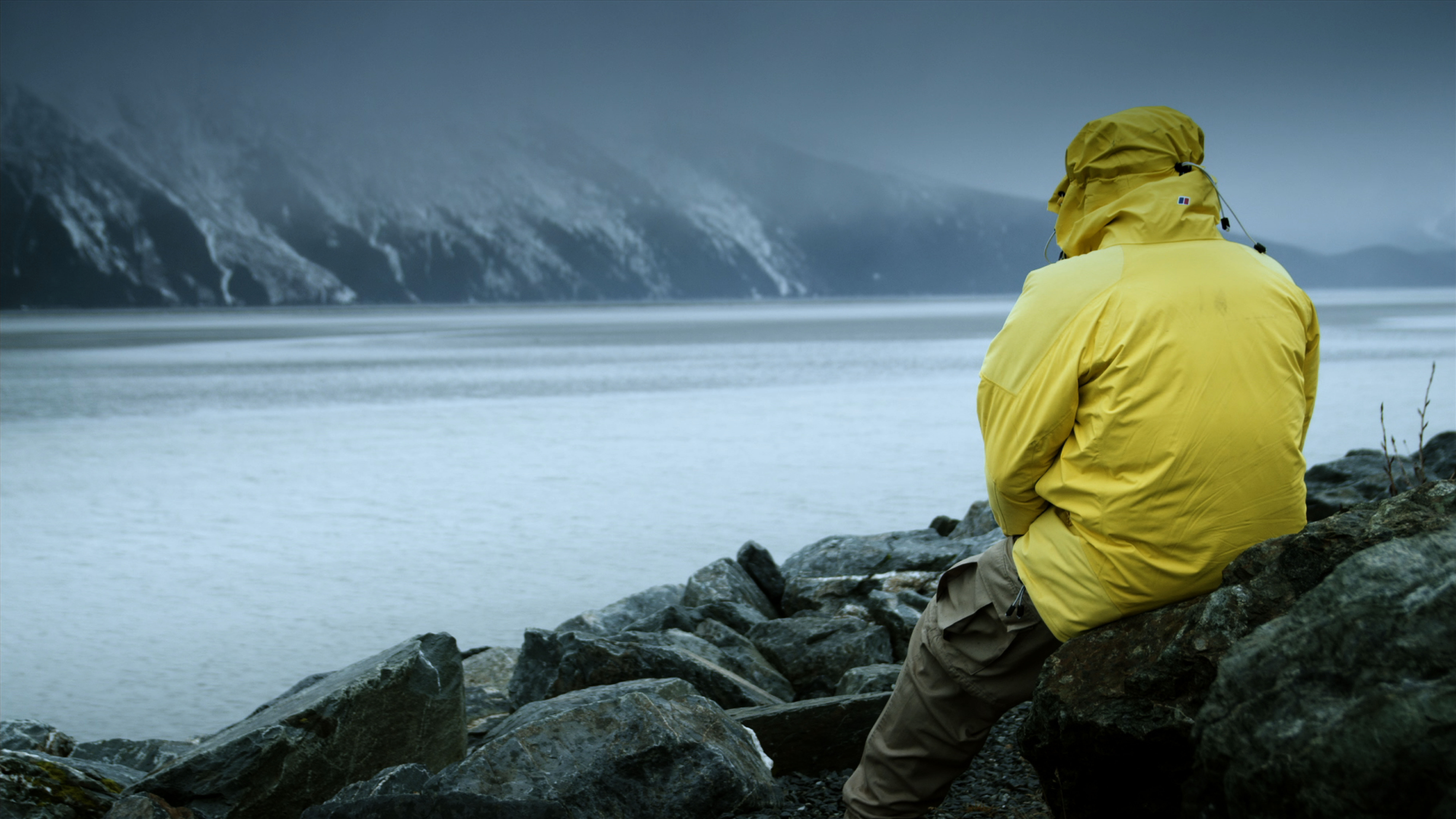
That it’s hard to know where to begin writing about John Akomfrah’s The Nine Muses is illustrated by the fact that this is my fifth, or is it sixth, attempt at an opening paragraph. And that’s just the ones I’ve actually typed; there are several more rattling around in my head. And none of them quite works. Do I want to start with the beauty of the thing? Or the fact that it’s made me yearn for snow even more (and I was already feeling more than a little disgruntled about the lack of snow this winter)? Or should I focus on Akomfrah’s use of colour? Or his interspersion of archive film with exquisite footage filmed in the snowy Alaskan landscape, or the extraordinary soundtrack culled from a diverse range of sources, or the framing of a film about immigration into Britain in the 1950s and 60s with Greek myth, or, or, or…

Continue reading Nine Muses

On video art and pants or video art on pants – Pipilotti Rist’s Eyeball Massage at the Hayward Gallery

by Ann Jones

I like video art. I’ve bored enough people by talking about art to know that lots of people don’t, but I do. And I like artists’ film. And I like art that challenges expectations and art that questions traditional use of the gallery space. Bring them all together in the right way and the result can be genuinely exciting – think Antony McCall’s solid light works (which I wrote about when MostlyFilm first started), or Banks Violette’s as yet untitled (TriStar Horse) projection onto water vapour which will stay with me a long time – so I fully expected to love Eyeball Massage, Pipilotti Rist’s exhibition at the Hayward Gallery.

Things get off to a pretty good start. The first thing on view in the gallery is a chandelier of pants, onto and into which video is projected. What’s not to like? Pants. Art. That’s the sort of ridiculous combination I can get behind, especially when the pants in question aren’t the frilly lacy ones designed for show but sturdy sensible ones we’d rather stayed well hidden. And the rest of the room – a small, vulnerable looking model of a suburban house (which looked somehow American to me but is apparently the ideal home of Swiss suburbia) with wall sized projections around it – initially has me hooked. It’s as I give this work more time that things start to change. A video in the house shows a family at the dining table. They eat their dinner from plates that are on fire. At this point the word “kooky” creeps into my head and doubts start to set in. I confess that at this point – far too early in the show for it to be a reasonable response – I also start to browse rather than really looking. There is a video here that requires attention. I should read the subtitles but my mind keeps wandering and I move on. I stroll up the ramp to the back gallery where I enjoy the stuffed clothes-shaped cushions inviting me to lounge on some trousers or a T-shirt (when I say I enjoy them I mean they make me smile, they look too mean as cushions to persuade me to brave the inevitable pins and needles associated with lounging about on the gallery floor; in my book, it takes at least a bean bag for that indignity to be worth considering). The work here seems less narrative; images float in the space catching the hanging screens of diaphanous fabric, breaking up the images and creating an abstracted wonderland that is genuinely quite beautiful.

Continue reading On video art and pants or video art on pants – Pipilotti Rist’s Eyeball Massage at the Hayward Gallery

Gerhard Richter: Panorama

by Ann Jones

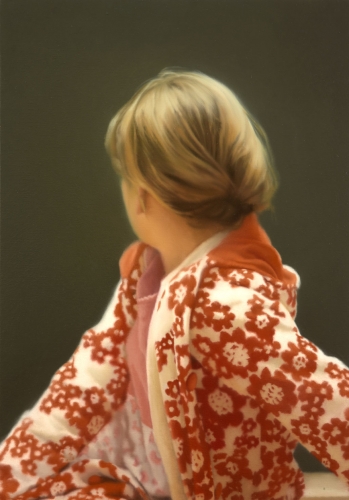
Aah. Betty!

Gerhard Richter is often described as the greatest living painter – certainly he is the most expensive – but it’s easy for such superlatives to get in the way of the work, especially work that poses questions and needs consideration and concentration rather than reverence. Gerhard Richter: Panorama at Tate Modern offers much more than a retrospective of his career – above all its about his exploration of paint both as his raw material and as a medium whose relevance has not always been accepted during his long career. I don’t think I’ve ever seen a Richter exhibition I didn’t like but nonetheless I approached the Tate show with caution: I would hate to hate Richter, even mild disappointment at a show that couldn’t live up to expectations would hurt, and I’m usually not much of a fan of chronological arrangements.

In the end my first visit to the exhibition was brief; I walked through the show quickly after a screening of Corinna Belz’s fascinating documentary Gerhard RichterPainting,  a dialogue between the artist and his materials which offers real insight into Richter’s working methods, but also into his inability to articulate how he knows when a painting is finished (there seemed to me to be a certain generosity in allowing the camera access given that Richter seemed to find its presence intrusive, but the result is an interesting portrait). On that walkthrough, I’m pretty sure I exclaimed “Oh. I love that painting!” out loud a couple of times. When I saw the painting of Richter’s daughter, I may have added “Aah. Betty.” From that first quick look, I knew that many of Richter’s most familiar works were there (his painting of Jackie Kennedy perhaps the most notable omission for me) along with others I’d known about but only seen in reproduction. There were also surprises – both good and bad – the squeegee paintings of the 1980s reinforced the idea (brought to the fore by the worst excesses of design on show in the V&A’s Postmodernism: style and subversion 1970 1990) that that was a decade with a lot to answer for aesthetically, and what poor Betty had done to deserve being stuck in a room full of them I have no idea.

Continue reading Gerhard Richter: Panorama

Tacita Dean – Film

by Ann Jones

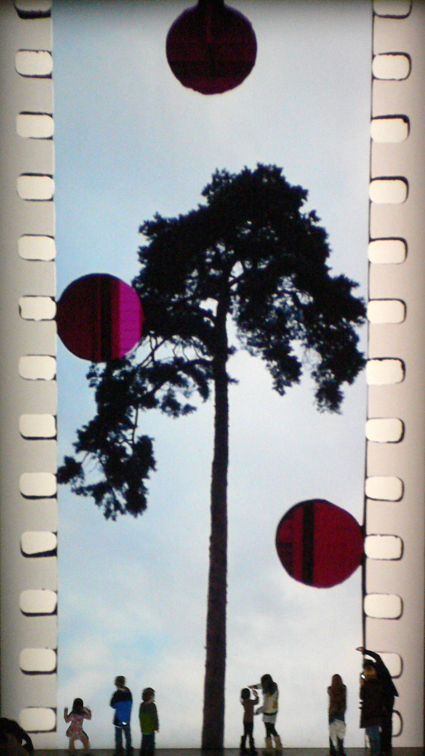
Tate Modern’s Turbine Hall is a difficult space for film – or indeed for any art, though clearly industrial scale sculpture has a head start – although, like many, I’d quite like to see Christian Marclay’s regulation carpet and sofas installed for an extended showing of The Clock; all weekend every weekend for six months or so perhaps. And, for me at least, Tacita Dean is an artist whose work has always seemed to work best in more modest spaces where the audience can give the work undivided attention away from the distractions of this most bustling of gallery spaces. Though the space demands a level of spectacle Dean has never seemed to aspire to, the Turbine Hall Unilever commission is not something to shy away from and being the first to bring film to the space at least allows Dean to work on her own terms. Or it might have done if the subject matter of her piece hadn’t forcefully imposed itself upon her in the form of the demise of Soho Film Laboratory, the last 16mm film lab in Britain. This then is a eulogy to a medium threatened with imminent extinction, a medium that defines Dean’s career.

Continue reading Tacita Dean – Film

Glimpses of the 2011 Venice Biennale

by Ann Jones

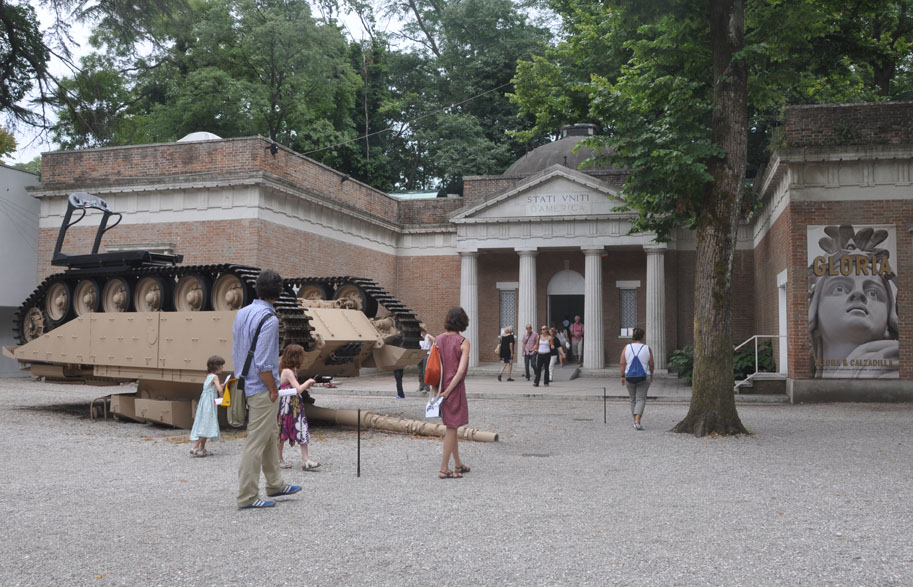
Venice isn’t like anywhere else. I realise this might seem like an extreme example of stating the obvious but I’m not referring to the the architecture or the canals or the all-pervasive air of unreality that always makes me wander round exclaiming ‘I can’t believe this is really here’ incessantly for the first couple of days until gradually familiarity with the actual place edges out familiarity with previously seen photographs and the picture of Venice I carry in my head. No. In an international art world increasingly driven by biennials, Venice isn’t like anywhere else.

So, what makes La Biennale different?

Continue reading Glimpses of the 2011 Venice Biennale

New Art Galleries: Remaking Margate

Ann Jones introduces the first of an occasional series about new art galleries.


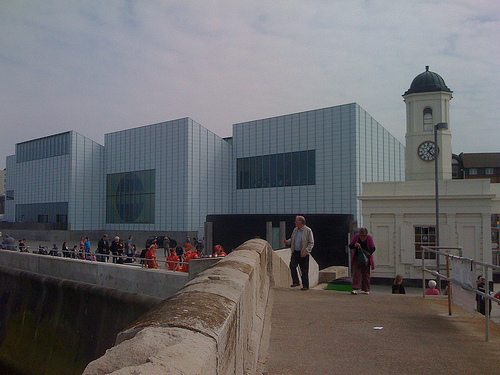
Turner Contemporary in Margate

Over the last couple of decades art has acquired an unprecedented audience in Britain. Blockbuster museum shows still draw big crowds but contemporary art also pulls in visitors in huge numbers and the London art market is thriving – in so far as such a thing is possible in the current economic climate.

In response, towns and cities across Britain have sought to use art to attract visitors and aid regeneration either through staging festivals, commissioning landmark public art works or building new museums and galleries. The most prominent of these art works has been Antony Gormley’s Angel of the North, commissioned by Gateshead Borough Council and funded in the main by the National Lottery. The best known new museum is also in Gateshead: the BALTIC Centre for Contemporary Art. BALTIC is a converted flour mill, part of a trend for converting disused industrial spaces into galleries and museums that also gave us Tate Modern. Most of the high-profile gallery spaces opened in recent years have, however, been new buildings, often partly commissioned to attract not just art tourists but architecture fans as well. (Examples include the New Art Gallery, Walsall; Nottingham Contemporary; the Towner, Eastbourne; and Mima Middlesborough.) The spectacular success of the Guggenheim Bilbao seems to have played a part in the design and commissioning of each of these buildings, albeit tempered by a traditional British reluctance to wholeheartedly embrace contemporary architecture – the Bilbao effect versus the Prince Charles effect, if you like. This is the landscape in which Turner Contemporary has opened in Margate. Continue reading New Art Galleries: Remaking Margate