All posts by Philip Concannon

Unknown's avatar

About Philip Concannon

Philip Concannon is a freelance film writer who blogs at philonfilm.net and tweets as @Phil_on_Film

The Passionate Christ

By Philip Concannon

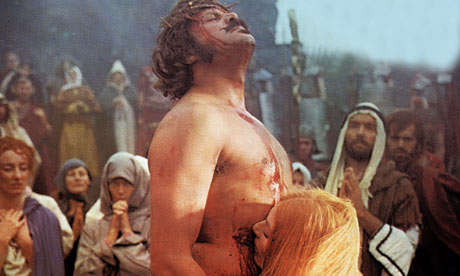
Martin Scorsese has famously described cinema as simply being “a matter of what’s in the frame and what’s out,” but when The Last Temptation of Christ was released in 1988, very few were willing to consider the film on those terms. This adaptation of Nikos Kazantzakis’ novel remains one of the most controversial films ever released by a Hollywood studio. It sparked protests, threats and even physical attacks, with a cinema in France being firebombed by a group of Christian fundamentalists for daring to screen the film. The charge was blasphemy, with the biggest bone of contention being a much talked-about sex scene between Jesus and Mary Magdalene. The fact that few of those criticising The Last Temptation of Christ had seen it, or had any intention of doing so, was apparently beside the point. Continue reading The Passionate Christ

Trishna

by Philip Concannon

Photograph of Frieda Pinto as TrishnaMichael Winterbottom’s eclectic career has made him a hard filmmaker to pin down, but a recurring touchstone for the director has been the work of Thomas Hardy. In 1996, Winterbottom had his first high-profile success with an adaptation of Jude the Obscure and four years later he made The Claim, a loose retelling of The Mayor of Casterbridge. Winterbottom’s third take on Hardy is his most radical adaptation yet, simultaneously updating and relocating Tess of the d’Urbervilles to modern-day India. Trishna is a bold and occasionally beautiful interpretation of the source material, but it’s also a hugely problematic one.

Continue reading Trishna

Love, Sex, Betrayal & Spoons – A Night With Tommy Wiseau

by Philip Concannon

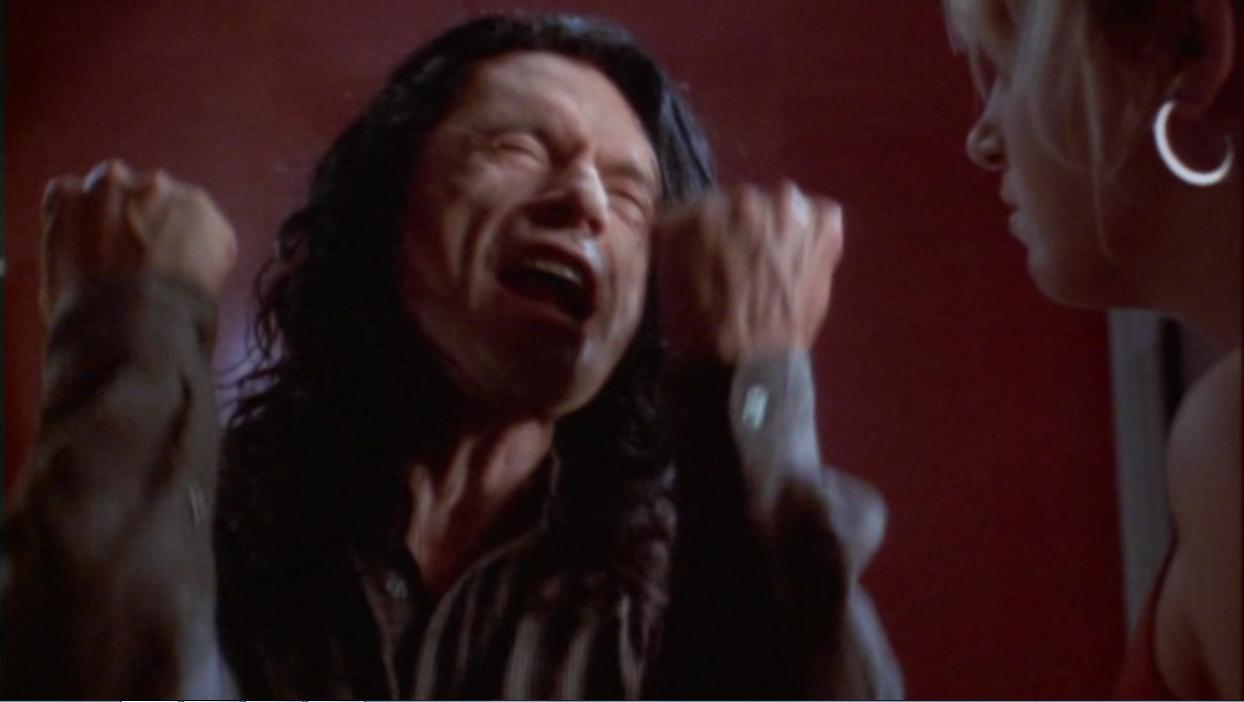
Who the hell is Tommy Wiseau anyway? That was the question foremost in my mind as I made my way through the dark streets of London’s West End for a midnight screening of The Room. Normally it would take a screening of an all-time classic or a new film by one of my cinematic heroes to tempt me out on such a freezing night, but here I was lining up for a film I knew by reputation only – that is, its reputation as one of the worst films ever made. When I reached the Prince Charles Cinema, it quickly became clear that my ignorance of The Room and its director put me firmly in the minority. The queue, which was already stretching around the side of the venue, was full of people in tuxedoes or wearing neckties around their heads, brandishing plastic cutlery or tossing inflated American footballs to one another. They regaled each other with random lines of dialogue that sounded bizarre or banal shorn of their context – “Johnny’s my best friend!” “I have breast cancer!” “You’re tearing me apart!” Everyone appeared to be in on a joke that I didn’t yet understand.

Continue reading Love, Sex, Betrayal & Spoons – A Night With Tommy Wiseau

Going Loco at the BFI Southbank

by Phil Concannon

January is a dismal month. Grey skies, biting winds and post-Christmas debts tend to darken the mood for the majority of us, but this weekend LoCo – a not-for-profit organisation dedicated to supporting comedy filmmaking – did its best to raise spirits with the inaugural LoCo Comedy Film Festival at the BFI Southbank. Over the course of four days, the festival’s eclectic programme served up a variety of shorts and features, Q&A’s, educational events and even a special presentation of a film that doesn’t exist. The combination of old and new, of dark comedies with breezy slapstick, ensured that the festival genuinely offered something for everyone. In fact, if you’ve long harboured a desire to see a tiny man crawl out of a cat’s anus…well, the LoCo Film Festival was the only gig in town. Continue reading Going Loco at the BFI Southbank

Rewriting History with Lightning – DW Griffith’s Birth of a Nation

by Philip Concannon

“In the brief span of six years, between directing his first one-reeler in 1908 and The Birth of a Nation in 1914, Griffith established the narrative language of cinema as we know it today.” – David A. Cook, a History of Narrative Film (2004)

“DW Griffith, when you come right down to it, invented motion pictures. As Lionel Barrymore says, there ought to be a statue to him at Hollywood and Vine, and it ought to be fifty feet high, solid gold, and floodlighted every night.” – Mack Sennett

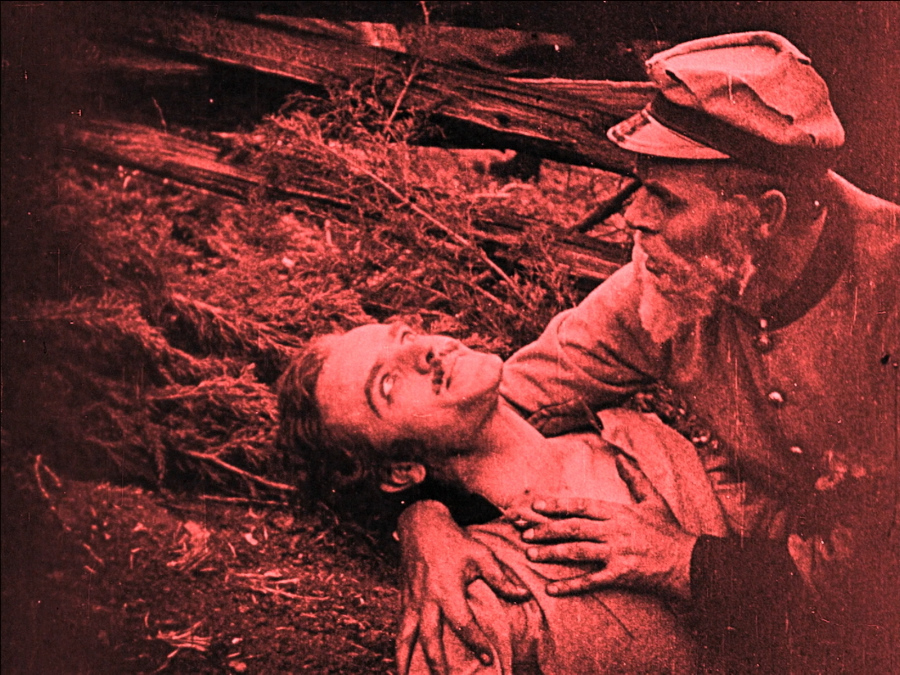
If you believe some of the things that have been said about him, there was no cinema before DW Griffith. Sure, there were other innovators in the medium’s nascent years, but Griffith was the man who broke new ground and unified these techniques into a narrative that played out on a scale unprecedented in American cinema. The Birth of a Nation was the first film blockbuster, it is unquestionably one of the most influential pictures ever made, and it immediately launched the man behind it into the pantheon of great directors. Whether or not he should remain there is another matter entirely, however, as we consider the thorny question that faces everyone who sits down to watch The Birth of a Nation – should this epic be considered as one of American cinema’s greatest achievements, or its greatest shame?

Continue reading Rewriting History with Lightning – DW Griffith’s Birth of a Nation

MostlyFilm’s Best of 2011 – the year in Rep

by Philip Concannon

The Devils

The most exciting action sequence I saw on the big screen in 2011 didn’t occur in a summer blockbuster. It wasn’t directed by Steven Spielberg, James Cameron, Paul Greengrass, or any other contemporary master of cinematic thrills, and it has nothing to do with those myriad French films in which a frantic man in a suit runs around Paris for some reason. The sequence I’m referring to is the climax of Storm Over Asia, when the protagonist – a direct descendant of Genghis Khan – picks up his sword and leads the charge against his British captors. Breathlessly paced and set to a rousing score of Mongolian throat singing, the sequence practically lifted me out of my seat in a way that very few recent films have managed to do. Storm Over Asia was directed by Vsevolod Pudovkin, and it was made in 1928.

Continue reading MostlyFilm’s Best of 2011 – the year in Rep

Premiere Japan 2011

by Philip Concannon

How does cinema react to a tragedy as enormous as the earthquake that struck Japan on March 11th this year? Director Koichi Omiya reacted to the disaster in the simplest way possible; he visited Tohoku and pointed his camera at a town destroyed. The Sketch of Mujo is a 75-minute documentary that captures the aftermath of the earthquake and tsunami, as piles of wreckage sit where houses once stood and families begin the arduous process of rebuilding their lives. He holds his camera steady on scenes of utter devastation and allows us time to pick out resonant details – an upturned car on the roof of a two-storey house, a child’s toy amid the rubble of a former nursery – and he speaks to residents who discuss their woes with philosophical outlook, and a staunch resilience. “A belief in mujo is at the centre of Japanese life,” a Buddhist priest tells us, mujo being the Japanese word for transience or impermanence, and The Sketch of Mujo successfully evokes the way this entire region was altered in an instant, both on a widespread and personal level.

Continue reading Premiere Japan 2011

Undiscovered Country: the Films of Edward Yang

by Philip Concannon

A Brighter Summer Day

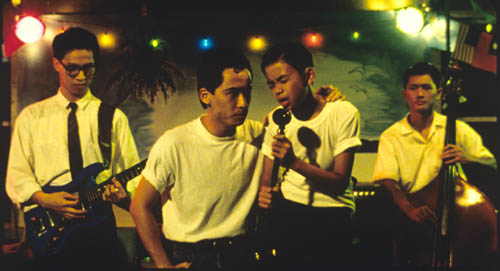
When Edward Yang died in 2007, I didn’t feel the sense of loss that I often feel when a notable filmmaker passes. At the time, I had only seen Yang’s last film Yi Yi, and as much as I adored that picture, I had no idea that it was merely the tip of the iceberg. I had no idea that we were losing in Edward Yang one of the most remarkable directors of his generation, and I wasn’t the only one unaware of the richness of Yang’s oeuvre either, because aside from his internationally acclaimed Yi Yi, the director’s films are largely unavailable for viewers in Europe and America. Prints and DVDs remain intractably bound up in complex rights issues, with the funding of some Taiwanese films by the country’s gangsters complicating the matter further. Few would quibble with Yang’s status as a great filmmaker, if only they were given the opportunity to see his body of work in its entirety.

Continue reading Undiscovered Country: the Films of Edward Yang

The Only Way is Essex?

Philip Concannon looks at three linked Brit gangster films. Can nothing stop the Geezer Appeal bandwagon?

The Range Rover in which Patrick Tate, Anthony Tucker and Craig Rolfe were found dead in 1995

On December 7th 1995, three dead bodies were found in a Range Rover on a remote farmland in Rettendon, Essex. The three men – Patrick Tate, Tony Tucker and Craig Rolfe – were notorious criminals who appeared to have fallen victim to an ambush in a drug deal gone awry, and two men were later convicted of the triple murders. Michael Steele and Jack Whomes are currently serving life sentences despite continually protesting their innocence, and various other individuals involved in the incident have either disappeared into the witness protection programme or made money from books tangentially connected to the three dead men.

That’s about all there is to the case of the Rettendon Range Rover murders, and yet between the years 2000 and 2010 no less than three films inspired by these events were released into UK cinemas (in the same period of time Terence Davies, one of our greatest filmmakers, struggled to get two pictures made). In a world teeming with amazing stories just begging to be told, why has this grubby tale about nasty people proved such an irresistible lure to filmmakers in this country? In truth, it’s not hard to see why – whatever angle you choose to attack this tale from, it offers up drugs, sex, betrayal and lashings of violence. For tawdry thrills that will appeal to an undemanding DVD audience, this incident appears to be a sure thing. If you’re after anything more than that – if you yearn for such cinematic luxuries as complex characters, witty dialogue and nimble plotting – you’d be advised to look away as I delve into the murky world of Essex Boys, Rise of the Footsoldier and Bonded by Blood. Continue reading The Only Way is Essex?

Perfect 10

Philip Concannon revisits Krzysztof Kieslowski’s Dekalog

Thou shalt not break the fourth wall

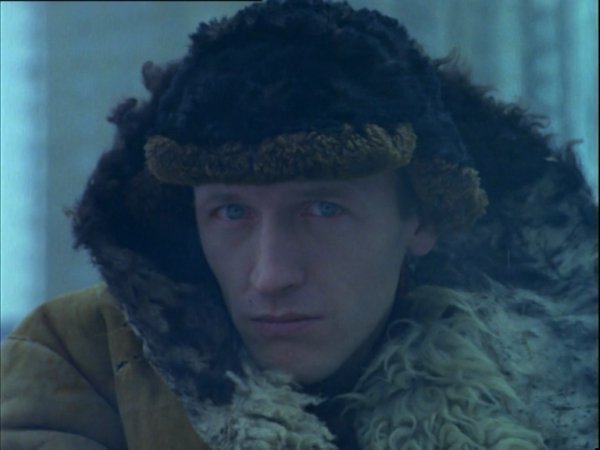
The camera moves slowly across the surface of a frozen lake. On its bank, hunched in the snow, we find a young man warming himself against a fire. The man raises his head and then slowly turns to look directly at us, wearing an expression that is hard to read; it could be a look of curiosity, perhaps, or one of reproach. The camera then cuts to another location, where a woman cries as she watches silent footage of a smiling child on television, before it brings us back to the young man who appears to be wiping a tear from his eye.

This is the opening scene from Krzysztof Kieslowski’s Dekalog, a ten-part miniseries the director made in Poland in 1988. The young man, played by Artur Barciś, appears in eight of the ten episodes, always in a slightly different guise and always observing the drama as it plays out but never intervening, like an omnipotent angel of fate. As Dekalog progresses, we might expect some clarification on this character’s true identity, but Kieslowski was not a man who liked to provide answers.
Continue reading Perfect 10