Category Archives: Classic Films

Nuking From Orbit

by Thomas Pratchett

'Last one to the top's a rotten xenomorph egg!'

In 1979, Ridley Scott made a film about a bunch of people who find an alien spaceship and discover that the long dormant life inside isn’t so dormant, and in fact wants to kill them. In 2011, Ridley Scott made a film about a bunch of people who find an alien spaceship and… you can see where this is going. By now, everyone knows that Prometheus is a (so Scott claims) tangentially related prequel to Alien, although exactly how related they are is still to be seen. We’ve got the same Giger-esque architecture, milk-filled androids, stark white interiors played against grimy steam-filled corridors and pods filled with slimy things that want to hug our faces. If anyone else had come up with such a scenario and claimed it had no real links to the Alien franchise, 20th Century Fox’s lawyers would have moved faster than you can say ‘minimum safe distance’.
Continue reading Nuking From Orbit

Black Coal Heart – Classic British Film Noir

By Blake Backlash

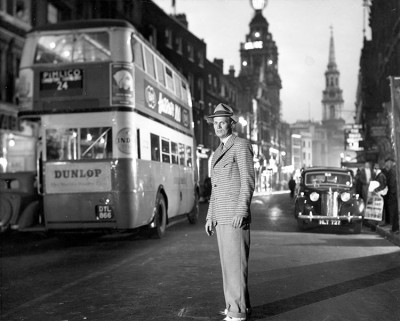
Let’s begin at the seaside with Grahame Greene. Imagine spending a wet Bank Holiday afternoon in Brighton and there’s a good chance you can already taste the atmosphere of damp, disappointment and danger that seeps through the films I want to tell you about. Graham Greene is important too. In the three years before World War II, he wrote A Gun for Sale, The Confidential Agent and Brighton Rock. All three are thrillers where there’s an attempt to bind the mechanics of a pulp plot to larger questions about fate and sin. Eccentric and desperate characters stumble through starkly atmospheric locations. Much of this is part of the template for all film noir – indeed A Gun For Sale became A Gun for Hire, with Alan Ladd and Veronica Lake. But Greene casts a long shadow over British noir in particular.

Continue reading Black Coal Heart – Classic British Film Noir

If My Calculations Are Correct, Part Four

by Ricky Young.

In this fourth and final part of MostlyFilm’s lookback at the 1983 BBC2 sci-fi season – of which you can read parts one, two and three by simply ‘clicking’ – we are left with what I was previously happy to call the dregs.

A harsh word, I know, but I’ll qualify that by saying that of the fifteen films on the list, they were the ones I wanted to revisit least. My reasoning was (as ever) decidedly shonky, but they seemed to be the pulpiest, the most familiar, the ones nearest to cultural touchstones. I know; boring, right? I’m supposed to be rooting out hidden gems here, not sitting down to bloody Invasion of the Body Snatchers for the zillionth time!

Of course, when I really thought about when I’d last watched all three of these films, rather than read about them, or talked about them, or referenced them – there was only one answer: the 1983 BBC2 sci-fi season. So preconceptions be damned, I reasoned, when sitting down with only an Xbox, a pile of dvd’s, a large bag of Jolly Ranchers and a look of steely determination. We’ve come this far together – last one to the finish-line’s a dirty, stinking communist.

Continue reading If My Calculations Are Correct, Part Four

Yesterday’s Men

by FIONA PLEASANCE

George Valentin - Georges Méliès
The gorgeous Georges.

I know what you’re thinking.  You’ve clicked on a link, and now there’s a sinking feeling in the pit of your stomach.  “Oh no,” you sigh, “not another bloody article about those retro-juggernauts, The Artist (2011) and Hugo (2011) and what it all means for Hollywood.  That’s so last month!”

Well, perhaps.  But as a teacher of film history, I hope that I can offer a slightly different perspective on the films as far as their historical accuracy and their contemporary significance are concerned.

Let’s start with The Artist which, having fictional characters at its heart, brings fewer concerns with it.  George Valentin, Peppy Miller and Kinograph Studios never existed, but the film takes place at one of the most interesting and extensively documented periods in cinema history.  The conversion process from silent to sound cinema made – and, yes, broke – a number of careers, so it encompasses many elements which Hollywood itself loves so much, particularly meteoric rises and dramatic falls from grace.

Continue reading Yesterday’s Men

Wild at Heart

Wild at Heart
Laura Dern and Nicolas Cage, relaxing on-set

by Jim Eaton-Terry

Wild at Heart seems to be the one universally accepted dud in David Lynch’s back catalogue.  There are the early oddities (Eraserhead, The Elephant Man, Dune), his masterpiece Blue Velvet, then the nightmarish trilogy of Fire Walk With Me, Lost Highway and Mulholland Drive.  Wild At Heart is dismissed as Lynch lite, his one attempt at a mainstream lovers-on-the-run movie fatally flawed by compromises to commercial acceptability in the wake of Twin Peaks.

Continue reading Wild at Heart

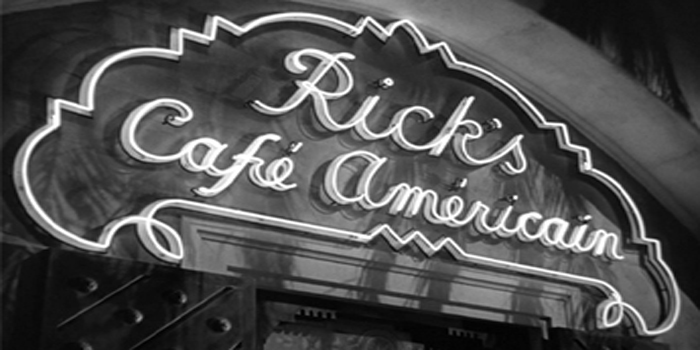
Casablanca’s 70th Anniversary

by Ron Swanson

One of cinema’s most beloved and iconic films, Casablanca will be in selected cinemas in time for Valentine’s Day. The re-release is to mark the 70th anniversary of a film whose reputation has never dimmed. A winner of three Academy Awards – Best Picture, Best Director for Michael Curtiz and Best Writing – Casablanca is revered as one of cinema’s greatest, most indelible romances. In 2007, the American Film Institute voted it the third greatest film of all time, behind only Citizen Kane (1941) and The Godfather (1972).

Continue reading Casablanca’s 70th Anniversary

Mostly Links – 3 February 2012

by Mostly Film

Meeting people is easy: Mostly Links on his monthly outing

Contrary to what you might expect, Mostly Film has a life outside blogging. Disguised as a perfectly normal human being (only a bit squintier), Mostly Film sometimes even leaves the house to meet other people, and has tea with them, or dinner, or a drink. You may even have sat next to Mostly Film on a bus and not realised it.

Mostly Film also has opinions about things that aren’t film or telly. They aren’t always grown-up or fully formed opinions – they tend to involve the words ‘aspect ratio’, whatever the topic – but they’re definitely opinions. Just ask, next time you’re sitting on a bus next to a perfectly normal human being (only squintier).

For instance, yesterday Mostly Film heard US Republican presidential hopeful Mitt Romney say that this year’s election run-in is going to be “the most vitriolic, spiteful campaign in American history.” Now, is that a threat, a promise, or a plea for mercy? Might it even be a request for advice? Mostly Film has chosen to believe it’s the last option, so this week’s Mostly Links is all about the dirtiest elections in screen history. Continue reading Mostly Links – 3 February 2012

If My Calculations Are Correct, Part Three

by Ricky Young

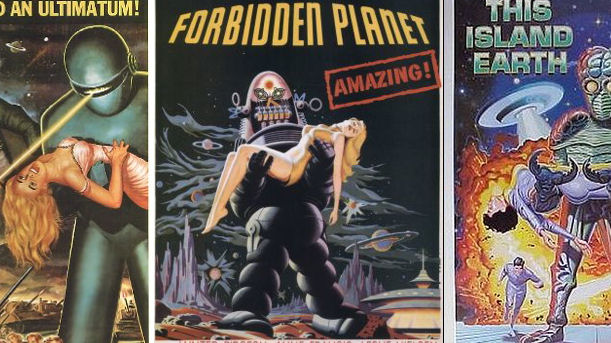
Montage of three sci-fi posters.

With seven films outstanding in our look-back at the 1983 BBC2 sci-fi season, should we perhaps turn from our never-ending vigilance against external dangers (such as wrenches and communists), and instead take some time to contemplate the monster that is Man himself? What lessons can we learn about our nature via these Technicolor messages from our own recent past? Well, if 1955’s Conquest Of Space is anything to go by, lesson #1 today is ‘religion is for unstable, murderous nutcases’, so thanks for all the pressing updates on that, Dawkins, you charmless little tit.

Produced and directed, respectively, by 50s sci-fi greats George Pal (who oversaw When Worlds Collide from Part 1) and Byron Haskin (who would go on to helm Robinson Crusoe on Mars, from Part 2), Conquest of Space might not be the oldest of the films we’ve rewatched, but it has a tone and feel of something made considerably earlier. Oh, and it’s loopier than a hipster’s earlobes, but have no fear – we’ll get to that.

Continue reading If My Calculations Are Correct, Part Three

L’Atalante at the BFI

by Indy Datta

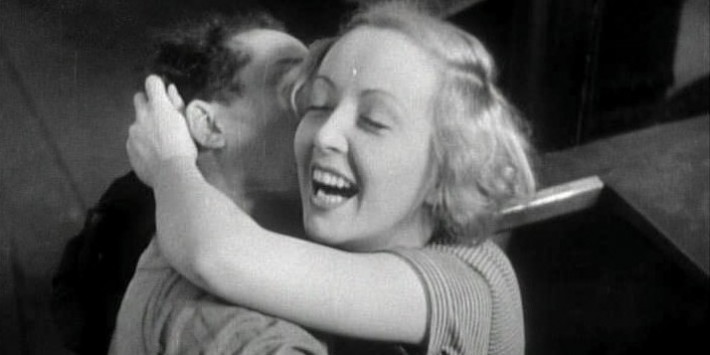
Jean Vigo turned in the first rough cut of L’Atalante from his deathbed: over the gruelling winter location shoot the young film maker – already frail, tubercular – had fallen fatally ill with pneumonia and septicaemia. He would do no further work on the film, or ever see it again, and would die at 29. The studio, Gaumont, took the film, re-edited it, and rescored it to prominently feature a popular song of the time, Le Chaland qui Passe – The Passing Barge – which also became the film’s title. Initially a critical and commercial failure, the film remained obscure for a decade and more, before its rediscovery and adoption as a formative inspiration by the critics and film makers, most notably François Truffaut, who would go on to form the French new wave.
Continue reading L’Atalante at the BFI

The Devil and George Bailey

By Blake Backlash

Snow falls into the black river beneath him. George knows how cold the water would be – he still has nightmares about going under to rescue his brother. As he remembers, the ear that the cold killed starts to tingle, and at first George thinks it’s because of the memories. But then he realises there’s a voice there. Intimately cradled among the useless workings of his dead left-ear, it speaks to him, and says:

We both know that you’re not going to jump. Continue reading The Devil and George Bailey