Category Archives: Film Making

There’s Always Two Lawyers: Kenneth Lonergan on screenwriting

by Paul Duane

Poster for Margaret

Kenneth Lonergan, a big, disorganised-looking, mop-haired, slightly put-upon-looking man, sits at the front of the auditorium. He’s looking at the audience, they’re looking at him, and nobody speaks. The guy who’s doing this Q&A with Lonergan, director Damien O’Donnell, is nowhere to be seen – it transpires he’s looking for a small bell that he’s brought as a prop, for some reason that never really becomes clear. There’s a long, uncomfortable pause as the audience and Kenneth Lonergan try to figure out the etiquette to deal with this mild bit of social discomfort.

It’s a very ‘Kenneth Lonergan’ type of moment, right out of Margaret, Lonergan’s second film in his two-film career as a writer/director.

Margaret’s a baggy, shapeless, engrossing story that can’t really be described except to say that you need to see it in order to talk about it. If you do see it you’ll definitely want to talk about it, the way you talk about people you know and the odd, compulsive decisions they make, and why the fuck did they do this and not that? It’s that kind of film.

Lonergan was visiting the Jameson Dublin International Film Festival to talk about screenwriting. Here’s some of the things he had to say on the subject.

Continue reading There’s Always Two Lawyers: Kenneth Lonergan on screenwriting

Yesterday’s Men

by FIONA PLEASANCE

George Valentin - Georges Méliès
The gorgeous Georges.

I know what you’re thinking.  You’ve clicked on a link, and now there’s a sinking feeling in the pit of your stomach.  “Oh no,” you sigh, “not another bloody article about those retro-juggernauts, The Artist (2011) and Hugo (2011) and what it all means for Hollywood.  That’s so last month!”

Well, perhaps.  But as a teacher of film history, I hope that I can offer a slightly different perspective on the films as far as their historical accuracy and their contemporary significance are concerned.

Let’s start with The Artist which, having fictional characters at its heart, brings fewer concerns with it.  George Valentin, Peppy Miller and Kinograph Studios never existed, but the film takes place at one of the most interesting and extensively documented periods in cinema history.  The conversion process from silent to sound cinema made – and, yes, broke – a number of careers, so it encompasses many elements which Hollywood itself loves so much, particularly meteoric rises and dramatic falls from grace.

Continue reading Yesterday’s Men

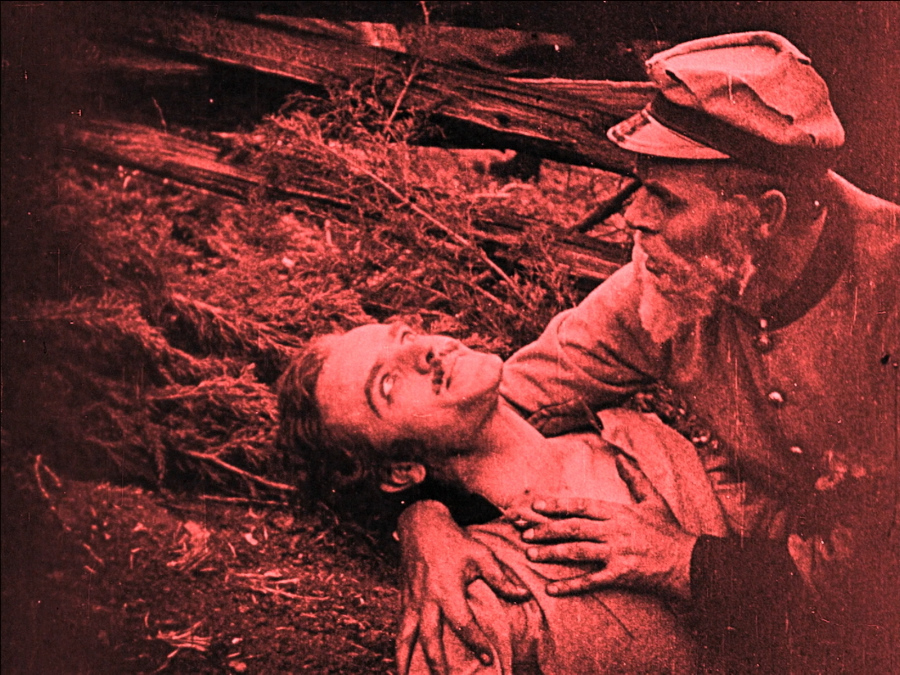
Rewriting History with Lightning – DW Griffith’s Birth of a Nation

by Philip Concannon

“In the brief span of six years, between directing his first one-reeler in 1908 and The Birth of a Nation in 1914, Griffith established the narrative language of cinema as we know it today.” – David A. Cook, a History of Narrative Film (2004)

“DW Griffith, when you come right down to it, invented motion pictures. As Lionel Barrymore says, there ought to be a statue to him at Hollywood and Vine, and it ought to be fifty feet high, solid gold, and floodlighted every night.” – Mack Sennett

If you believe some of the things that have been said about him, there was no cinema before DW Griffith. Sure, there were other innovators in the medium’s nascent years, but Griffith was the man who broke new ground and unified these techniques into a narrative that played out on a scale unprecedented in American cinema. The Birth of a Nation was the first film blockbuster, it is unquestionably one of the most influential pictures ever made, and it immediately launched the man behind it into the pantheon of great directors. Whether or not he should remain there is another matter entirely, however, as we consider the thorny question that faces everyone who sits down to watch The Birth of a Nation – should this epic be considered as one of American cinema’s greatest achievements, or its greatest shame?

Continue reading Rewriting History with Lightning – DW Griffith’s Birth of a Nation

Mostly Links

by Susan Patterson

Mostly Links is back and this week it goes colour.  Mostly Links has been pondering why so many films are so blue.  And orange.  If you’re wondering what we mean think CSI Miami.  And then some. Mostly Links first pondered this after seeing  Carancho (dir: Pablo Trapero, Argentina, 2010), and wondering why everyone was wearing a blue shirt, and why all the streets were bathed in orange light, until finally  everything shot from inside a car was steely grey, with not a single other colour in sight.


Continue reading Mostly Links

2011: A Film Odyssey

Philip Concannon previews More4’s history of film and cinematic innovation

The Story of the Kelly Gang – the first feature-length film ever made

“At the end of the 1800s, a new art form flickered in to life. It looked like our dreams.”

The Story of Film is a story told through moments; images thematically linked to tell us how this art form, created by inventors and visionaries in the 19th century, exploded to become the industry that we know it as today. Mark Cousins has already told this story in his book of the same title, but this 15-part documentary series still feels like a significant film event. At a time when the art of cinema seems secondary to the business of moviemaking, and when public interest and awareness in films beyond the mainstream appears to be at an all-time low, The Story of Film is a valuable attempt to reconnect us with the essential magic at the heart of cinema. “Movies are multi-billion dollar global entertainment industry now,” Cousins admits at the start of episode one, “but what drives them isn’t box-office or showbiz. It’s passion, innovation.” Continue reading 2011: A Film Odyssey

Shake Your Money Maker

MarvMarsh looks at the history of big finance on screen

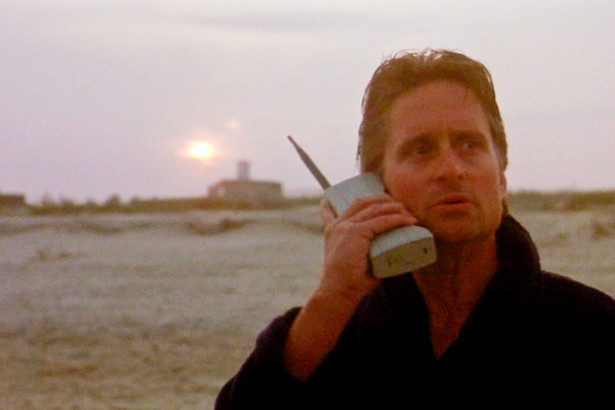
Gordon was very happy with his 'free calls on the beach at sunset' plan

Gordon Gekko; Larry the Liquidator; the Duke brothers. They may sound like professional wrestlers but what they actually are is nothing like as honest and noble. They are cinema’s money men. The people at the top of the writhing pile of maggots that is the financial industry. It is not an industry that Hollywood understands, or if it does then that does not translate into a willingness to portray it accurately. A few broad strokes give us a man on the edge, betting the firm in a desperate attempt to save his drink-soaked skin; a few more give us his boss, who spends his days in his gigantic office or the back of his limousine, drinking whiskey and handing out lessons on what life is really like. A final few more gives us the young Turk who realises something is badly wrong and saves his soul by bringing down the firm and walking away. And that, pretty much, is the financial industry on film.

Given that we now live in a post-apocalyptic landscape after our dreams were all laid to waste by the feckless actions of some greedy banker scum, or so the story goes, perhaps that is all the financial industry really deserves. Films have a difficult relationship with work as it is, so to accurately and interestingly cover the work of people it is going to be hard to portray as human, let alone sympathetic, is a big ask. Also, is there really an audience for a film about an individual diligently carving out a good reputation for himself in the Compliance department of an international bank? Perhaps, but I wouldn’t want to be the one pitching it. Actually, of course I would because what if it sold? I’d be a millionaire! But it wouldn’t. I can’t even get that to fly in my dreams.

Here’s an idea for an exciting scene in a film, Producer Guy. Continue reading Shake Your Money Maker

The Passion of the Kinski

Philip Concannon

Just good friends: Werner Herzog and Klaus Kinski

The title of Klaus Kinski’s memoir is Kinski Uncut, but that’s not strictly accurate. When the actor first attempted to publish his autobiography in 1988, under the title All I Need is Love, a lawsuit from Marlene Dietrich (who had taken offence to his depiction of her as a lesbian) ensured the book was withdrawn from circulation until after her death. Since then, each subsequent edition of the book has carefully removed the names of anyone still living who may be feeling similarly litigious, so what we have here is not exactly the complete recollections of Klaus Kinski as the author intended. Nevertheless, it still feels like a pure, concentrated dose of Kinski; as if the actor’s brain spilled out onto the page and he left it there without making any attempt to organise his thoughts or check his darker impulses. Perhaps Kinski Unfiltered or Kinski Unhinged would have been more appropriate titles.

But is it Kinski Untrue? I don’t doubt that many of the events in the book took place in Kinski’s life, but the author’s hyperbolic description of them often gives us reason to doubt the veracity of what we’re reading. Everything in Kinski Uncut is extreme – his suffering is more intense than most ordinary souls could bear, his acting performances are received with either angry derision or tears and standing ovations, his sexual encounters (of which there were many) are all epic and orgasmic. When he talks about his childhood, he describes a period of Dickensian squalor, where he suffered permanently from starvation and frostbite and learned to steal in order to survive. Everything in the book seems designed to reinforce the idea that Kinski’s life was more dramatic, outrageous and depraved than that of any mere mortal who might be reading his story; that he is a tortured genius who has suffered nobly among the “idiots” and “riffraff” who make up the rest of the population. This is Klaus Kinski’s world, and the rest of us are just living in it. Continue reading The Passion of the Kinski

Attack of The Clones: Hollywood’s new originality

By Ron Swanson

“So, someone has to be Dawson? No way, man…”

Striding through a wasteland of bloated sequels and wasted comic book adaptations comes this blockbuster season’s one true warrior of originality. Ignore the name; Super 8 is not a (seventh) sequel to Rainn Wilson’s twisted comic book movie. Instead, it’s a collaboration between one of the finest young filmmakers to be embraced by the Hollywood mainstream and one of the all time greats. Yes, that’s right: Super 8 is going to change the way Hollywood does summer blockbusters!

Now, if Mostly Film had the budget, that would all have been voiceover, and following that there would be a record scratch, and the picture would flash across images from seminal films like Jaws, Close Encounters of the Third Kind, ET (all directed by Super 8 producer Steven Spielberg), Stand by Me and The Goonies. Super 8 may not be a sequel. It may not be an adaptation. What JJ Abrams’ new film is, though, is an unashamed homage to the films of the 1980s films that I, for one, grew up adoring. Continue reading Attack of The Clones: Hollywood’s new originality

Reopening Heaven’s Gate

BY PHIL CONCANNON

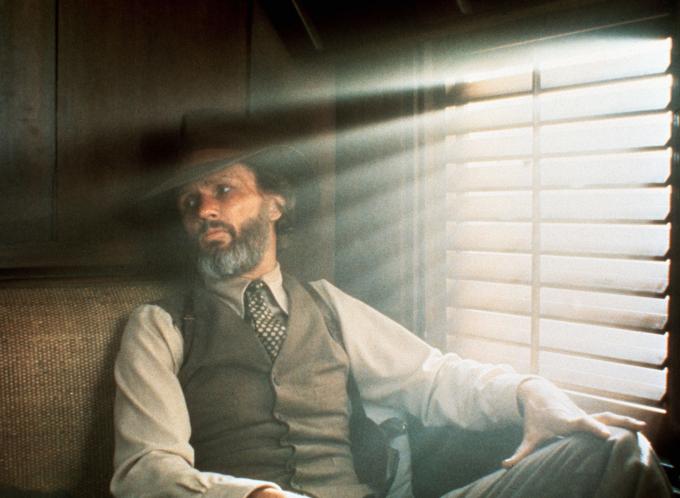
“Does anyone want to switch seats?” Kris Kristofferson wonders what he’s got himself into.

Can Heaven’s Gate ever be rescued from its reputation? For thirty years the film has been marked by the stench of failure, its production having passed into legend alongside Apocalypse Now as an example of how not to make a movie. In the case of Francis Ford Coppola’s film, at least he could cite circumstances beyond his control – a sudden typhoon, Martin Sheen’s heart attack – and the director somehow managed to find a powerful, spectacular film amid the chaos. Heaven’s Gate has no such natural disasters to hide behind and the scathing critical reaction upon its release sealed the film’s fate. This flop wasn’t just viewed as just another bad movie, it was viewed as an example of directorial self-indulgence run amok and the wastefulness of Hollywood studios, and neither United Artists or the film’s young director Michael Cimino (who had reached the peak of his career just two years earlier) ever recovered from the debacle.

That was all I knew of Heaven’s Gate before I first saw the film some six years ago, and given its notorious history, I was surprised at how much I enjoyed the experience of watching it. The film has problems, for sure, but it also has considerable virtues and a sense of ambition that is frequently thrilling. Recently watching the film for a second time on the big screen, it seemed inconceivable that this bold and strikingly beautiful film had been described in the press as “an unqualified disaster” (Vincent Canby) and “the most scandalous cinematic waste I have ever seen” (Roger Ebert). Even though this film found a few ardent defenders in those early days – Robin Wood, Kevin Thomas and Nigel Andrews among them – the damage had already been done. As recently as 2008, Joe Queenan (in an article inspired by the release of The Hottie and the Nottie) claimed that Heaven’s Gate was in fact the worst film ever made. Seriously, did we all see the same fim? Continue reading Reopening Heaven’s Gate