This year Glasgow Film Festival was ten years old. We asked five writers to tell you about a film they saw during the Festival that matters.

This year Glasgow Film Festival was ten years old. We asked five writers to tell you about a film they saw during the Festival that matters.
Ron Swanson
This year’s London Film Festival put together the best programme of films I can remember in my ten or so years of attendance. It delivered some brilliant films with huge reputations from festivals earlier in the year, but also a fair few new discoveries for me, and a handful of well-crafted crowd-pleasing films, which are the lifeblood of any festival. Continue reading London Film Festival: Festival Wrap-Up
The Invisible Woman (Ralph Fiennes, 2013)
Ralph Fiennes’ second outing as director, following Coriolanus, sees him shift from one of the traditional choices of the serious thesp-turned-filmmaker, Shakespeare, to the other – costume drama. An adaptation of Claire Tomalin’s biography, The Invisible Woman is the story of Nelly Ternan, the actress who for many years was the mistress of Charles Dickens.
We initially meet Nelly (Felicity Jones) some years after Dickens’ death; now married with a family, she is directing a school production of a play by Wilkie Collins. This stirs up memories of how she first met Dickens when, aged 18, she performed in the same author’s play.
The Charles Dickens presented here is a showman who lives in the full glare of celebrity (in one scene, he is mobbed by adoring fans). He is larger than life, effusive if perhaps somewhat egotistical, and shows a warmth not generally associated with Fiennes. However, once you get over the shock that Dickens isn’t being played by Simon Callow, Fiennes is quite successful in the role; I particularly enjoyed his scenes with Tom Hollander as Wilkie Collins.
Unfortunately, I was less engaged in his relationship with Nelly, whose dilemma really should be the most interesting element of the film. Though the pair are swiftly attracted to each other, Nelly is reluctant to enter into a sexual relationship with a married man (though I was unclear exactly what she was expecting to happen). Her mother (Kristin Scott Thomas) is more conflicted, concerned for her daughter’s reputation but pragmatic enough to recognise a chance for economic security when she sees it. Dickens’ behaviour is also cause for concern; in at least one instance, he treats his family in an utterly unconscionable manner.
In a film about an illicit relationship, it is odd that it’s over 70 minutes before we get any sense of passion between the two leads. Whether this sense of restraint was the choice of Dickens or of Fiennes, I can only guess; either way, it makes this tasteful, well-performed film a colder affair than you feel it should be. – Gareth Negus
The Invisible Woman is due for release in the UK on 7 February 2014. Continue reading London Film Festival 2013: Closing Day Round-Up
The Sacrament (Ti West, 2013)

Ti West, the man the festival brochures like to call the king of slow-burn horror, has been promoted (possibly not the right word) from FrightFest to full London Film Festival status for his latest film. A non-supernatural cult horror largely inspired by, though not specifically based on, the Jonestown massacre, it’s a found footage film, which may have you moaning already.
The found footage is presented in the manner of The Last Exorcism rather than The Blair Witch Project, in that it’s been edited – sometimes in such a way as to suggest there were more cameramen available than the script leads us to believe – and given a suitably doomy score.
The film follows two reporters from Vice ,which I was surprised to learn is actually a real thing, into a remote hippy-ish cult, which the sister (Amy Seimetz of Upstream Color) of a friend has joined. Initially, all seems like peace and love, despite the armed guards at the gate. But things take a sinister turn once the reporters start asking questions of the cult leader, Father (Gene Jones).
I greatly enjoyed West’s last two films, The House of the Devil and The Innkeepers; unfortunately, The Sacrament didn’t work so well for me. Part of that was down to my expectations – I had anticipated that Eden Parish would hold a supernatural secret, and was disappointed that the threat turned out to be more prosaic. That, of course, is my problem rather than the film’s. The real flaw is that, having arrived at the camp, the leads’ subsequent actions have basically no effect on what transpires. They run around filming, and do quite a bit of shouting, but fail to exert any influence on who lives and who dies. They can only observe, and hope not to get killed.
Perhaps that was West’s intended point, and what he saw as the true horror of the situation. It’s good to see him trying new subject matter and expand his range, but while The Sacrament includes individual moments that shock, it failed to move me as drama. Gareth Negus
The Sacrament is showing at the London Film Festival on Wednesday 16 October. Continue reading London Film Festival: Day Eight Update
A round-up of some what’s been shown to date
Captain Phillips (Paul Greengrass, 2013)
The 57th BFI London Film Festival gets off to a cracking start with the Opening Gala screening of Captain Phillips. Adapted by Billy Ray (Shattered Glass) from the book “A Captain’s Duty: Somali Pirates, Navy SEALS, and Dangerous Days at Sea”, by Richard Phillips, telling the story of the hijacking of an American cargo ship; the first to be hijacked in 200 years, Captain Phillips sees Paul Greengrass behind the camera again for the first time since Green Zone in 2010.
Of course, adapting a film from the memoir of your lead character offers you some challenges as a filmmaking team, especially when working in the thriller genre. It’s harder to create suspense when the audience knows that when the ending comes, our main character is getting out of there alive. Greengrass dealt with the opposite problem, so brilliantly in United 93, when he took an ending we all knew all too well, and added swathes of raw, unavoidable human sorrow that made the film almost unbearable, so it should come as no surprise that Captain Phillips has an answer for the problem, by subtly subverting the traditional thriller structure.
That it can do so, so effectively, is largely down to a terrific central performance from Tom Hanks, who has never been better than he is here. It’s such a vanity-free performance from Hanks. Phillips’ heroism is certainly not obvious, nor the type that is traditionally sought out by Hollywood stars. In fact, in Hanks’ hands, Phillips is not a particularly likable character, phlegmatic to a fault, and hard on the men under his command. The majority of his actions are not motivated by a desire to be a hero, and as aspects of his character slip away in front of our eyes, his performance doesn’t waver at all.
He’s ably supported by a cast of mostly unknowns, with Barkhad Abdi as the leader of the skeleton crew of Somali pirates who board the ship, given the most rounded supporting character to work with, and impressing. It’s a tour-de-force performance, though, and in spite of Hanks’ unselfishness as an actor, it’s still almost impossible to take your eyes from him. With any justice, he’ll be a strong contender for an unprecedented third Best Actor Oscar come late February. Ron Swanson Continue reading London Film Festival: Day Three Update
In the first of today’s two LFF updates, Ricky Young reflects on a handsome restoration of an ugly film
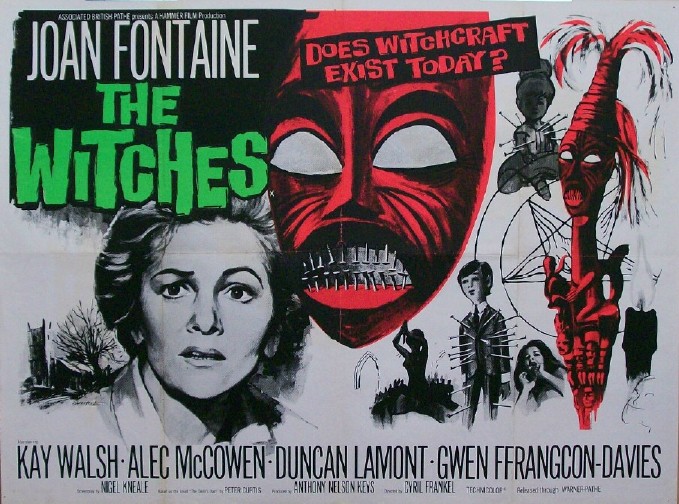
Today sees the LFF unveiling of the restored version of overlooked Hammer potboiler The Witches. Directed by Cyril Frankel and written by Nigel Kneale, it stars Hitchcock Oscar-winner Joan Fontaine in what would turn out to be her last cinematic role.
The Witches rarely gets much of a mention when discussing Hammer’s output – none of the big Hammer names or stars are involved – and despite the admittedly glorious-looking restoration, it’s not hard to see why. Even at their tackiest, the Hammer greats always had a spark of audience-pleasing oomph at their core. The Witches’ most exciting moment features six seconds of runaway livestock. Make of that what you will. Continue reading London Film Festival: The Witches
The LFF opens to the public on Wednesday. Gareth Negus introduces a few films showing in the first week
The Strange Colour of Your Body’s Tears
Written and directed by Hélène Cattet and Bruno Forzani, this, like their debut Amer, is an art film that plays with the imagery of the giallo – the Italian horror sub-genre whose best known exponent is Dario Argento. If you’re unfamiliar with the form, this film may well be a bit baffling. If you are, then … it might still be a bit baffling.
The apparent plot centres on Dan Kristensen (Klaus Tange), who returns home to find his wife missing. His efforts to find her lead him to a room on the seventh floor, where a mysterious woman tells him this is not the first disappearance in the building. Things get progressively weirder, involving childhood flashbacks, and numerous murders.
The apartment building with hidden secrets recalls the sinister complexes of Argento’s Inferno; I also spotted visual and narrative references to The Bird with the Crystal Plumage, Deep Red and Tenebrae (those better versed in Italian horror can doubtless list many more). But while many Argento films have a loose grip on such trivia as logic and character motive, they do have actual plots behind their elaborate murders and lavish images; Strange Colour seems uninterested in such things. Cattet and Forzani frequently cut abruptly between scenes, often with a character waking up in a manner to suggest the preceding events could have been a dream. (Indeed, the film starts with the camera closing in on Kristensen’s closed eyes, as though to suggest the whole film may be taking place inside his head). As a lead character, he is frustratingly blank; it is impossible for the audience to feel much empathy, or even interest, in his bizarre plight.
Clearly, narrative is not the point in a film like this; it’s purely an art film, a visual and auditory experience that isn’t designed to be watched for the story. I don’t mind being baffled by a film, but by the halfway point I reluctantly concluded that I was also really quite bored. It is stunning to look at, beautifully designed and lit, and the directors come up with numerous images as impressively wince-inducing as anything in Argento’s back catalogue; but it feels like little more than a clever, elaborate tribute act.
The Strange Colour of Your Body’s Tears screens on Friday 11, Sunday 13 and Sunday 20 October. Continue reading London Film Festival 2013: Early Doors
Spank The Monkey hails a film festival with a twist.
Remember cinemas? They used to be good, didn’t they? And now they’re not. Many people have offered their solutions to the problem, but the only thing we can agree on is that we should ignore anyone who uses the phrase ‘second screen experience’ without an accompanying ‘wanker’ hand gesture. So what can be done?
Maybe we should look at the example of one of the best cinemas. Between 1981 and 1993, the Scala was a London cinema club with a wildly eclectic approach to programming. Its twelve-year mission to introduce audiences to the most extraordinary films on the planet was celebrated in a 2011 festival called Scala Forever, which I reported on at the time. It was a great way to commemorate a long-gone icon, but it wasn’t quite a permanent monument. An upcoming festival called Scalarama, on the other hand, has much larger ambitions. Continue reading Scalarama
Niall Anderson looks at smaller festivals and special screenings coming up this summer
Film festival season begins every year in January with Sundance, proceeds to Berlin for February, and advances to Cannes in early May. Somewhere in the middle the Oscars happen, and then the heavy-hitters take a breather till August and Venice. In the meantime there are countless smaller festivals, special one-off screenings, and various blink-and-you’ll-miss-em appearances of directors and films you might like to see if only you knew they were happening. So welcome to the Mostly Film Blink-And-You’ll-Miss-Em round up for summer 2013.
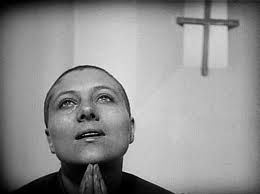
First up, because it’s genuinely first up, is a special showing in London’s Union Chapel of Carl Dreyer’s 1928 silent masterpiece The Passion Of Joan Of Arc. A critical classic almost since it first appeared, and renowned for the savagely self-exposing turn of its star, Maria Falconetti, The Passion has inspired countless musical interpretations and post hoc soundtracks. The one you’ll hear at the Union Chapel is by Irish composer Irene Butler, scored for soprano, organ and electronics. Part of the Union Chapel’s Organ Project season, the piece will be performed on July 17th only. If you’d like free tickets, there will be a competition on MostlyFilm’s twitter account – starting NOW. Continue reading Come See The Paradise
Gareth Negus, Matthew Turner and Sam Osborn report from the 2013 Edinburgh International Film Festival.

Gareth Negus
The 2013 Edinburgh International Film Festival followed a successful first year for Artistic Director Chris Fujiwara.
Perhaps I ended up seeing the wrong films (with 100+ features and short programmes, it really wasn’t possible to see everything) but I felt the programme was a slight disappointment after last year. A lot of this was down to the underwhelming opening and closing films. It’s clearly not easy to select the perfect films for these slots: they need to balance commercial appeal with star quality for the red carpet press photographers, while maintaining a degree of artistic credibility. So Breathe In, the opener, probably seemed like a good bet: co-star Felicity Jones available for pictures, from the director of the well-reviewed Like Crazy, and an accessible subject matter. Unfortunately, though well photographed and nicely played by Jones and Guy Pearce, the story – middle aged musician and family man finds his mojo revitalised by a younger girl – was a very familiar one, and the film did nothing new or interesting with it.
 MostlyFilm