Category Archives: New Releases

Mostly Pop – April 2012

by Mr Moth

Mid-slap, K'Naan realises that he's going to need a bigger hand.

Keane – Silenced by the Night.

Apparently, Keane have been releasing records fairly regularly since they stunk up the airwaves back in 2004 with Somewhere Only We Know. Amazing. A band who have risen without trace, they’ve had three number one albums. Seriously, what? Anyway, in a country where Adele’s 21 outsells Michael Jackson’s Bad, this will probably be another number one album. Which is a shame.

For one thing, I think – I think – we’ve already heard the Killers’ second album, which is what this song could be taken from. Not the video, though, because it’s, er. Actually, no, replace dish-faced Tom Chaplin with a scraggy-bearded Brandon Flowers and it is a video from the Killers’ second album. Which would be fine if the Killer’s second album was worth copying, which it clearly isn’t. Also, also, also, this video has my LEAST FAVOURITE video cliché, when the protagonists turn up where the band were, but – ooo-eee-ooo-eee – they’re not there! Just their instruments! Oh wow, spooky doo!

Anyway. I look forward to Keane turning up in a couple of years with big feathery shoulder pads.
Continue reading Mostly Pop – April 2012

Breathing

By Blake Backlash

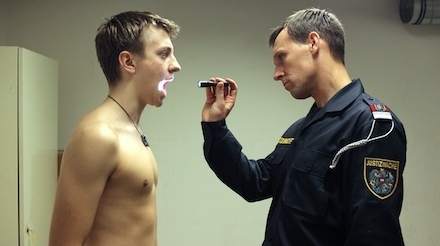
Breathing: the first thing you have to get the hang of when you stumble into the world, and the last habit you break before you go out of it. By calling his film Breathing, Karl Markovics is no doubt trying to alert us to the film’s thematic concerns with living and dying. However, the title also seems to me to be about the way the way those movements inside our chests serve to connect us. Not only is it something that we all do, it also the most immediate and ever-present way we have to meet the world around us. You might not be thinking about it much as you read this, but if the air around you changed in way that made breathing difficult, you’d soon start to pay attention to it. And that act, of noticing our breathing, also seems to bring the present moment into sharp focus – that’s why tapes that are supposed to help you sleep, or help you meditate in way that helps you forget your worries, start by telling you notice as you breathe in… and out. A breath is a moment. Continue reading Breathing

In Night and Ice

On the occasion of the 100th anniversary of the sinking of the Titanic, we look at just a few of the many screen portrayals of one the most infamous* disasters of the 20th Century. Spoiler warning – we do reveal details of the fate of the RMS Titanic.

Continue reading In Night and Ice

Rearranging the Furniture

by Jen Corcoran

Lena Dunham in Tiny Furniture

Lena Dunham: if you don’t know her name already, you soon will. The 25 year-old Manhattan based film-maker is currently the focus of intense media attention from blogosphere to broadsheet as her Judd Apatow-sponsored TV series Girls debuts on HBO over in the US. Meanwhile, Dunham’s wildly acclaimed breakthrough feature Tiny Furniture (2010) finally gets a release in the UK this week, exporting her brand of naturalistic, female-led comedy across the Atlantic.

Lena Dunham’s accelerated rise through the Hollywood food chain has met with adulation and condemnation in equal measure. With a dozen YouTube shorts and one micro-budget feature, Creative Nonfiction, under her belt, Dunham was barely out of college when Tiny Furniture won the Best Narrative Feature prize at South by Southwest Festival. Starring the writer herself as Aura, a disillusioned graduate who returns to New York and moves back in with her mother and sister, the film is an unashamedly personal, self-parodying exploration of what it means to be young in the post-Millennial era.

Continue reading Rearranging the Furniture

Once Upon a Time in Anatolia

by Indy Datta

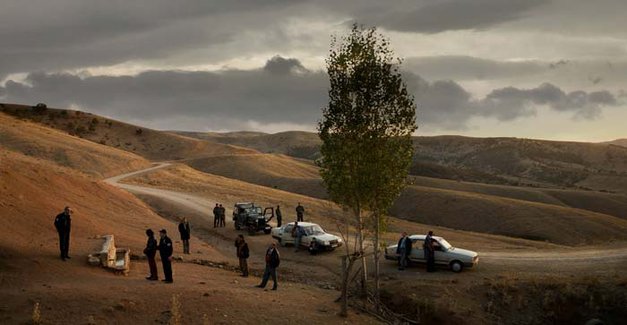
Turkish director Nuri Bilge Ceylan’s latest film was the joint winner – along with the Dardennes’ The Kid With a Bike – of the Grand Prix at last year’s Cannes film festival, and has since been widely  acclaimed as his masterpiece.  At the very least it is his most thematically expansive and formally ambitious work since his international breakthrough, 2002’s Distant. But as always with Ceylan, I find myself stranded uneasily between admiration and scepticism, dazzled by the technical mastery, unable to shake the suspicion that there’s less to the film than meets the eye, yet on some level aware that the failing is probably mine.

Continue reading Once Upon a Time in Anatolia

John Carter

by Gareth Negus

Since first writing about the film John Carter for Mostly Film nearly a year ago, I’ve done my best to avoid news of it. I’ve seen the trailers, but deliberately decided not to watch any clips – I wanted to come to the finished product as unspoilt as possible.  That didn’t mean I escaped the news altogether, and some of that news wasn’t encouraging.  The dropping of ‘of Mars’ from the title, reportedly decided after the massive failure of Mars Needs Moms caused an outbreak of brown trousers in the Disney marketing team, was a big worry.  The name John Carter on its own didn’t seem to communicate much to a potential ticket buyer.  If Lawrence of Arabia was being made today, would it be retitled just Lawrence, in case the mention of Arabia put people off?  They might as well have called it A Film about Some Bloke and be done with it. Continue reading John Carter

Slade in Flame

by Sarah Slade

Before the Beatles and Dick Lester, pop movies of the 1950s and 60s featured one of a stable of jobbing popstars, a “let’s do the show right here, fellas!” plot that would involve the clean-cut young folks keeping their youth club/coffee bar out of the hands of a besuited property developer using  the Power of Pop (or Trad Jazz, in the case of Helen Shapiro in It’s Trad, Dad!). The jobbing popstar would be required to sing one uptempo number, a ballad, and a jaunty final number about what fun it is to be young and listen to crazy beat music

The template was changed slightly with the release of “A Hard Day’s Night”: an mock documentary that featured the Beatles playing slightly exaggerated versions of themselves (Sardonic John, Cute Paul, Quiet George and Hapless Ringo) doing the publicity rounds when all they want to do is play and sing a whole album’s worth of catchy tunes. But still the basic premise was crazy kids at play, and hey, what are they doing on that staircase?

But then Altamont happened, and the Sixties stopped happening.

Continue reading Slade in Flame

The Front Line

by Caulorlime

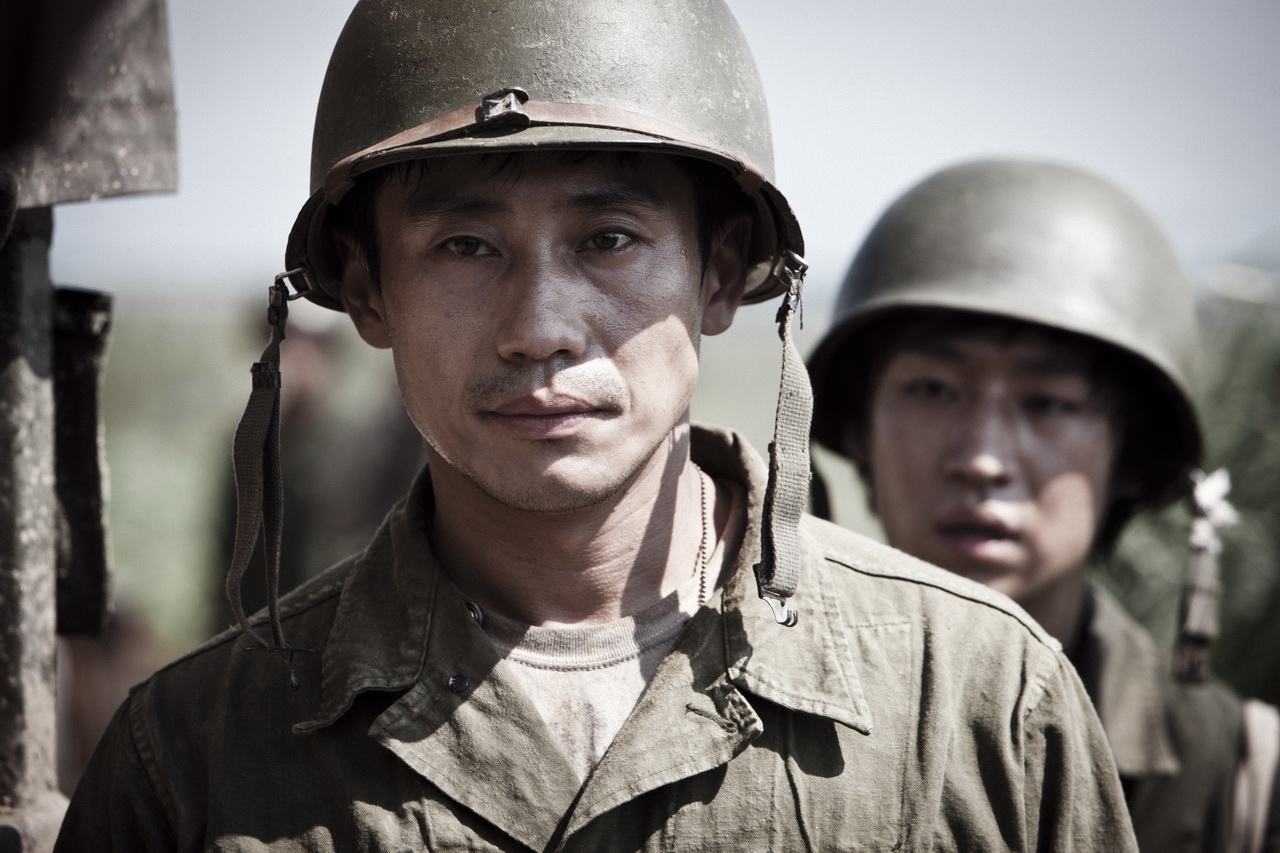
The Korean War is an historical obscenity so absurd that it feels like it was created for propaganda purposes. We are, in the west, well used to the hideous idea of people dying in the First World War right up to 11 o-clock on the eleventh of November, and the utter pointlessness of those deaths. In the Korean war (or as the Koreans call it, the war)* the same thing occurred, only the truce talks went on for two years after the fundamental desire for ceasefire was agreed, with the added piquancy that the fighting that occurred in the last few months and weeks was actually the most vicious, the most deadly of the entire conflict. Areas devoid of mineral richness or any natural strategic importance, hills too steep for farming and too bleak for settlement, became the focus of horrific and sustained fighting. Some small and pointless territories changed hands over 30 times in 18 months at the cost of countless Korean lives, as well as a significant number of Chinese, American and other troops. The perceived importance of these areas was due to their proximity to the 38th parallel, an entirely arbitrary line drawn at the end of WWII partitioning the country into North and South Korea, and sparking the inevitable war. In 1953, as the interminable armistice talks dragged on, these hills became a flash point merely because the owners of a hill could move the arbitrary border to the other side, gaining about three kilometers of extra territory. Thousands of people were killed and maimed fighting over them. The damn things are in the demilitarised zone now, and no one owns them.

Continue reading The Front Line

Hadewijch

by Yasmeen Khan

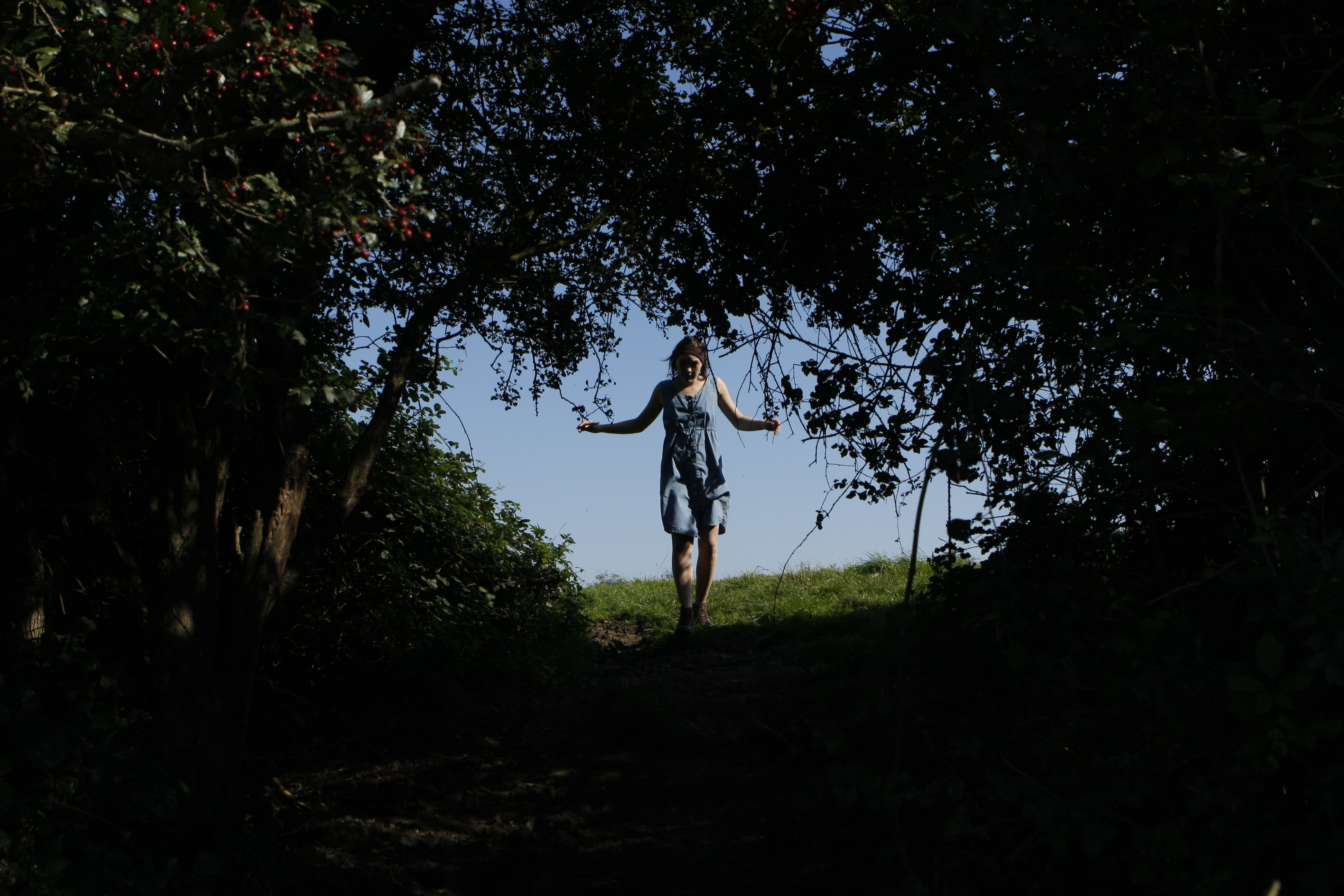
Before 2009’s Hadewijch, Bruno Dumont made three exceptional feature films – La Vie de Jésus (1997), L’Humanité (1999) and Flandres (2006) -and one terrible turkey – Twentynine Palms (2003), not to be confused with 29 Palms (2002), which is also the only one to be set outside France. So it’s encouraging to see him return there for Hadewijch. His style suits contemporary French cinéma du corps much better than it does the Californian thriller. Dumont’s films are bleak and powerful explorations of personalities in crisis, set against the barest outlines of plot, naturalistic, drawn on drab streets or brutally beautiful landscapes, concerned with extremes of emotion, with setting and atmosphere rather than narrative.

Continue reading Hadewijch

Fire Walk With Me

by Gareth Negus

Before its release in 1992, Twin Peaks: Fire Walk with Me was possibly David Lynch’s most eagerly-anticipated film yet. When it was released, it immediately became the most bitterly criticised work in his filmography. It has subsequently been re-evaluated by many, and now occupies a rather peculiar place in his body of work. A prequel to the TV series that Lynch co-created with Mark Frost, it was accepted at the time as forming part of the series’ narrative; but anyone thinking about watching the film for the first time in 2012 may never have seen a single episode of the TV show. If that includes you, please note that this article contains major spoilers. And also that the entire series is available on DVD.

The series was ostensibly about an FBI agent, Dale Cooper (Kyle MachLachlan) who is sent to the town of Twin Peaks to investigate the murder of a teenage girl, Laura Palmer; yet the whodunit element was only ever intended to act as a backdrop to the story of the town’s variously eccentric and/or sinister inhabitants. As the series went on, elements of outright fantasy were introduced, heralded by a much-spoofed dream sequence featuring a dancing, backwards-talking dwarf:

At first, the series was a phenomenon, but ratings took a nose-dive mid-way through the second season. Having revealed the identity of the killer, at the network’s insistence, the series floundered in a run of tedious episodes. The series found its feet again toward the end of the season, but too late to escape cancellation.

Like a lot of Twin Peaks fans, I was initially disappointed with the news that the film was to be a prequel rather than a continuation. We already knew what had happened to Laura Palmer; we wanted to find out what happened next, after the cliffhanger that closed the second and final season. But any new Peaks was better than no Peaks at all, so of course I went to see it.

Continue reading Fire Walk With Me