Category Archives: New Releases

Man on a Ledge

by Susan Patterson

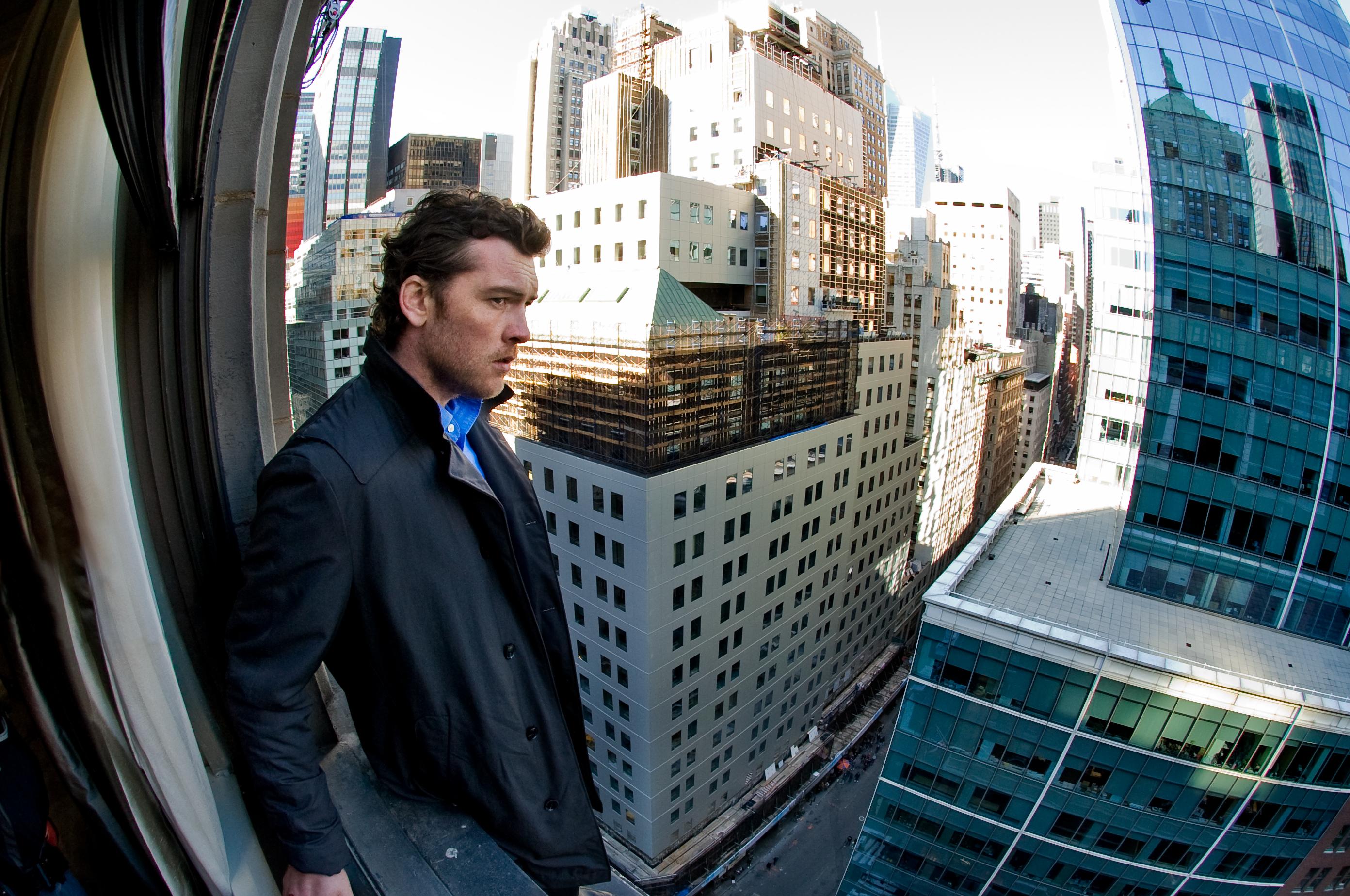
Ex-cop Nick Cassidy (Sam Worthington) checks into a room with a view in the Roosevelt Hotel, New York City, under a assumed name, eats a last meal, wipes the room clean of his finger prints, writes a note, and steps out the window and asks for police negotiator Laura Mercer (Elizabeth Banks) by name. A swift flashback sets up his relationships with his former partner Mike Ackerman (Anthony Mackie), who, like every fictional cop partner, believes in his innocence, and his no good brother kid brother Joey (British actor Jamie Bell not looking very much older than when he was Billy Elliot). A graveside altercation at his father’s funeral sees Cassidy overpower his guards, punch out Joey, steal his car, and crash into a train.  Wouldn’t any of us be standing on a ledge after a day like that? Continue reading Man on a Ledge

Nine Muses

by Ann Jones

That it’s hard to know where to begin writing about John Akomfrah’s The Nine Muses is illustrated by the fact that this is my fifth, or is it sixth, attempt at an opening paragraph. And that’s just the ones I’ve actually typed; there are several more rattling around in my head. And none of them quite works. Do I want to start with the beauty of the thing? Or the fact that it’s made me yearn for snow even more (and I was already feeling more than a little disgruntled about the lack of snow this winter)? Or should I focus on Akomfrah’s use of colour? Or his interspersion of archive film with exquisite footage filmed in the snowy Alaskan landscape, or the extraordinary soundtrack culled from a diverse range of sources, or the framing of a film about immigration into Britain in the 1950s and 60s with Greek myth, or, or, or…

Continue reading Nine Muses

Coriolanus

by Gareth Negus


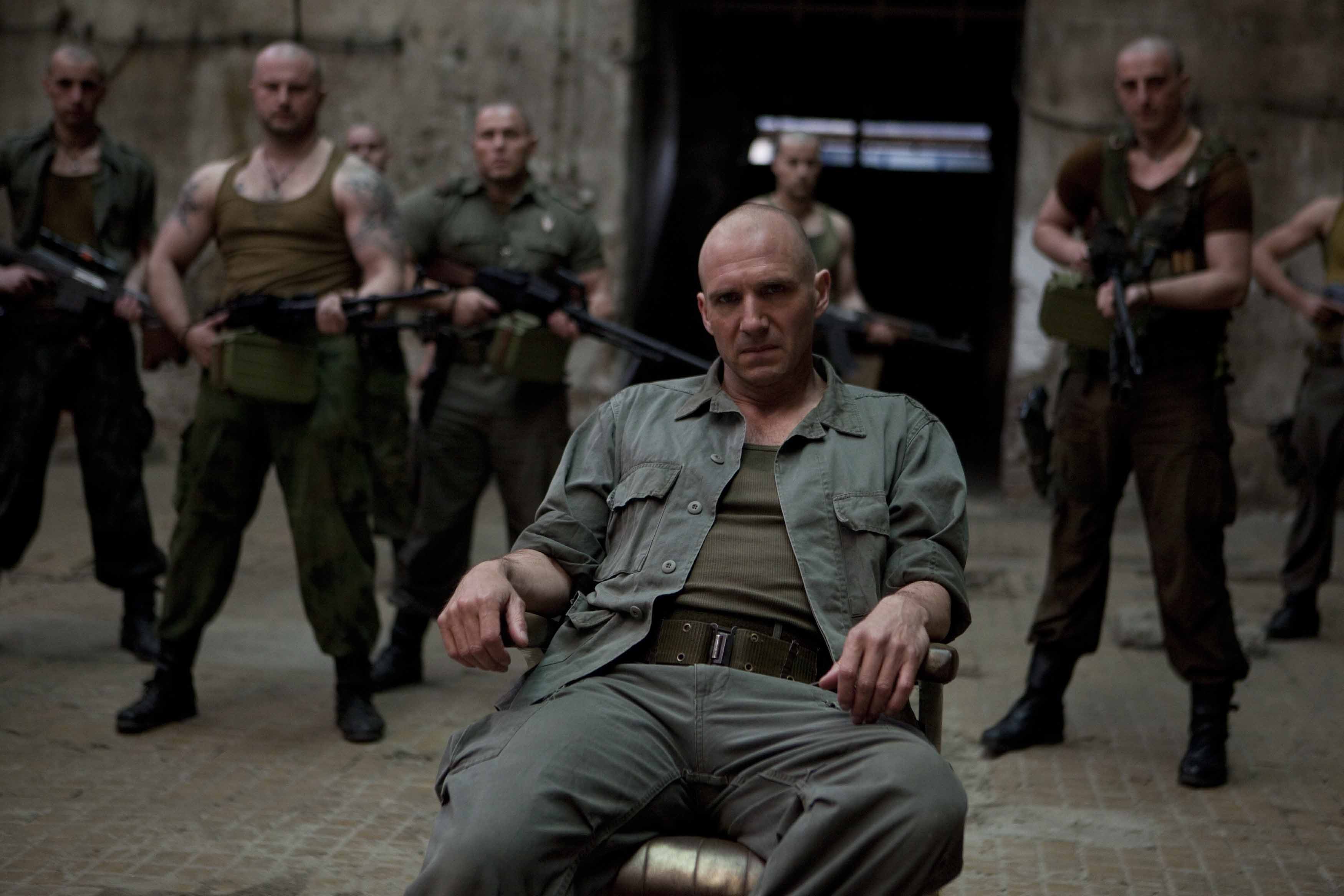
Filming Shakespeare successfully is a bit of a trick, especially if you want to reach an audience who would normally run screaming from the idea of watching a 16th century play in a theatre. Not only do you face the challenge of transferring a work from one medium to another, but of encouraging the audience to see past the artificial language and view the play in a contemporary light. Do you keep the story in its original period, or go for a modern setting? Do you favour fidelity to the text, or do you give yourself license to chop and change scenes and dialogue to keep things moving?

Get it wrong, and you have a film like Julie Taymor’s the Tempest (2010), in which actors wander on, do their party piece, and then wander off stage again without any sense of how they are relating to the other characters in the story. Get it right, and you have something like Baz Luhrmann’s version of Romeo + Juliet (1996), a thrillingly modern crowd-pleaser that remains faithful to the source. Continue reading Coriolanus

I Don’t Like Loose Ends: Steven Soderbergh’s Haywire

"Unready for my close-up": the elusive Steven Soderbergh

By Niall Anderson

The first problem with auteur theory is that it made everyone want to be an auteur. The second is that auteurism made versatility a matter of special regard, rather than an essential part of a director’s make-up. As auteurism took hold in the 70s, the salaried DIY wizards of Hollywood’s middle years must have wondered what was suddenly so impressive about people directing and writing their own movies. Not long before, writing and reworking scripts had once been an essential facet of the director’s job: you just didn’t get a credit for it. And yet here was someone like Robert Altman doing the same thing, and being called a genius. Continue reading I Don’t Like Loose Ends: Steven Soderbergh’s Haywire

Shame

by Laurent de Alberti

Back in 2008, director Steve McQueen and actor Michael Fassbender were virtual unknowns when their first collaboration, Hunger, took the independent film world by storm, nabbing a Camera d’Or for best first film in Cannes, and giving them worldwide recognition. So it is an understatement to say that their second collaboration was much anticipated. And yet it turns out to be a surprise disappointment.

In Shame, Michael Fassbender plays Brandon, a successful executive in New York City, whose life is dominated by his pursuit for sex: internet porn, prostitutes, casual hook-ups, he is in thrall of a never ending sexual addiction, while being unable or unwilling to commit to any relationship. The arrival of his needy and unstable sister Cissy (Carey Mulligan) disturbs his carefully managed lifestyle.

Continue reading Shame

Take Shelter

by Emma Dibdin

Michael Shannon has officially become Hollywood’s go-to Man On The Edge. Ever since he literally drove Ashley Judd insane as a disturbed war veteran in William’s Friedkin’s paranoid skin-crawler Bug, he’s played an impressive range of notes on the scale of crazy. From his Oscar-nommed performance as Leo and Kate’s outspoken, fresh-from-the-asylum neighbour in Revolutionary Road to buttoned-down federal agent Nelson Van Alden in HBO’s mobster drama Boardwalk Empire, “intense” is too quaint a term for the brand of simmering, quasi-alien danger Shannon conveys: there’s a sense that any of his characters could snap at the drop of a hat.

What’s surprising about his bravura turn in Take Shelter, then, is how completely human and recognisable it is, how un-alien. Much of the Shannon canon has fascinated and repelled in equal measure – you wouldn’t be best pleased to run into Van Alden, or Bug‘s Peter Evans, down a dark alley. Running into Take Shelter‘s tortured blue-collar family man Curtis, on the other hand, you’d probably be fine with. You might even be inclined to offer him a pint and a sympathetic ear.

And God knows he could do with one. We’re introduced to Curtis in the midst of what appears to be an apocalyptic storm: ominously dark clouds gather, a harsh wind blows, and (in case you’re thinking that sounds like a pretty average British summer’s day) viscous brown oil begins to fall in the place of rain. And though he wakes up, this is no “it was all a dream” cop-out – the sense of impending dread lingers with us, and with Curtis, from those haunting opening shots onwards.

Continue reading Take Shelter

You Really Don’t Want What She’s Having …

The problem with the modern romcom is men, says Ron Swanson, and not for the obvious reasons.

Name this man

The Hollywood romantic comedy seems like it could not be in worse shape unless all films in the genre teamed Jennifer Lopez with Steven Tyler. In the past twenty years only two American romantic comedies have made more than £15m at the UK box office. To put that into context, among the films that have passed that entirely arbitrary landmark this year are Gnomeo and Juliet, The Smurfs and Black Swan.

It’s when you look at the two films, Hitch and What Women Want¸ neither of which, I would imagine, would feature very highly in any ‘best of the genre’ lists that one stark truth begins to appear: the romantic comedy has been betrayed by the absence of the A-list actor. Continue reading You Really Don’t Want What She’s Having …

Plus ça change …

Emma Street marvels at the sanity of the characters in bodyswap comedies.

The Magic Fountain of Plot Contrivance: Ryan Reynolds and Jason Bateman in The Change-Up

Hollywood loves a body swap. Whether it’s an older person swapping bodies with a younger one (Freaky Friday, 18 Again) or a man swapping bodies with a woman (It’s A Boy Girl Thing, The Hot Chick) or a person becoming a different version of themselves (Big, 13 Going On 30). Well, in The Change-Up, a thirty-something man wakes up in the body of a thirty-something man! A different one, obviously. It would just be normal life, otherwise.

Jason Bateman and Ryan Reynolds are lifelong friends. Bateman is a successful lawyer with an impossibly hot wife, three adorable children, tons of money and a very busy schedule. Reynolds is an unsuccessful actor with a sword fixation and a lot of free time. On a drunken night out together, they tell one another – insincerely – that they wish they had the other one’s life. Unfortunately they do so whilst pissing into a magic fountain of plot contrivance. Next morning sees the inevitable:  hangovers, regrets and waking up in someone else’s body. Continue reading Plus ça change …

A mole at the heart of the Circus

Josephine Grahl finds a little too much unspoken in Tomas Alfredson’s Tinker Tailor Soldier Spy

'Your mission, Benedict Cumberbatch, is to impersonate as many literary characters as possible over your career.'

Reviewing a cinema adaptation of a book you know and love is hard. Am I judging the film fairly as a work of art in itself; or am I criticising it, unfairly, for failing to live up to my own imagining of the characters and settings? You can’t divorce the film from its inspiration. Once a reinterpretation departs too far from the source material, you start to wonder why it still lays claim to the original material; why not just write something new instead?

“There is a mole at the heart of the Circus” – a Soviet double agent at the centre of the British secret service. George Smiley’s predecessor, Control, has worn himself out searching for the traitor and retired in disgrace. When a terrified agent suddenly turns up on the run from Russian assassins, with a story which confirms the existence but not the identity of the mole, Smiley is called from his own retirement to track down the traitor. Control has narrowed the field to five men, the tinker, tailor of the title; Smiley must finish the job. Continue reading A mole at the heart of the Circus