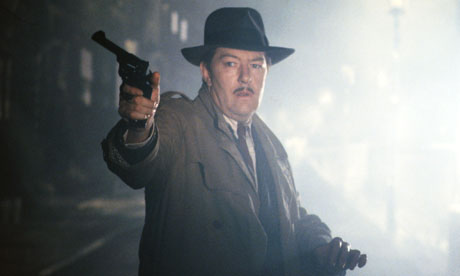
It is often said that we are currently living through a golden age of television, but for all of our contemporary small screen achievements has anything been created in this period that can match The Singing Detective? In fact, as I watched Dennis Potter’s miniseries for the first time this weekend (at an all-day ICA screening hosted by the Institute of Psychoanalysis) I wondered how the show would fare today. Who would commission a multilayered tale of sex, guilt and debilitating skin conditions, in which scenes of psychological realism are augmented by film noir pastiche and musical interludes? The show is so complex and unconventional in its storytelling techniques that it still feels astonishingly modern. The Singing Detective was ahead of its time. It may still be ahead of ours. Continue reading Under the Skin of The Singing Detective→
The first table-read of ‘The Angels Take Manhattan’ goes as well as expected.
The Ponds throw themselves off a building, and appear alive in a familiar graveyard. For some reason.
Amy Pond: “Why always here?”
The Doctor: “Does it matter?”
—
Alright, I’m through with playing nice.
Here at Europe’s Best Website, our journey talking about Doctor Who began at a fortuitous moment – the Russell T. Davies era had wheezed its last and every fanboi’s wish had somehow come true; Steven Flippin’ Moffat had taken over as Executive Producer! In a genre far more inured to disappointment and mediocrity, here was an aligning of planets that just didn’t seem real – the writer of some of NuWho’s best-regarded moments being handed the reins of the BBC’s flagship show, to bend to his considerable will.
We tracked the first two of Moffat’s series; celebrated the highs, tutted at the lows, and ended last year with the hope that, having got a few issues with self-importance out of his system, the newly low-key Doctor could return to being quirky and fun and serious and clever and scary and exciting i.e why we still love it, 49 years after it began.
But, no.
If you happened to see Moffat being presented with a Special Achievement Award at this year’s BAFTA’s (where it was abundantly clear that if he were in fact made out of delicious chocolate, the entire audience was going home hungry), or touched upon his now-infamous ‘The Tweeter’ presence (Sample tweet: “Thanks for saying nice things about me! If you said a bad thing about me, I’m calling the police!”), you could be forgiven for pondering quite how much of his not-inconsiderable talent is in thrall to his not-inconsiderable ego.
Three months after the announcement of Moffat taking over Doctor Who, it was announced that he would also be acting as Co-Executive Producer and sometime writer on the BBC’s new version of Sherlock, in which the classic Victorian detective would be reincarnated for our times as a boring, bug-eyed bell-end. Cleverly, each broadcast of the second series seemed to hit the airwaves with a new and rediffusable form of Holmes’ beloved cocaine, such was the rapture that greeted the three episodes of arch, incoherent filler – indeed, discussing on the internet how Sherlock survived his final plunge became one of this year’s most short-lived sensations, up there with ‘caring about sport’, and that Korean man who thinks he’s a horse.
Perhaps it’s unfair to suggest that Moffat could be spreading himself too thin – I do not, after all, know the man and the demands of his work-life in the slightest – but since the first five episodes of Series 7 represent the weakest gruel since the show came back in 2005, am I mad to ask for fewer damn ‘tease-words’ about next year’s Sherlock, and more of the juice that made Series 5 such a pleasure?
So, let the half-hearted, whey-faced griping begin!
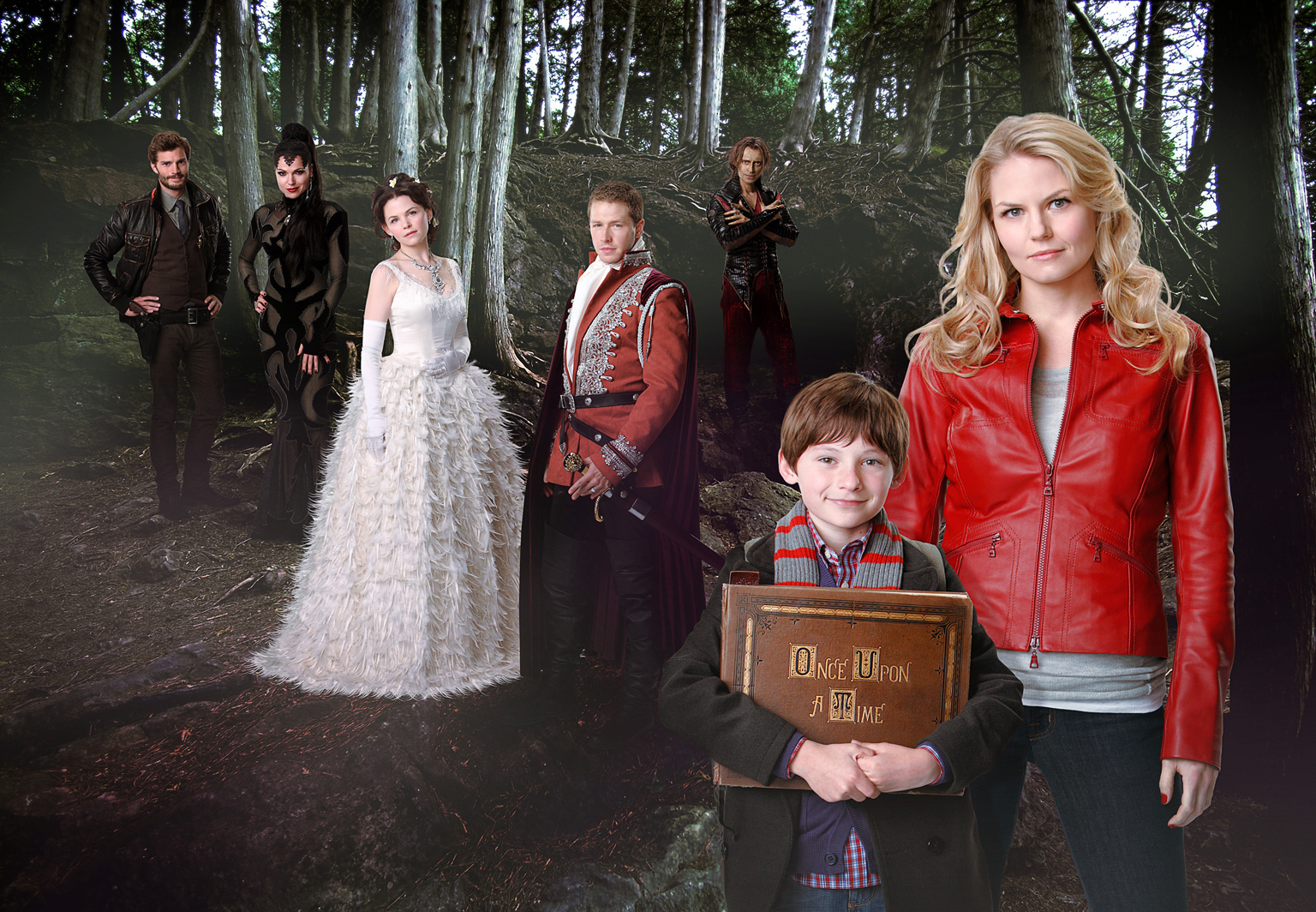
TheTramp finds that fairy tales are back – and they’re grimy.
All the magic in the world couldn’t protect the cast of Once Upon a Time from the curse of Photoshop.
Once upon a time, fairy tales were Disney’s domain. They took the old Grimm boys’ stories and lightened them up a little with a combination of beautiful art work, princess dresses to die for, Technicolor and happy ever afters. Publishers followed suit, updating the fairy tales we all know and love – like Cinderella, Red Riding Hood, Snow White, Beauty and the Beast – and creating pretty illustrated books that children could read with their parents and enjoy the pictures to help aid sweet dreams.
Readers of the Grimm tales will know they’re not designed to aid sweet dreams. They are social lessons and morality tales. They make it quite clear that the world is full of nastiness and only the smart, the cunning and the manipulative will survive. There may be dashing princes, but don’t rely on them ladies – what if you find yourself with a wolf and there’s no prince in sight?
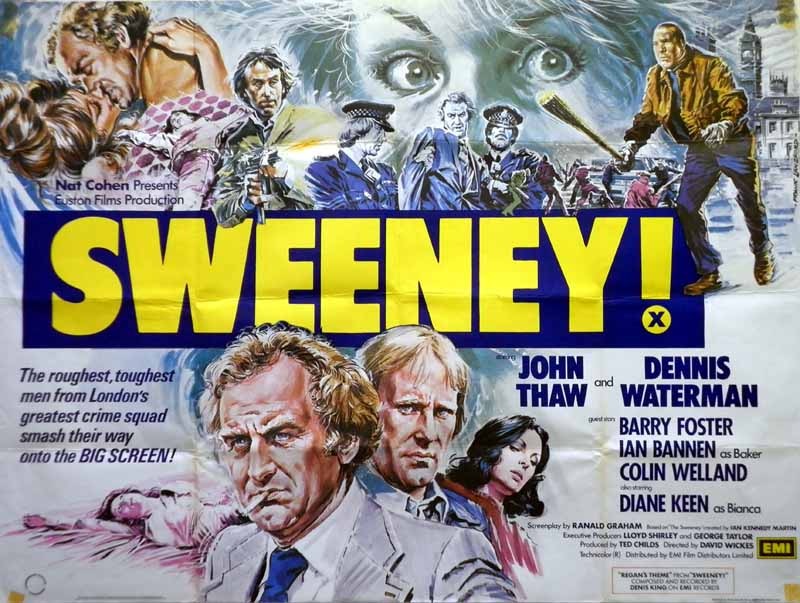
As the Nick Love-directed remake of The Sweeney reaches British cinemas, Dene Kernohan looks at the history of British TV in the cinema.
The subgenre of films based on British TV series is one I have a great deal of affection for, even if critical acclaim has been limited. And it’s one which has been around almost as long as commercial television itself. The earliest example seems to be I Only Arsked!, a 1958 Hammer comedy in which Bernard Bresslaw reprised his role of Pte “Popeye” Popplewell from Granada Television’s national service sitcom The Army Game.
“This is a story about a man who transforms himself from Mr Chips into Scarface”. Vince Gilligan – The Guardian, May 19, 2012.
For the past two months or so, fans of Breaking Bad have been ecstatic, watching a run of episodes that have seen the show reach new heights. For the next ten months or so, those same fans will be driven crazy by not knowing what’s coming next. I find some comfort in the fact that I can postpone the sense of emptiness and loss that will inevitably follow when there will never be any new Breaking Bad to look forward to, but it’s overshadowed by the nervousness and paranoia that summer 2013 will never arrive.
Niall Anderson pleads for people to lighten up about spoilers
Kirk responds badly to being spoiled for Friday Night Lights
The first recorded use of the term SPOILER ALERT is from 8 June 1982. It occurred in a Usenet film group (net.movies) and related to Star Trek II: The Wrath of Khan, which had been released the previous Friday. A group member called Hamilton from the University of Chicago employs the term as a warning to other users before speculating [SPOILER ALERT!] on whether Spock is genuinely dead or if he could be brought back for the sequel.
It feels strange to see a meme so fully formed a good twenty years before it hits the mainstream. But it’s all basically here, including the tendency of spoiler etiquette to skew towards cultish material. Look further in the Usenet archives and you’ll see the term being adopted as a simple matter of course and courtesy. A spoiler hierarchy also develops. Minor plot points are preceded by a throat-clearing SPOILER ALERT, while complex or major plot points tend to be translated into a substitution cypher like ROT13 (which replaces a letter with the one thirteen places after it in the alphabet). This way, you couldn’t be spoiled inadvertently.
It’s all nice and civilised, in other words, and it seems to have developed within Usenet without friction: that is to say from a commonsense recognition that not everybody who’s reading will have seen the film that you’ve seen, and would just like to know whether you thought it was good or not. The Usenet archive isn’t exhaustive or particularly easy to navigate, but of the 300 uses of the word “spoiler” I was able to find from the 1980s, none was preceded by a complaint, a tantrum, or a threat of excommunication from the community for apparently saying something too revealing. The anger and the aggression surrounding spoiler etiquette in the Net age simply aren’t there. I don’t often wish I was living in the past, but for this one topic I do.
Open a TV or film discussion thread on just about any online forum these days and the following things will happen. Someone will cry firsties, someone will call foul on the firstie, someone will propose an alternative firstie that makes an oblique jokey reference to something that happened in the thing under review. At which point someone else will appear threatening to kill you and your children if you even think of spoiling the plot. A dozen similar messages will appear at intervals until your scrollwheel goes elastic from the effort and your eyebrows knot themselves into a permanent V at the sheer bad-tempered entitledness of these people. The unintended consequence being that I now read more complaints about spoilers than I do actual spoilers. Continue reading You’ll never guess what happened next→
Fifteen years ago this week, Tom Fontana invented television.
Okay, that’s a bit of a sweeping statement. Obviously, there must have been television before 1997: if there wasn’t, what’s all that stuff they keep showing on ITV4? Still, a few hours in front of that channel will show you that TV drama has moved on since then. These days, people want more: large ensemble casts, tightly-interwoven story arcs, and a willingness to push the boundaries of what’s acceptable on the small screen. In short, they want what we think of as ‘HBO drama’: a concept that didn’t exist until July 12th 1997, and the transmission of the very first episode of Oz.
I warn you now, this is about that most ghastly of things – parenthood. The experiences therein. Stuff I know, or think I know, ‘since becoming a father*’. If you don’t like that, well, I suggest you stop reading now because the first line of the next paragraph isn’t for you.
Since becoming a father I’ve started watching a lot of TV which isn’t made for me, and reading books which aren’t written for me. I’m not going to lie to you, people – a lot of it is terrible. Appalling, knock-it-out-on-the-cheap, thoughtless, insultingly bad trash hiding behind the defence of ‘it’s only meant for kids’, as if children aren’t worth spending time and effort to please. As if they’re not perceptive (actually, you know, they’re really not. The number of times I’ve got away with saying that ‘there is no TV on’ is shockingly and rewardingly high). As if we, the parents, aren’t going to notice.
I’m not here to talk about that stuff, though. The bad isn’t worth examining on any level above a rant (and I do plenty of that), it’s the good that’s interesting. Always. The bad is easier, the good is more interesting. I’ve already talked about the sort of Stockholm Syndrome that sets in after about a year of exposure to it, but there’s another phenomenon, related but very different. Further warning for those still reading – the next sentence will make me sound like I’m writing for Comment Is Free.
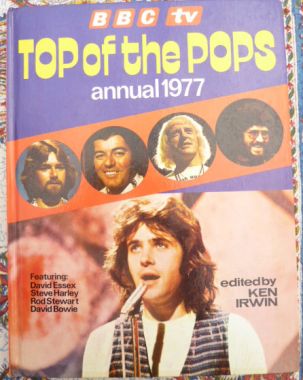
Europe’s Best Website plunges into the world of telly only rarely, (as goodness knows every single show that goes out over the ether gets recapped up the wazoo these days, for good or bad) but for this correspondent, the very best thing on the box in the last twelve months has been the weekly 35-years-ago Top of the Pops repeats on BBC4. Pre-’76, the archive was swiss-cheese at best, with dozens and dozens of shows lost to the ages, but when we joined what looks like a considerable on-going project , the gaps were narrowing down to insignificance.
The ‘Pops gets a hard time from the Nostalgia Police, thanks to the gruesome later incarnations and Steve Wright’s voiceovers on the generally-emetic TOTP2. But there was a time when it was always there, always grinding out the chart on a Thursday and heralding the weekend in the best fashion possible. Back when its broadcast rules (highest climber, highest new entry, number one, non-movers only after four weeks, no fallers unless they rose again and beat the previous position etc) emanated from the old-school Light Entertainment honcho who had no agenda other than reflecting the pop singles of the day. Unfettered pop!
On the occasion of the 100th anniversary of the sinking of the Titanic, we look at just a few of the many screen portrayals of one the most infamous* disasters of the 20th Century. Spoiler warning – we do reveal details of the fate of the RMS Titanic.




 MostlyFilm