Category Archives: Books

Mad Love

Gareth Negus reviews the new biography of Doctor Who producer, John Nathan-Turner

jnt-final.600

Becoming, and more particularly remaining, a Doctor Who fan in the 1980s was – with hindsight – an odd and sometimes uncomfortable experience.  Of course, some might say being a Doctor Who fan at any time was rather odd, but the 80s were the decade during which the programme fell from public favour and was regarded as an embarrassment by the BBC.

A biography of John Nathan-Turner,  the man who produced the series throughout that decade, would seem to be about as niche as niche publications get.  It’s easy to imagine a book on Russell T Davies or Steven Moffat on the Waterstones shelves, but Nathan-Turner was known for producing Who and pretty much nothing else.  BBC lifers – of the sort which Nathan-Turner had apparently thought he would be – might enjoy the gossipy anecdotes and tales of the inner workings of Television Centre in decades past, but that’s probably not a large enough group to make a bestseller.

Yet Richard Marson’s new book, JN-T: The Life & Scandalous Times of John Nathan-Turner has had a fair bit of press coverage.  Unfortunately, that’s largely thanks to the chapters detailing the sexual exploits of Nathan-Turner and his partner, Gary Downie, which – though not, by any stretch of the imagination, in the Saville league – occasionally sound dodgy enough that you think people should have been disciplined, if not fired. The pair regularly propositioned Doctor Who fans for sex, including many who were under the then age of consent for homosexuals (though they would be legal under today’s laws).  One incident, described on page 194 of the book, is a clear case of sexual assault experienced by the author himself.


Continue reading Mad Love

“Count to five and tell the truth”

Laura Morgan watches the 50th-anniversary reissue of John Schlesinger’s Billy Liar

billy1
‘Genius – Or Madman?’ Billy Fisher as Hero of Ambrosia

There are lots of good things about going to the cinema alone. You can go and see anything you like without justifying your choice to someone else, and you don’t have to tell anyone what you thought of the film afterwards. You don’t have to share your snacks, or miss parts of a trailer – or, worse, the movie itself – because someone wants to have a conversation with you. Going to the cinema alone is a selfish and glorious way to spend a couple of hours. The only downside to it is that when a film makes you laugh until you weep – not the silent shoulder-shaking kind of laughter that you could just about get away with, but the hooting, spluttering kind that marks you out as a genuine lunatic – when that happens, being by yourself only makes matters worse. Fortunately for me I have only done this once: the first time I saw Billy Liar. Continue reading “Count to five and tell the truth”

The Music of James Bond

by Victor Field

There are very few screen productions to have had entire books written about their music; Peter Jackson’s The Lord Of The Rings,Tim Burton’s BatmanStar Trek (but not Star Wars or Doctor Who, ha ha). The Music Of James Bond sees the world’s most famous spy added to that short list.

The appropriately initialled Jon Burlingame (no stranger to writing about spy music following his liner notes for FSM’s excellent The Man From U.N.C.L.E. albums) covers Commander Bond’s musical history from the late ‘50s US TV version of Casino Royale* to almost the present day – press deadlines mean Thomas Newman and Adull (er, Adele) don’t get a look-in with Skyfall – with a minimum of musicological textwork and a maximum of revealing information. Just as Burlingame’s TV’s Greatest Hits is an essential for anyone interested in small screen music, this is a must for those who have every Bond soundtrack from LP to download.

Continue reading The Music of James Bond

Partners in Crime

crime_1

by Susan Patterson

Partners in Crime (Associés Contre le Crime... ) (2012) is Pascal Thomas’ third adaptation featuring Agatha Christie’s detective duo Tommy, renamed Bélisaire for a French audience, and Tuppence, going by her full name of Prudence.  Christie’s introduced the couple in 1922 in the Secret Adversary.  They were a frothy, cheerful couple, who reappeared in Partners in Crime in 1929, a collection of  short stories, and a further three novels, the couple ageing with the time passed between the books.

Continue reading Partners in Crime

Grimm Times

TheTramp finds that fairy tales are back – and they’re grimy.

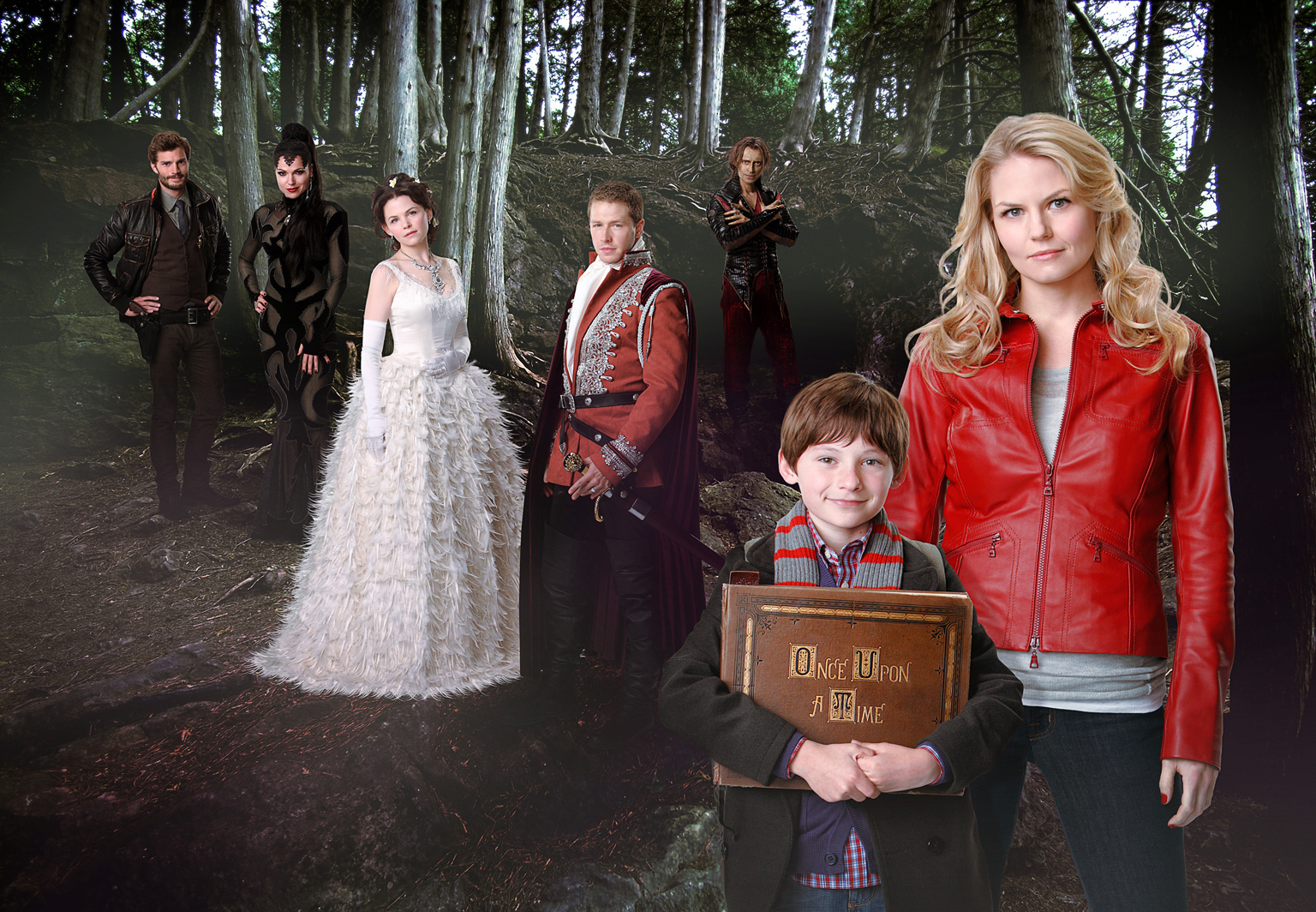
All the magic in the world couldn’t protect the cast of Once Upon a Time from the curse of Photoshop.

Once upon a time, fairy tales were Disney’s domain. They took the old Grimm boys’ stories and lightened them up a little with a combination of beautiful art work, princess dresses to die for, Technicolor and happy ever afters. Publishers followed suit, updating the fairy tales we all know and love – like Cinderella, Red Riding Hood, Snow White, Beauty and the Beast – and creating pretty illustrated books that children could read with their parents and enjoy the pictures to help aid sweet dreams.

Readers of the Grimm tales will know they’re not designed to aid sweet dreams. They are social lessons and morality tales. They make it quite clear that the world is full of nastiness and only the smart, the cunning and the manipulative will survive. There may be dashing princes, but don’t rely on them ladies – what if you find yourself with a wolf and there’s no prince in sight?

Continue reading Grimm Times

That was UNREAL!

by MarvMarsh

EEEEEEEAGLES!


Recently I became a fan of the Westish Harpooners. They are a college baseball team and they don’t exist. Those seem like two extremely good reasons not to care what the Westish Harpooners get up to but as I got to a part in Chad Harbarch’s novel The Art of Fielding where the legendary Mike Schwartz, catcher and leader of  the Harpooners, is crouched in the batter’s box with the game on his shoulders, I could not have been more emotionally invested if Schwartz was about to take his best swing at my undefended testicles. I love sport; I even love it when somebody makes it up.

Continue reading That was UNREAL!

A Home at The End of The World

Niall Anderson looks at a new book about Andrei Tarkovsky’s most mysterious film


Stalker doesn’t ask much of the viewer. It tells a clear, simple story. It’s not tricksy, obscure or up itself. Every scene seems perfectly calculated to either raise an interesting question or provide a more interesting answer. Its ending is a real ending (one of the most memorable in all cinema, in fact). So yes: Stalker is easy. All it asks is that you give it your complete and sincere attention for nearly three hours, preferably without blinking.

Continue reading A Home at The End of The World

The Known Unknowns

by MrMoth

Ah, simpler, more innocent times.

I warn you now, this is about that most ghastly of things – parenthood. The experiences therein. Stuff I know, or think I know, ‘since becoming a father*’. If you don’t like that, well, I suggest you stop reading now because the first line of the next paragraph isn’t for you.

Since becoming a father I’ve started watching a lot of TV which isn’t made for me, and reading books which aren’t written for me. I’m not going to lie to you, people – a lot of it is terrible. Appalling, knock-it-out-on-the-cheap, thoughtless, insultingly bad trash hiding behind the defence of ‘it’s only meant for kids’, as if children aren’t worth spending time and effort to please. As if they’re not perceptive (actually, you know, they’re really not. The number of times I’ve got away with saying that ‘there is no TV on’ is shockingly and rewardingly high). As if we, the parents, aren’t going to notice.

I’m not here to talk about that stuff, though. The bad isn’t worth examining on any level above a rant (and I do plenty of that), it’s the good that’s interesting. Always. The bad is easier, the good is more interesting. I’ve already talked about the sort of Stockholm Syndrome that sets in after about a year of exposure to it, but there’s another phenomenon, related but very different. Further warning for those still reading – the next sentence will make me sound like I’m writing for Comment Is Free.

Continue reading The Known Unknowns

Comics to screen: Marvel Avengers Assemble

by Matthew Turner

Warning: This post contains SPOILERS for Marvel Avengers Assemble (or The Avengers, if you live anywhere other than Britain) and is intended to be read after you’ve seen the film.

With the recent release (and what already looks like phenomenal box office success) of Marvel’s The Avengers, it seems only fitting to mark the occasion with a final Comics To Screen post. This will examine how writer-director Joss Whedon, closely supervised by Marvel Studios, has blended the now established movie universe (referred to, annoyingly but conveniently, as the Marvel movie-verse) with the classic comics themselves. Arguably, with the enormous success of the  three key movie franchises (Iron Man, Thor and Captain America), it’s no longer really that important to cater to old-school comics fans, but it’s nonetheless interesting to look at just how much of early Avengers history survives into the new movie and to see which elements have been drawn from elsewhere.

Continue reading Comics to screen: Marvel Avengers Assemble

The Passionate Christ

By Philip Concannon

Martin Scorsese has famously described cinema as simply being “a matter of what’s in the frame and what’s out,” but when The Last Temptation of Christ was released in 1988, very few were willing to consider the film on those terms. This adaptation of Nikos Kazantzakis’ novel remains one of the most controversial films ever released by a Hollywood studio. It sparked protests, threats and even physical attacks, with a cinema in France being firebombed by a group of Christian fundamentalists for daring to screen the film. The charge was blasphemy, with the biggest bone of contention being a much talked-about sex scene between Jesus and Mary Magdalene. The fact that few of those criticising The Last Temptation of Christ had seen it, or had any intention of doing so, was apparently beside the point. Continue reading The Passionate Christ