Category Archives: Classic Films

A Home at The End of The World

Niall Anderson looks at a new book about Andrei Tarkovsky’s most mysterious film


Stalker doesn’t ask much of the viewer. It tells a clear, simple story. It’s not tricksy, obscure or up itself. Every scene seems perfectly calculated to either raise an interesting question or provide a more interesting answer. Its ending is a real ending (one of the most memorable in all cinema, in fact). So yes: Stalker is easy. All it asks is that you give it your complete and sincere attention for nearly three hours, preferably without blinking.

Continue reading A Home at The End of The World

A Study in Scarlett – Part 1

In the first of a two-part series Viv Wilby looks at the way Gone With The Wind tells its story through costume

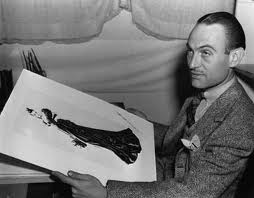
GWTW costume designer Walter Plunkett with one of his designs

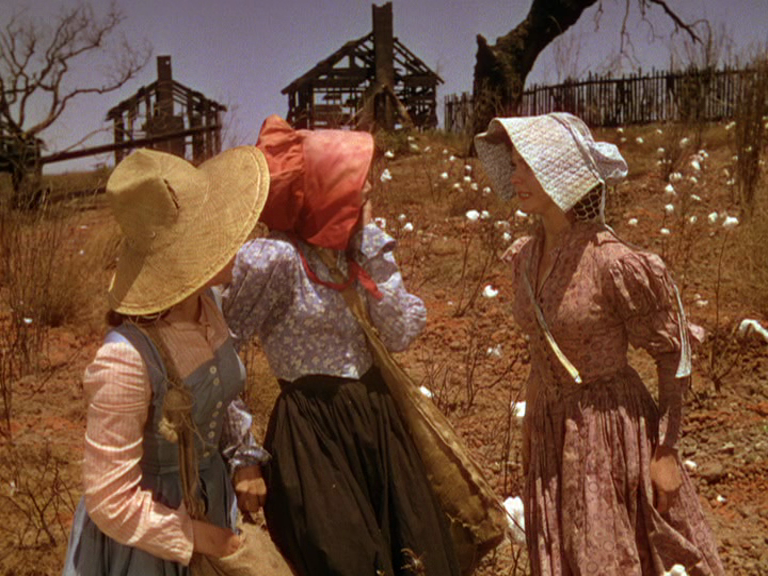
I first saw Gone With The Wind when I was young and impressionable and I’ve loved it ever since: the spectacle, the melodrama and, yes, the frocks. Watch a movie as often as I’ve watched the Wind and you start to notice things, little patterns and parallels. I’m no fashion historian, but it seems to me that Gone With The Wind tells its story as much through costume as through action and dialogue.

Scarlett O’Hara’s story is one of riches to rags to riches again, and of course what she wears throughout the film reflects this. Clothing is a signifier of social status and wealth in any film  but in Gone With The Wind this fact has particular resonance. The wealth of the South came from cotton.  Strict dress codes apply, particularly for women. At key points in the story, items of clothing are given as gifts or rewards or tokens of affection. They are the means through which a woman can recreate herself, the key to a better future, badges of success, markers of disgrace. They can oppress or liberate.

With all this is mind, I thought it would be fun to take a closer look at some of Walter Plunkett’s stunning costumes for the film, chiefly those worn by Vivien Leigh as Scarlett, what they say about the character at different points in the story, how they link her to or set her apart from other characters.

Continue reading A Study in Scarlett – Part 1

The Life and Death of Colonel Blimp

By Ron Swanson

I look at my relationship with my favourite film as being analogous with great, romantic love (starting to get an insight as to why my love life is, um, troubled, while writing this sentence). My childhood sweetheart was Star Wars, my first teenage relationship was Goodfellas, and the first one where romance and feelings mattered was The Apartment. About three years into that relationship, though, I realised that I didn’t believe in CC Baxter and Miss Kubelik’s happy ever after (Billy Wilder’s intention, I believe), and ironically, it didn’t work out for me and The Apartment, either.

Currently I’m in a continental-style group marriage with three films. I hope, at some point to write about why I love David Lean’s Brief Encounter so very much or why Sergio Leone’s Once Upon a Time in the West takes my breath away with every viewing. However, as this weekend sees the re-release of Michael Powell and Emeric Pressburger’s The Life and Death of Colonel Blimp, that seems like a perfect excuse to eulogise one of the best and most laudable films ever made.
Continue reading The Life and Death of Colonel Blimp

Il Boom

By Blake Backlash

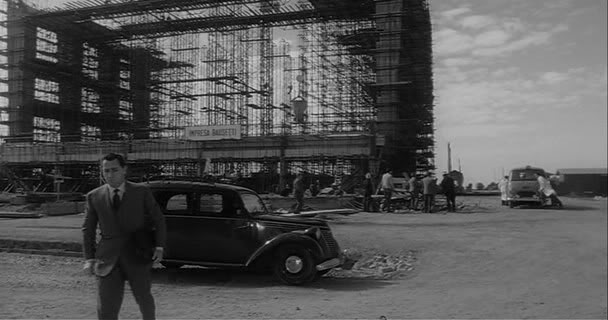
There is a scene in Vittorio De Sica’s Il Boom where a number of well-to-do Italians dance to a band who are performing the tackier sort of early 60s pop song. The lyrics are sung in English. That same quality of a cheap import is imbued in the title of the film. Whereas most European countries created a label in their own language to denote their rapid, post-war economic growth (it is hard to think of a word less German than Wirtschaftswunder), the Italian media co-opted their term from English. ‘Il Boom’ has connotations of something messy and uncontrollable, while at the same time seeming voguish and silly, perhaps even meaningless. Such associations suit De Sica’s satire – which is interested in showing us the empty spaces that might be concealed by the ostentatious sixties prosperity.

Continue reading Il Boom

La Grande Illusion

By Indy Datta

La Grande Illusion – which tells the story of a motley band of French POWs in captivity and on the run during the First World War – was Jean Renoir’s first major commercial success. In the early years of his career (after a short-lived flirtation with the idea of becoming a ceramicist) he had partially financed the string of loss-making silent films he made by selling paintings left to him by his father, the impressionist painter Pierre-Auguste Renoir. Although the advent of cinema sound had suited Renoir’s film-making almost from the start, with successes such as La Chienne and Boudu Sauvé des Eaux, La Grande Illusion – with its more expansive scope and scale and its cast of movie stars, including French man of the moment Jean Gabin – was a hit of a different order, and the first non English-language film to be nominated for the Oscar for Best Picture. Its success (along with the success of his next film, an adaptation of Zola’s La Bête Humaine) gave Renoir the kind of status as a film maker that couples freedom to money. He used that capital to make La Règle du Jeu, a scandalous failure that, the legend has it, drove Renoir out of the French film industry and into the arms of Hollywood. Continue reading La Grande Illusion

In Night and Ice

On the occasion of the 100th anniversary of the sinking of the Titanic, we look at just a few of the many screen portrayals of one the most infamous* disasters of the 20th Century. Spoiler warning – we do reveal details of the fate of the RMS Titanic.

Continue reading In Night and Ice

The Passionate Christ

By Philip Concannon

Martin Scorsese has famously described cinema as simply being “a matter of what’s in the frame and what’s out,” but when The Last Temptation of Christ was released in 1988, very few were willing to consider the film on those terms. This adaptation of Nikos Kazantzakis’ novel remains one of the most controversial films ever released by a Hollywood studio. It sparked protests, threats and even physical attacks, with a cinema in France being firebombed by a group of Christian fundamentalists for daring to screen the film. The charge was blasphemy, with the biggest bone of contention being a much talked-about sex scene between Jesus and Mary Magdalene. The fact that few of those criticising The Last Temptation of Christ had seen it, or had any intention of doing so, was apparently beside the point. Continue reading The Passionate Christ

The Gospel According to Pasolini

by Viv Wilby

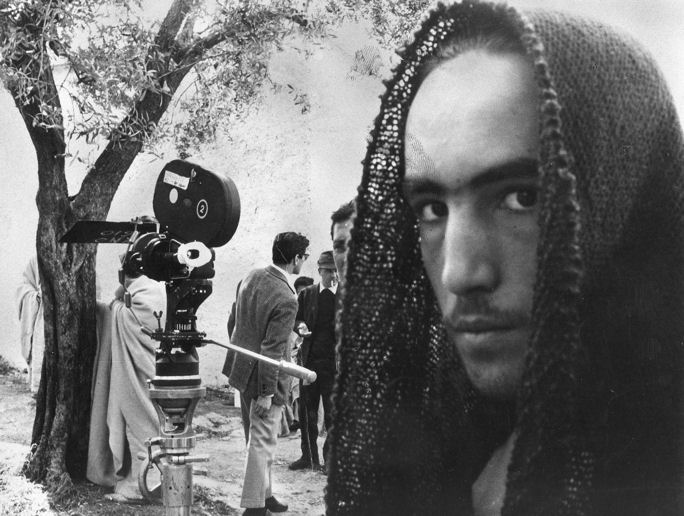
It’s not hard to see Pier Paolo Pasolini’s 1964 film, Il Vangelo Secondo Matteo (The Gospel According to St. Matthew), as a deliberate shift away from, perhaps even rebuke to, the style of religious filmmaking that had poured out of Hollywood in the 1950s and early 1960s. These were gaudy, technicolor affairs, stuffed with earnest matinee idols, hammy character actors and hundreds of extras. Starlets draped in wisps of chiffon would flash kohl-rimmed eyes at pained looking holy men. And just in case we were in danger of forgetting, a stentorian voiceover would remind us that This Is The Word Of The Lord.

In contrast, Pasolini’s film is simple and spare. Shot in stark black and white with a cast of non-professionals, it follows the linear narrative of Matthew’s gospel. We move through the familiar beats of Christ’s life: the visit of the three wise men and flight into Egypt; the baptism in the river Jordan and temptation in the wilderness; the calling of the apostles; the preaching and miracles; culminating in Christ’s arrival in Jerusalem, his betrayal by Judas Iscariot, arrest, trial, crucifixion and resurrection. Continue reading The Gospel According to Pasolini

The 2012 Kinoteka Polish Film Festival

by Clare Dean

Image

This year, the Kinoteka Polish Film Festival celebrated its 10th anniversary in style with an eclectic line-up covering film, music and visual art across nine venues in London, Edinburgh and Belfast.  Over the course of a fortnight, 19 features screened along with a selection of short films, an exhibition of Krzysztof Kieslowski’s Decalogue film posters and a closing concert with Polish composer Krzysztof Penderecki and Radiohead guitarist Jonny Greenwood. While previews of new films dominated, two strands focused on the classics and reminded me just how great Polish cinema can be.

Continue reading The 2012 Kinoteka Polish Film Festival