Indy Datta takes a look at the top-notch new Blu-ray of Philip Kaufman’s remake of “Invasion of the Body Snatchers”, released by Arrow Video on Monday.

Indy Datta takes a look at the top-notch new Blu-ray of Philip Kaufman’s remake of “Invasion of the Body Snatchers”, released by Arrow Video on Monday.
Need a solid, British character who can display authority with a hint of vulnerability in a changing post-war landscape? Viv Wilby recommends Trevor Howard.
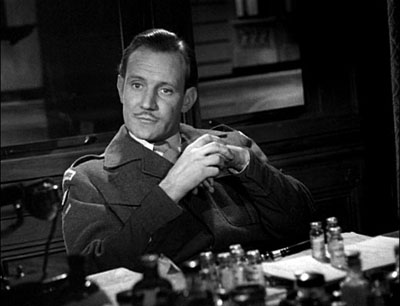
Were he still alive, Trevor Howard would have turned 100 yesterday. One of the striking things about the DVD boxset released to mark his centenary is the extent to which it confirms his own observation that he spent most of his career playing ‘number two’.
Five films are collected here, and only in two does he really have anything like a clear claim to the leading role. Supporting actor, co-star on occasion, but rarely is he asked to carry a film. Even where he arguably gets the main part — The Heart of the Matter and Outcast of the Islands in this collection — there’s a meaty supporting cast buoying him up and it’s still no guarantee of top billing. Yes, Brief Encounter is here, of course, but Brief Encounter is really all about Celia Johnson. She is where the emotional heft of the film resides. Trevor’s just there to look good and give her someone to play off. He’s a consort, a co-lead.
In the last part of Extremists Week, our fearless correspondent Kiwizoidberg looks at the favourite films of the gun lobby
Amat victoria curam: victory favours the prepared. When SHTF and it’s TEOTWAWKI, will you be ready? Will you grab your bug-out bag and head for the hills, or retreat to your fortified bunker? And how are you going to defend yourself from everyone else who ignored your warnings and thought you were crazy?
Welcome to the world of the Doomsday preppers. This group of people is made up of individuals, families or even communities who are preparing for the end of the world as we know it (TEOTWAWKI). They may be crazy, but their paranoia has driven them to take action. They have stocked up on water and tinned food and developed skills that they believe will help them survive whatever the world may throw at them when the shit hits the fan (SHTF). How they think the end comes about varies, but preppers are planning to survive and are willing to defend themselves by any means necessary. When this includes firearms, we have the makings of a gun-nut. The term can be interpreted as pejorative or affectionate, depending on your point of view.
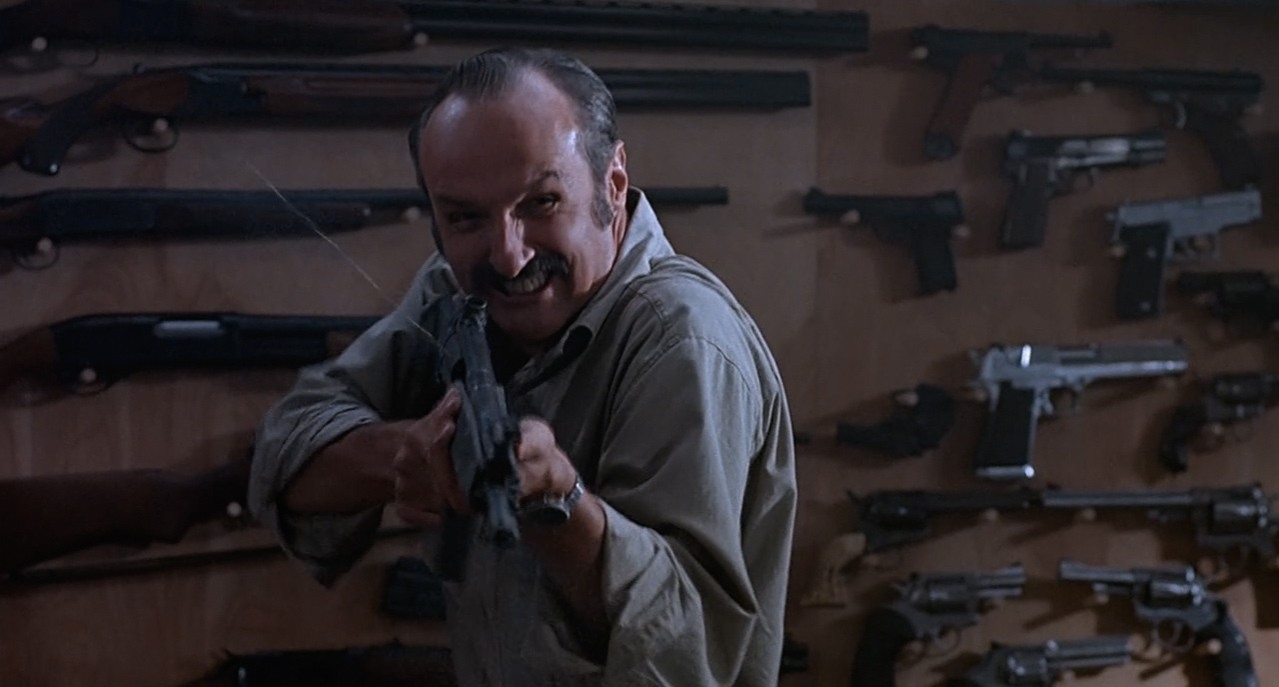
When I see or hear the term ‘gun nut’, I imagine someone like Burt Gummer in Tremors (1990). Burt and his wife have a respectable arsenal in their cellar which comes in handy when the graboids invade their town. Back when the film was released, Burt seemed a likeable enough kind of crazy. Nowadays, you are unlikely to find any charming gun-nuts in film. Instead, you get characters like Harlan Ogilvy (Tim Robbins) in the basement scene from the War of the Worlds (2005), someone out of touch with reality; unstable and highly dangerous.
What is this fear that drives the preppers, and what role has film or TV played?Disaster movies are almost as old as cinema. When the genre hit its absolute peak in the 40s and 50s, it did so when WWII was a fresh memory, and when fear of nuclear weapons and Soviet infiltration were at their height. The Roswell Incident of 1947 led to sightings of UFOs everywhere – not least on celluloid. Pretty soon the latent paranoia of Hollywood B-movies was reflected on TV through shows like The Twilight Zone. Prepper lists of favourite films tend to include ‘Panic in the Year Zero’ from 1962, which tells you something about the longevity of this particular cultural crisis, and maybe why we’ve seen so many disaster movies recently. Continue reading Out of my cold, dead hands
Indy Datta takes a look at the new BluRays of Ghibli’s Grave of the Fireflies and Kiki’s Delivery Service.

After the recent theatrical run for the 1988 Ghibli double bill of Hayao Miyazaki’s My Neighbour Totoro and Isao Takahata’s Grave of the Fireflies, today sees the release of a slew of Studio Ghibli titles in DVD/Blu-ray dual format editions. I was lucky enough to score review copies of Fireflies and Miyazaki’s follow-up to Totoro – Kiki’s Delivery Service. Thoughts on the films and the discs after the jump.
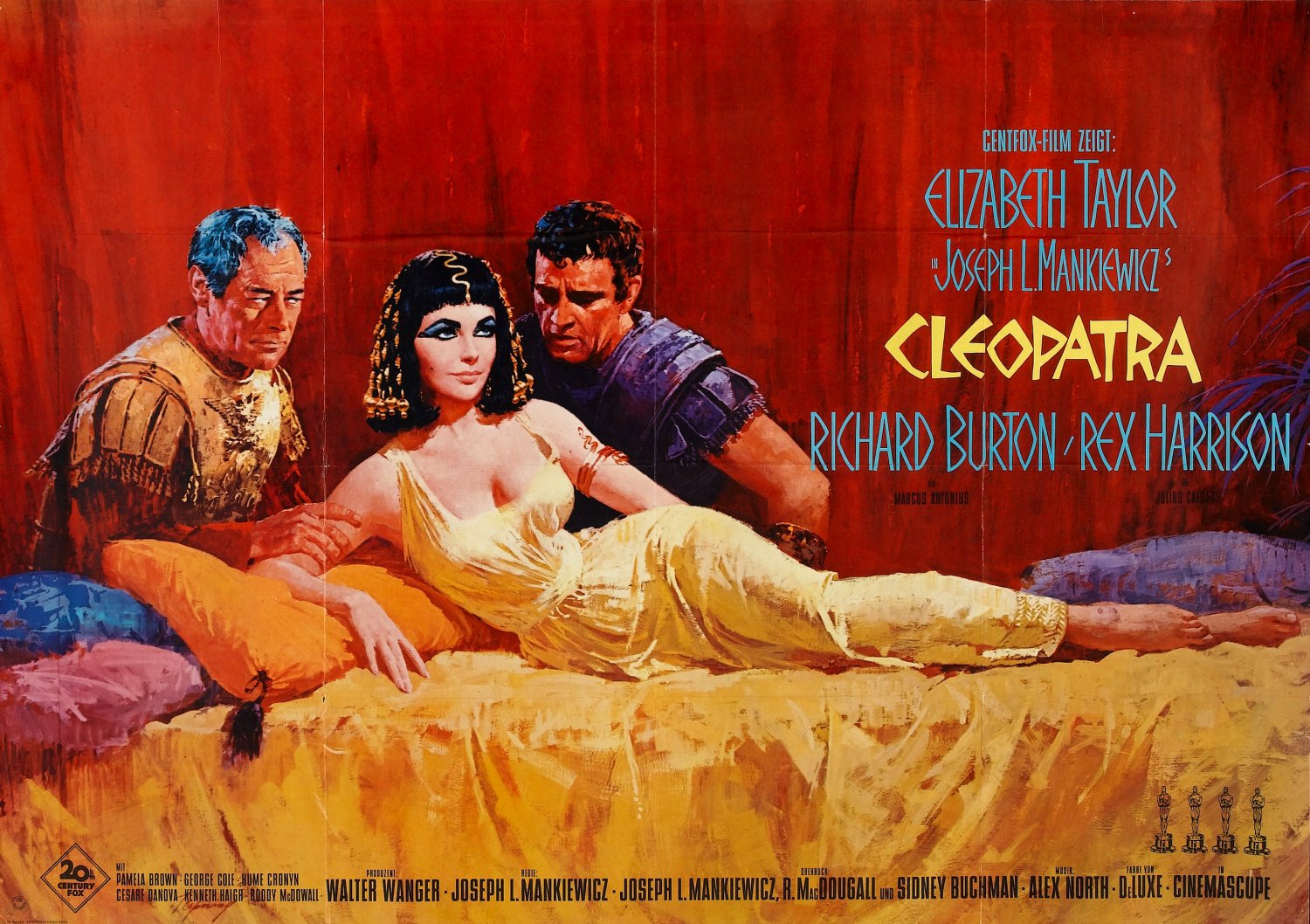
Frances Grahl revisits the 1963 epic, Cleopatra.
Was Cleopatra gorgeous
In a gown of gold?
Langston Hughes
Row after row of plumed and armoured horsemen gallop into the Forum. Behind them, dozens of decorated chariots. Naked dancing girls whirling long streamers perform a decidedly risqué dance into the widening space. The crowds of bedazzled Roman citizens surge forward, entranced, and are forced back by the guards. Next come troupes of Sudanese warriors, and dancing Black Africans with great tufted head-dresses (of course, as according to the norms of 1963 Hollywood, these dancers look rather more like Black Californian dancers than the subject tribes of Lower Egypt). Feathered filmic fantasies on the theme of witch-doctors leap forward on giant stilts. A scantily dressed Nubian woman steals the scene for a moment, then disappears in clouds of coloured smoke. New rows of pharaonic guards march through the square bearing the great banners of Egyptian sovereignty. Showers of gold coin fall through the air. Suddenly the space is filled with beautiful girls with long, golden wings, pulling behind them a giant pyramid. Is it the queen? The show’s not over yet. The point of the pyramid opens and hundreds of doves fly up and away.
A military fanfare. The crowd is frantic. The new banners are made of dangling gold pieces and white plumes. Then come hundreds more Nubian slaves, pulling a great wooden harness. It’s not possible: a giant Sphinx of black onyx is slowly wheeled forward. At its mouth, gold steps lead up to a golden throne. Cleopatra, queen of Egypt, slowly descends to the feet of Julius Caesar. Her dress is a thousand golden feathers, with a crown and golden cloak to match. The Senate rises. The crowds cheer. Caesar nods. Will she? Yes, she will. She’s bending her beautiful head, bowing low before the entire power system of Rome. And as she rises, she closes one beautifully kohled eye at Caesar. First a submission, then a wink.
Fiona Pleasance watches Eureka’s new DVD release of Murnau’s classic.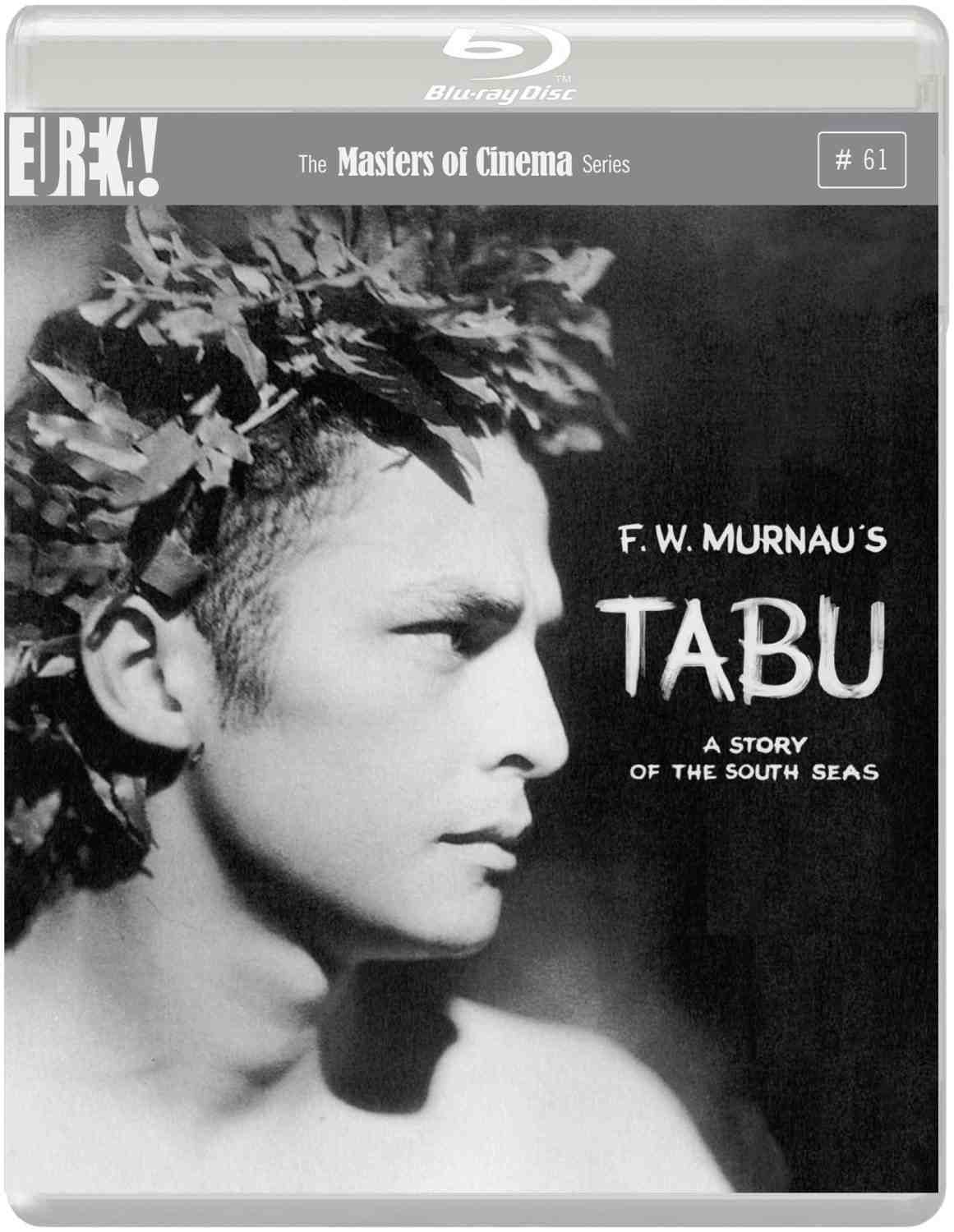
Tabu (1931) is a film which inhabits boundaries. The crossing of social and religious barriers drives its plot. Originally conceived as a colour picture, Tabu was released in black and white. Despite appearing four years into the sound era, it is silent, albeit with a synchronised music score. It is a fiction film containing documentary-like sequences, originally conceived as an investigation into the encroachment of modernity onto the traditional Polynesian way of life, but ending up as a melodrama straight from the Hollywood mould. Independently (self-) financed in the first instance, the film was effectively bailed out when Paramount bought the distribution rights. It was planned as a collaboration between two of the most important directors of 1920s cinema, but one took over and the other departed the project; film historians have been arguing about the relative influence of each ever since.
And, saddest of all, Tabu turned out to be the final film made by its credited director, F. W. Murnau, who died following a car crash one week before the film’s New York premiere.
By Viv Wilby 
In the empty immensity of earth, sky, and water, there she was, incomprehensible, firing into a continent. Pop, would go one of the six-inch guns; a small flame would dart and vanish, a little white smoke would disappear, a tiny projectile would give a feeble screech – and nothing happened.
Heart of Darkness, Joseph Conrad
Aguirre: the Wrath of God is one of those movies that has almost become more famous for what happened on the set than what happens on screen. The tempestuous relationship between the young German director Werner Herzog and his wildman star Klaus Kinski is notorious and the story of how Herzog ended up threatening Kinski with a gun to get him to behave has been well rehearsed; there’s little point in going over it all again here.
Of course the parallels are irresistible: Europeans struggling to adapt to the tropical terrain; a mission hijacked by an insubordinate madman; problems communicating with the locals; logistics from hell. We could just as easily be talking about the making of the movie as the movie itself. Continue reading Firing into a continent
Laura Morgan watches the 50th-anniversary reissue of John Schlesinger’s Billy Liar

There are lots of good things about going to the cinema alone. You can go and see anything you like without justifying your choice to someone else, and you don’t have to tell anyone what you thought of the film afterwards. You don’t have to share your snacks, or miss parts of a trailer – or, worse, the movie itself – because someone wants to have a conversation with you. Going to the cinema alone is a selfish and glorious way to spend a couple of hours. The only downside to it is that when a film makes you laugh until you weep – not the silent shoulder-shaking kind of laughter that you could just about get away with, but the hooting, spluttering kind that marks you out as a genuine lunatic – when that happens, being by yourself only makes matters worse. Fortunately for me I have only done this once: the first time I saw Billy Liar. Continue reading “Count to five and tell the truth”

Ah, Easter! Who among us does not, at this time of year, find their mind turning to thoughts of resurrection? To things which are lost and which, one day, might see the light of day once more? Inspired by such musings, several MostlyFilm contributors have, as they have time and again, written about those forgotten films and telly programmes which, having once been crucified on the crucifix of obscurity, we would like to see rise once more from the cave of time. Come with us now, as we roll back the stone of memory and share with you, our disciples, these cinematic and televisual miracles.
by Spank The Monkey
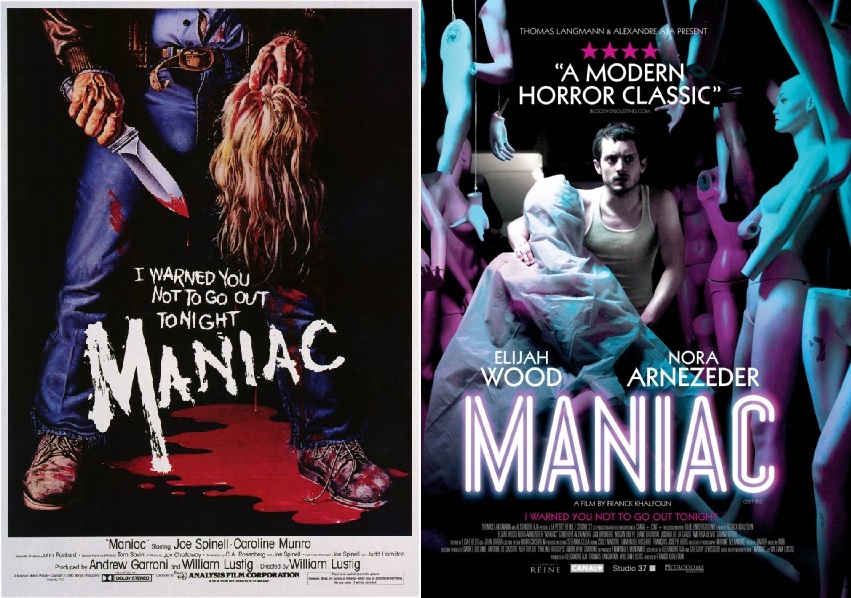
On the left, we have Maniac, directed by William Lustig in 1980. It’s a notorious horror movie, one which got caught up in the UK ‘video nasty’ moral panic of the time. It was banned by the BBFC until 2002, when it finally appeared on DVD with nearly a minute’s worth of cuts. It’s still not possible to buy the uncut version here.
On the right, we have Maniac, directed by Franck Khalfoun in 2012. It’s a remake co-written and produced by French horror director Alexandre Aja, who was also involved in the remakes of The Hills Have Eyes and Piranha. It has a bigger budget, a famous lead, and a clean bill of health from the British censor. It’s just disappearing from UK cinemas, after one of those blink-and-you’ll-miss-it releases that have become so fashionable nowadays – you might be able to catch it at the Prince Charles if you run.
What can we learn from watching both versions of Maniac back-to-back? Apart from ‘all women are evil and must be punished,’ obviously.
 MostlyFilm