Category Archives: Television

Faking Bad

Yes, it was great, but what did Breaking Bad actually mean? Niall Anderson has SPOILERS a-plenty.
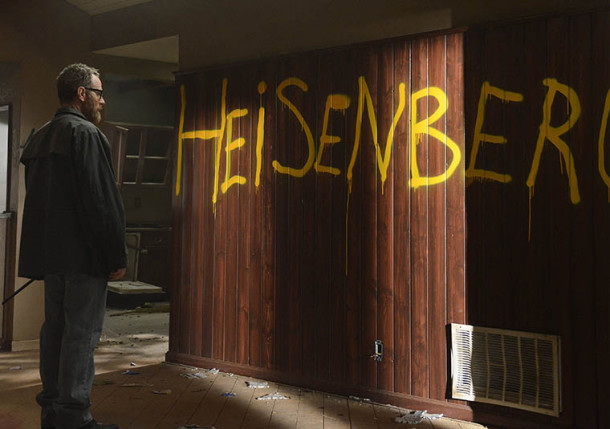
A couple of weeks ago, this blog published a bit of minor snark about the sudden omnipresence of Breaking Bad across popular culture, using the various tat and t-shirts it’s spawned as a way to look at why the show became the phenomenon it has. What did it say about Breaking Bad that it could generate this minor industry of knock-off secondary merchandise where something like The Sopranos – a very similar programme – didn’t?

My argument, very roughly, was that there was something a bit neat and tidy about Breaking Bad, a kind of clockwork fastidiousness very like that of its central character, Walter White. It set up its premise and its particular aesthetic and then it delivered every week: badassery, heists, good baddies, bad goodies, sudden reversals of fortune and an almost unbroken tenseness. At its freewheeling best, it was like a high-toned MacGyver: a series of audacious stunts and set-pieces driven by a palpable brooding rage. This made for compelling TV and infinite quotability (which gave the show, first, its cult following and then its popular one), but it didn’t necessarily make any of it meaningful. The show also became crueller as it went along, more prone to linger on the damage the characters both inflicted and withstood, but this often seemed like a reflex response to complex plot machinations: it didn’t always feel like there was a real engagement with the idea of pain.

A good ending is one way to put carping ideas like this to rest, to answer the question of what all this mayhem was ultimately for. Breaking Bad had a good ending in one sense – a no-bullshit, no comeback finality that felt both earned and necessary – but in another sense it was just accountancy: a list of figures to be ticked off one by one so everything will add up. The ending wasn’t tidy, but it was certainly neat. Continue reading Faking Bad
Hannibal, Redux

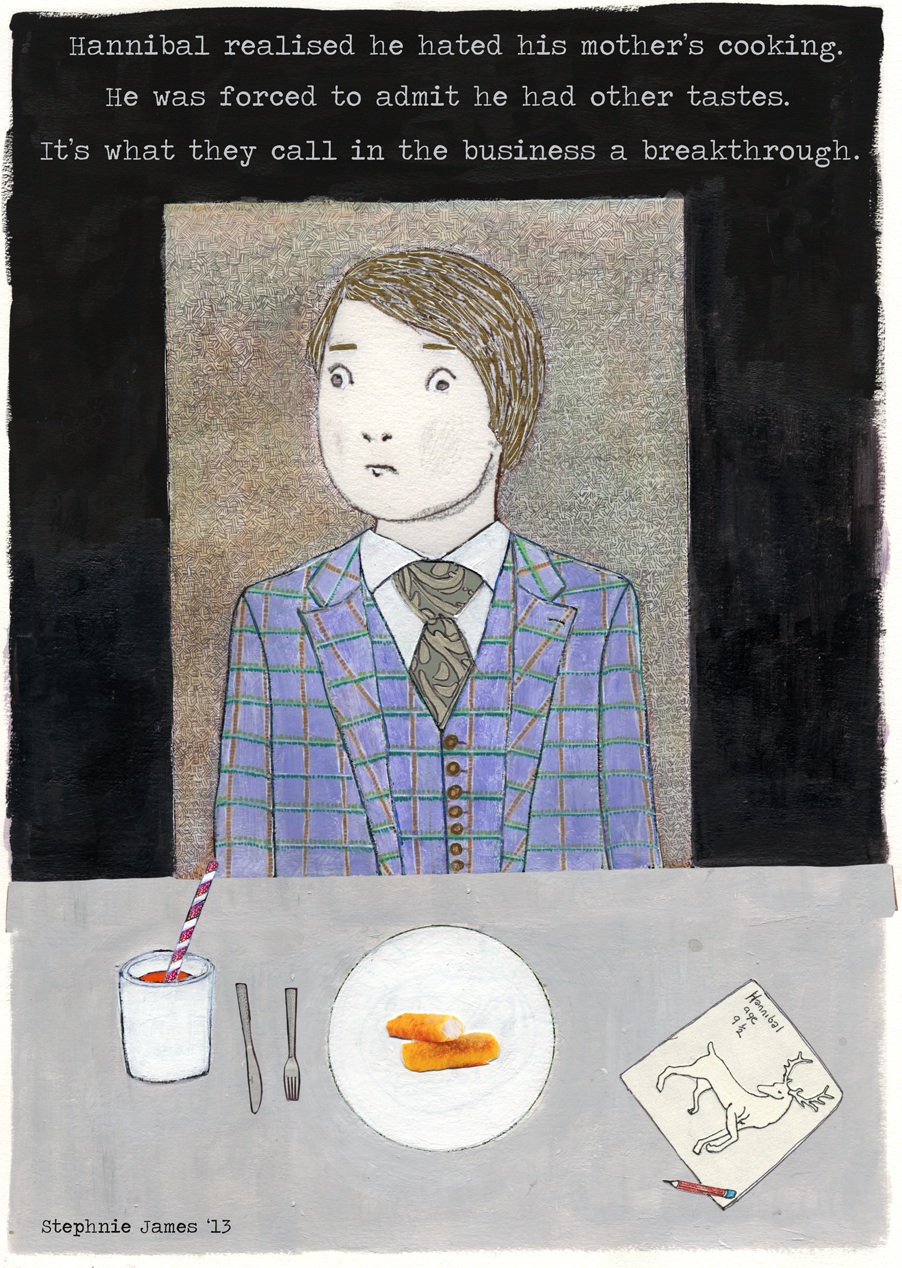
by Stephnie JamesHannibal

Part of a series of Hannibal illustrations. Stephnie says: ‘Most of the art I’ve seen in connection with the show depicts young Hannibal in a variety of gruesome acts (eating family pets, etc.) but I thought it might be funnier to show him as a miniature version of the dandy we see on Bryan Fuller’s show.  In this illustration he is somewhat disappointed with the juvenile fare his mother has presented him with, although it has got him to thinking …’

Stay tuned for more Hannibal stuff very shortly. http://www.stephniejames.blogspot.ie

Hannibal Nitrate

MarvMarsh takes his shades off and admits, like David Caruso, that there may be more to serial killers than he previously admittedSPOILERS!

'Oh. Hello officer.'
‘Oh. Hello officer.’

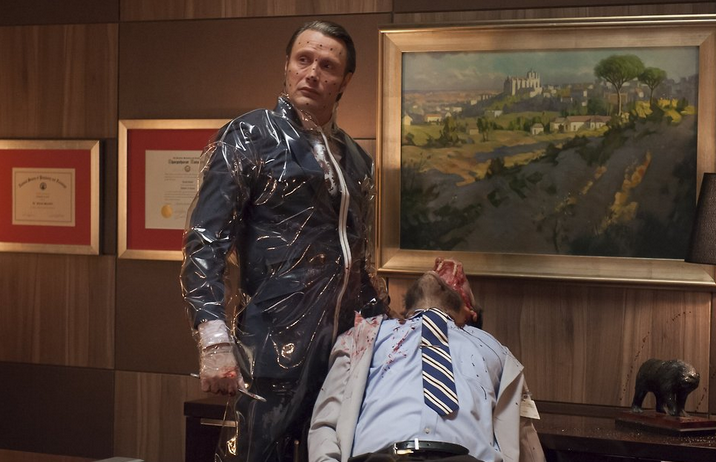
A couple of years ago I was allowed on this website to explain that the glory days of serial killers in the cinema were over. I suggested that serial killers had been driven off the big screen and had found shelter on the small one, where they’d taken up residence on cop shows with seasons’ worth of nonsense to shovel into a box set. This scenario lacked dignity (if you were a serial killer) but it paid the rent. Happily for me, Brian Fuller has gone out of his way to prove me right by creating a television series based on the greatest serial killer of them all, Hannibal Lecter. Thanks Brian; I appreciate it.

I also appreciate that he has made an excellent job of it. By the end of the third Hannibal film, the intriguingly named Hannibal, the character had sunk to such grievous, humiliating lows that it was like seeing an ex-heavyweight boxing world champion wrestling a monkey at a carnival. And remember, this is the man once awarded the title of greatest movie villain of all time by the American Film Institute. A title much coveted, as you can imagine. Darth Vader, Norman Bates, The Joker, Dominic Torretto out of The Fast and the Furious: they were all after it, but Hannibal got it. So what happened to Hannibal is sad indeed. Thomas Harris, the character’s creator, had ratcheted up the operatic ludicrousness that was always a feature of the series and – consciously or not – turned the whole thing into an overblown fiesta of grand-scale idiocy. Ridley Scott directed the film version and sadly decided that Harris was right.
Continue reading Hannibal Nitrate

“You See That Sign Flashing There? It Says…Applesauce.”

black-and-white-audience

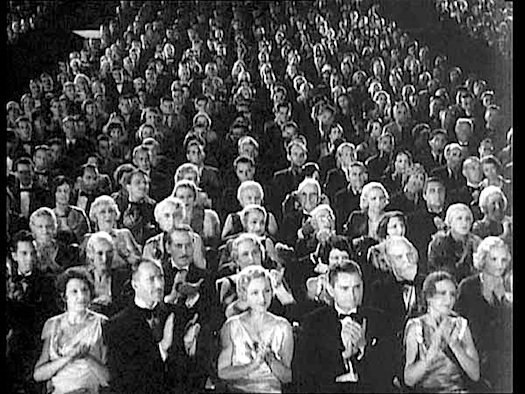
There’s been a lot of talk recently of canned laughter.  Surely no-one denies that canned laughter exists – the wonderfully spooky phrase “the laughter of the dead” refers specifically to laughter captured so long ago that the audience is no longer even with us – but clearly the idea of laughs on cue is taboo in modern comedy. Mention the phrase on Twitter, for example, and you’re as likely as not to find the size twelves of the local comedy constabulary on your neck, requesting that you re-think the phrase and maybe buy a DVD in penance. We here at MostlyFilm, however, are not subject to the laws of Tweet-land and can more freely question the idea that every laugh at every joke on the soundtrack to every comedy was recorded right at the moment the punchline dropped.

After the jump, Sarah Slade shares her memories of being in an audience for a comedy show that didn’t quite get the laughing part of their job right. It’s certainly enough to pose the reasonable question – if not canned, then what? Ethically sourced and packaged in a protective atmosphere for later use?

Continue reading “You See That Sign Flashing There? It Says…Applesauce.”

I am the one who knock-offs

Niall Anderson cashes in on Breaking Bad, because, well, who isn’t?

We’ve had cool TV shows before. We’ve had cool TV shows getting called the best of all time. We have had cool, best-of-all-time TV shows that have also been genuinely popular. We’ve had award-winning shows that have grown from cult concern to cultural phenomenon in the seeming blink of an eye. We’ve had, for instance, The Simpsons.

But when last April The Simpsons itself decided to tip the hat to AMC’s critical favourite Breaking Bad, we saw something quite as peculiar as a mild-mannered chemistry teacher turning into a psychopathic drug-lord. We saw an apparently high-minded moral drama being given a lap of honour long before the race was over, let alone won. And we saw, almost immediately afterwards, the rise of the Breaking Bad cash-in.

This didn’t happen to The Wire. It hasn’t even happened to Mad Men. The Sopranos may have inspired a few ‘Bada Bing!’ t-shirts and the odd semi-official ‘Music From’ CD, but the sheer boggling range of Breaking Bad tat is pretty much unprecedented outside of kids’ TV. Does this maybe tell us something about the show? Does it say something about the audience? Let’s drive that RV out into the wilderness of the internet and see who wants to take us for everything except our underpants. Continue reading I am the one who knock-offs

It Feels Different This Time

 by Ricky Young

Few things are certain in life, but one thing is for sure: Zoë Ball cannot start a sentence without preceding it with that weird teeth-sucking-then-“er” sound she makes. As a nation, we had forgotten quite how annoying it could be. But on Sunday night, for reasons likely to be forever lost to all of space and time, she was chosen to introduce the bizarre one-off special Doctor Who: Live – The Next Doctor, and we all got to be really quite irritated by it again, together, as one.

Yes, Peter Capaldi’s the next ‘Doctor Who’, lead character in the BBC’s television programme Doctor Who. It’s a bold move – brave, even. It’ll shake up a show in desperate need of being thrown into a completely different direction, and it might even raise the prospect of Capaldi using his Oscar to belt Steven Moffat across the face in an ‘I’m not saying this shit’ incident, which even if it never actually happens will forever exist in my head. In fact, I’m thinking about it right now. And again now. No, hang on…BAM! There it goes again!

Continue reading It Feels Different This Time

But That’s Not All

by Mr Moth

Ah. My old nemesis. We meet again.

If, like me, you ever find yourself staring at the on-screen TV guide for so long that all you can hum for the next day is the background lift-funk, you’ll know the lure of the more, shall we say esoteric?, stations available towards the top end of the channel range. I’m not talking about the ones with almost-naked ladies looking bored and waggling a vintage cordless phone at the camera, nor the ones with grainy, sweat-soaked footage of a preacher telling people off for being very naughty in the sight of God. I’m talking about the shopping channels. A whole range of actual TV stations that exist purely to sell, sell, sell. Given that this is like watching regular commercial television without that ridiculous “content” getting in the way of the sweet, sweet advert breaks, what actual incentive could there be for a normal human being tuning in? Why would anyone ever switch to Thane Direct  of their own volition?

The answer, of course, is that there is gold in the gold-digging. Between frantic sales pitches, bamboozling product demonstrations and artless time-filling, there are spaces where the mere act of selling you a food processor transcends commerce and becomes art.

Of a sort.

Continue reading But That’s Not All

Out of my cold, dead hands

In the last part of Extremists Week, our fearless correspondent Kiwizoidberg looks at the favourite films of the gun lobby

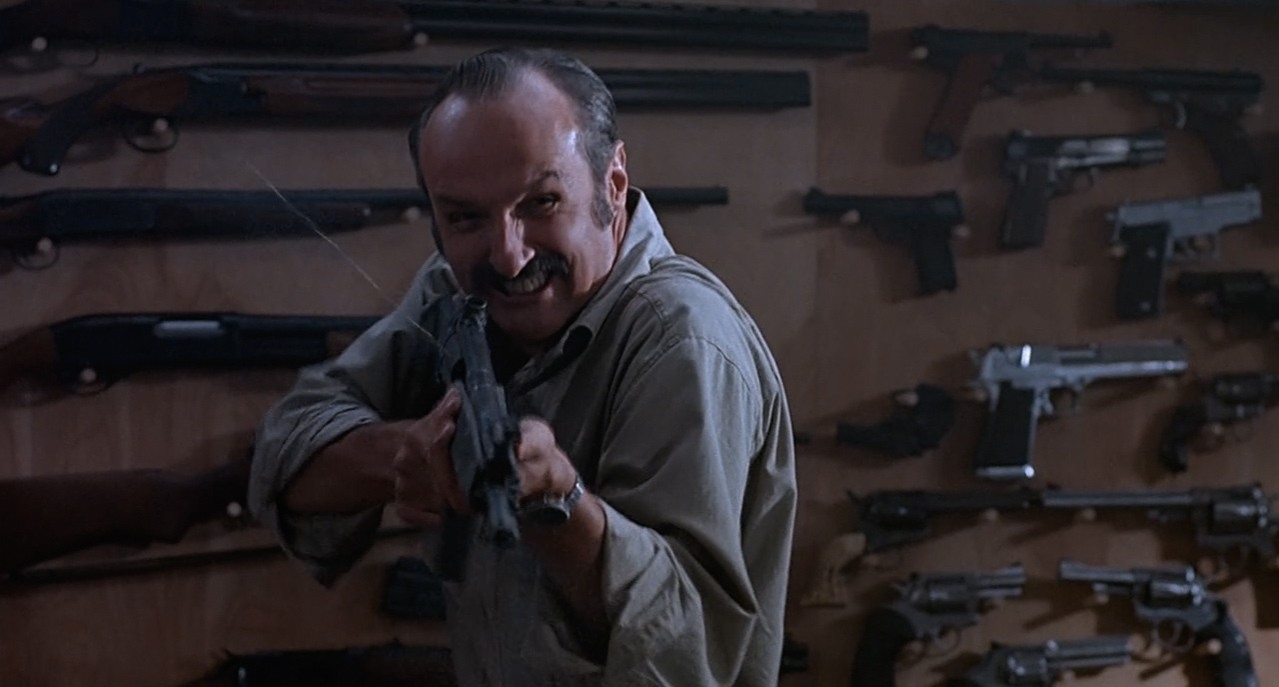
“I am COMPLETELY out of ammo. That's never happened to me before.” Michael Gross in Tremors
“I am COMPLETELY out of ammo. That’s never happened to me before.” Michael Gross in Tremors

Amat victoria curam: victory favours the prepared. When SHTF and it’s TEOTWAWKI, will you be ready? Will you grab your bug-out bag and head for the hills, or retreat to your fortified bunker? And how are you going to defend yourself from everyone else who ignored your warnings and thought you were crazy?

Welcome to the world of the Doomsday preppers. This group of people is made up of individuals, families or even communities who are preparing for the end of the world as we know it (TEOTWAWKI). They may be crazy, but their paranoia has driven them to take action. They have stocked up on water and tinned food and developed skills that they believe will help them survive whatever the world may throw at them when the shit hits the fan (SHTF). How they think the end comes about varies, but preppers are planning to survive and are willing to defend themselves by any means necessary. When this includes firearms, we have the makings of a gun-nut. The term can be interpreted as pejorative or affectionate, depending on your point of view.

When I see or hear the term ‘gun nut’, I imagine someone like Burt Gummer in Tremors (1990). Burt and his wife have a respectable arsenal in their cellar which comes in handy when the graboids invade their town. Back when the film was released, Burt seemed a likeable enough kind of crazy. Nowadays, you are unlikely to find any charming gun-nuts in film. Instead, you get characters like Harlan Ogilvy (Tim Robbins) in the basement scene from the War of the Worlds (2005), someone out of touch with reality; unstable and highly dangerous.

What is this fear that drives the preppers, and what role has film or TV played?Disaster movies are almost as old as cinema. When the genre hit its absolute peak in the 40s and 50s, it did so when WWII was a fresh memory, and when fear of nuclear weapons and Soviet infiltration were at their height. The Roswell Incident of 1947 led to sightings of UFOs everywhere – not least on celluloid. Pretty soon the latent paranoia of Hollywood B-movies was reflected on TV through shows like The Twilight Zone. Prepper lists of favourite films tend to include ‘Panic in the Year Zero’ from 1962, which tells you something about the longevity of this particular cultural crisis, and maybe why we’ve seen so many disaster movies recently. Continue reading Out of my cold, dead hands

Smiley’s People

Emma Street explains why Ben Wheatley’s new film is – and isn’t – like The Breakfast Club

Image
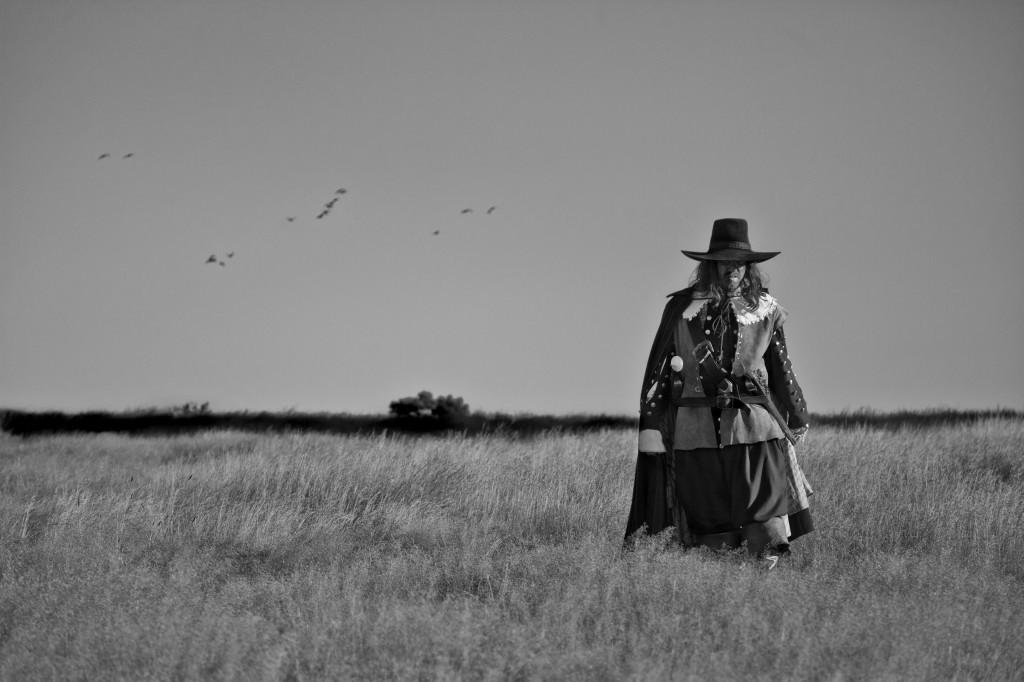
Michael Smiley in A Field In England

Ben Wheatley’s A Field in England was released last Friday across all platforms with the possible exception of kinetoscope. Viewers were offered the option of watching the film at the cinema, on DVD, via digital download or by tuning in to Film4 at 10:45 where the whole thing broadcast without ad breaks.

I dipped my toe in the multiple release formats experience by watching it first on television on Friday night and then seeing it on the big screen on Sunday at the ICA. This showing was followed by a question and answer session with director Ben Wheatley and actor Reece Sheersmith, who stars in the film and is better known as one of the League of Gentlemen. In this session Wheatley discussed how he chose to shoot the film chronologically in order to allow the actors the opportunity to grow with their characters. He also shared his thoughts on the cinematic advantages of shooting in black and white – how it prevents viewers becoming distracted by attractive scenery or costumes and focuses attention on character’s faces. Black and white footage, he says, also highlights dirt and grime.

In which case, he certainly achieved the look he was going for. The images that remain with you after watching A Field In England are the moods, reactions and suffering written on the protagonists’ faces  and the grubby muddiness of their surroundings. Continue reading Smiley’s People

Trans-mundane Emanations

By Ricky Young.

ClaraInSkaldak'sHands

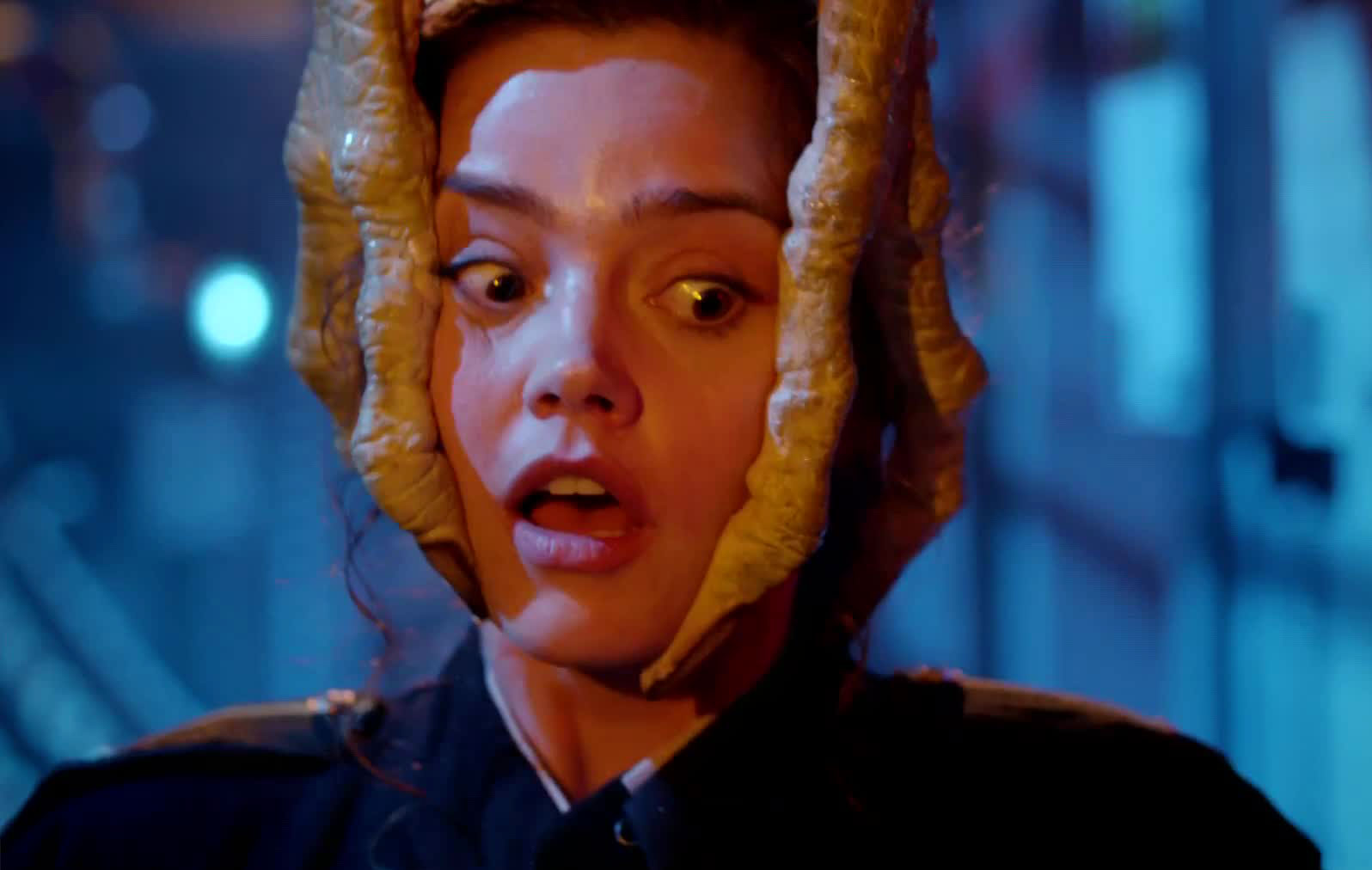
From the moment the 11th Doctor crashed into Amelia Pond’s garden while still wearing the 10th Doctor’s suit, Doctor Who has existed in a dream-world. The very first person he met was unhooked from reality, without origin or backstory, sitting on a crack in time and ready for her first chapter title; she wasn’t a real girl, she was The Girl Who Waited. From that point on, we’ve been shown a woozy and off-kilter version of reality, where things only made sense if they really, really had to, and exists a million miles away from the council estates, shopgirls and urgently-flickered news-broadcasts of the previous era. Doctor Who has certainly never been world you visit for unflinching docu-realism, of course, but the self-conscious focus on ‘stories’, meta-stories, and the consequences of myths and fairytales has led to an airless and looping feeling where nothing moves forward, nothing changes, nothing ends and nothing ever truly dies.

When MostlyFilm last talked about Doctor Who, immediately after the loud, deeply-unsatisfying semi-mystery that was the departure of the Ponds, we hoped that fans of loud, deeply-unsatisfying semi-mysteries would have had their fill by now, and that the audience, the actors, the production team and show-runner Steven Moffat could move on from loud, deeply-unsatisfying semi-mysteries into a new and exciting phase of The Programme That Can Be Anything. (After all, we’re not haters for the sake of it – we thought S5 was pretty damn good.)

What fools we were.

Season 7b existed as little more than another loud and deeply-unsatisfying semi-mystery, its final moments setting up yet another loud and probably deeply-unsatisfying semi-mystery as a 50th birthday present. Shh, though. MostlyFilm has angered the show-runner before, and an angry Steven Moffat isn’t anything we ever want to experience again..
Continue reading Trans-mundane Emanations