Monthly Archives: October 2012

Mostly BOO! Halloween Thoughts on The Shining and Room 237

by Indy Datta

Stanley Kubrick’s 1980 adaptation of Stephen King’s novel  The Shining is, courtesy of the BFI, getting a theatric rerelease this week (with previews tonight), in the longer US cut, previously little seen in Britain on the big screen. And last week saw the theatrical release of Rodney Ascher’s documentary, Room 237, a dense, impressionistic collage of varyingly outré interpretations of Kubrick’s film, narrated by the authors of the theories; simultaneously illustrated and undermined by Ascher’s selection and juxtaposition of images from the film and elsewhere. Some thoughts after I make you jump.

Continue reading Mostly BOO! Halloween Thoughts on The Shining and Room 237

Character building – Hollywood costume at the V&A

By Josephine Grahl

Fashion and the movies have a mutually rewarding relationship. Historical movies, however authentically costumed, almost always have a little something of the period in which they are made – think of the poofy, quintessentially sixties hair in Doctor Zhivago, or the 1935 version of Anna Karenina, starring Greta Garbo as Anna, in which the female characters attend balls in sequinned strapless vamp dresses more suited to 1930s Hollywood than to late nineteenth century Petersburg. But it goes the other way too – Dr Zhivago sparked a brief craze for fur hats and long Russian coats, and Gone with the Wind inspired a short-lived fashion for romantic full-skirted evening dresses before the fabric restrictions of the Second World War put an end to such frivolous wastefulness.

Evidence for this symbiosis is sprinkled throughout the V&A’s new exhibition of Hollywood costume, five years in preparation, which assembles some of the most memorable and iconic costumes from the last century of Hollywood film. Witness the costume in which Claudette Colbert played Cleopatra in 1934, which to modern eyes looks like nothing so much as a particularly elegant 1930s evening gown. Next to it, one of Elizabeth Taylor’s outfits for her portrayal of the Egyptian queen is a reminder of the fashion for gilded embellishment and weighty jewellery which followed the success of the 1963 film. Since the exhibition is at the V&A, it’s an interesting exercise to visit the fashion galleries down the corridor and compare the authentic period clothing with the versions produced for film – how far do cinema versions stray from the authentic? How are the shapes and silhouettes exaggerated or minimised? When a costume is made to be filmed, what effect does that have on the detailing or on the colours used?

Continue reading Character building – Hollywood costume at the V&A

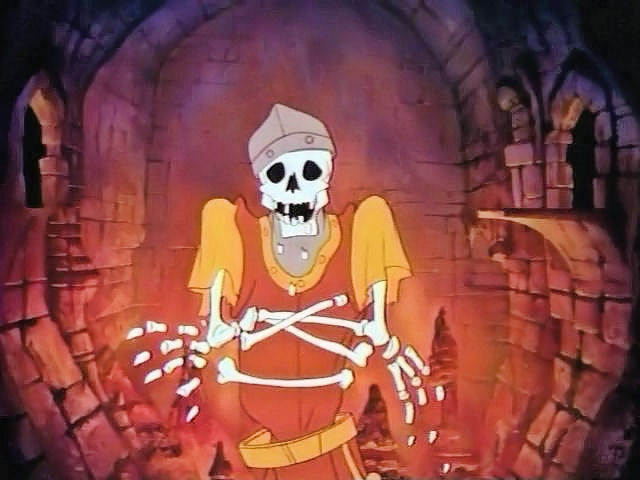
Continue/Quit?

by MrMoth

Let me start with a confession, and head off comment-based accusations at the pass: I have never completed a videogame on a difficulty setting higher than ‘Normal’, and even then the number that I have completed on higher than ‘Easy’ doesn’t exceed single digits. So, yes, I’m not that kind of player. I will, in all honesty, never be that kind of player. But let’s come back to that later.

First, as with my earlier article, I’d like to look at videogame history (from my point of view) and the evolution of hardness. I am, in gaming terms, a fairly old hand. The first electronic entertainment gadgeridoo in our house was a Pong ripoff by Grandstand, the Game 2000, back in the dawn of the 80s. It was pretty much the worst thing ever in terms of gameplay – one player hit the square ball, the other player hit the square ball, and so on until one player failed to hit the square ball, at which point the score increased. Imagine air hockey, but without the risk of a broken finger* adding that frisson of danger. But this was the Dark Ages, before the advent of real home gaming, and it seemed like some crazy electric dream. Was it difficult? Impossible to say. Is tennis difficult?

Continue reading Continue/Quit?

The Turner Prize 2012

by Ann Jones

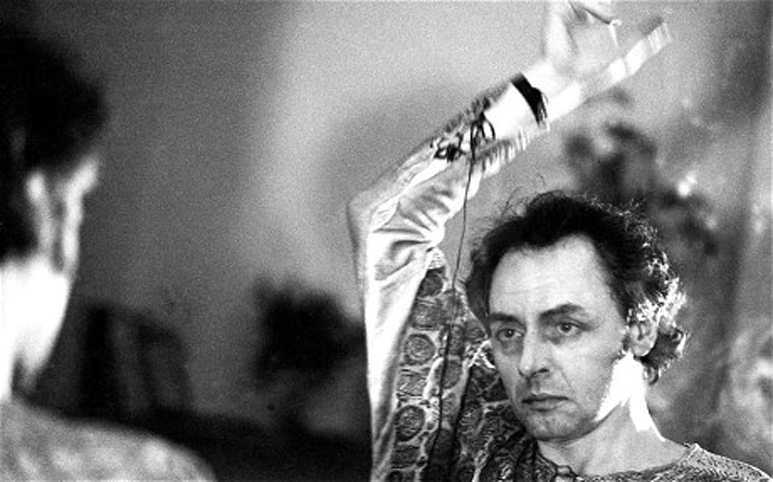
Luke Fowler’s All Divided Selves

Although film and video have been a regular feature of Turner Prize exhibitions for years, it’s rare for two of the four short-listed artists to be working with moving image, and I don’t think I can remember a previous show with raked seating more akin to a cinema than a gallery space. What perhaps makes this more unusual is that, arguably, it’s the other two artists on the shortlist who are the storytellers (although one of them explicitly denies the narrative aspect of his work and the other one so totally fails to engage my attention that I’ve no way of being sure).

Continue reading The Turner Prize 2012

Mostly Covers: I Put a Spell on You

by theTramp

The greatest songs will always attract cover versions; artists just can’t resist singing them, you see. I Put a Spell on You is an absolute classic of a song, which is why there are so many versions available to buy, download or view on YouTube.  If you love this song as much as I do then I really cannot recommend enough spending a few hours trawling through them all and picking out your personal favourites.

Now in Mostly Covers I listen to many, many versions of a song to pick out the weirdest and most wonderful for you to enjoy. This is no exception, except for the fact that perhaps the weirdest and most wonderful is the original.

The original spell – Screamin’ Jay Hawkins

Usually it’s the cover versions that prove weird and wonderful, but not so with I Put A Spell On You. If your first brush with this song was the lyrics you might well expect it to be a soft, beautiful, bluesy jazz tune. But that’s not Screamin’ Jay’s style. Remember Baron Samedi in Live and Let Die? That’s more Screamin’ Jay.  His world is weird, wonderful and just a little unsettling – the witch doctor of early rock’n’roll. He wrote I Put a Spell on You in 1956, it charted but not particularly high. So here it is, Screamin’ Jay’s bewitching, unsettling spell:

Continue reading Mostly Covers: I Put a Spell on You

Flying Swords Of Dragon Gate

by Spank the Monkey

About a quarter of a century ago, I saw my first film featuring Chinese people flying through the air waving swords about, and it blew my goddamn mind. Zu: Warriors From The Magic Mountain was made by Tsui Hark in 1982, and was as wild an introduction to the delights of Hong Kong cinema as you could wish for. As I leapt onto every subsequent film from the territory that the Scala cinema could throw at me, I’d tell anyone who’d listen just how incomprehensible HK movies sometimes seemed to a Western viewer.

After a few years, I’d seen enough of them to realise that I was being unfair. It wasn’t that all HK movies were incomprehensible: if I was honest about it, it was really just Tsui Hark’s. And thirty years after Zu, his latest film Flying Swords Of Dragon Gate shows he can still provide that unique combination of eye-buggering visual spectacle and fantastically garbled storytelling. All that’s changed in the interim is the scale.

Continue reading Flying Swords Of Dragon Gate

London Film Festival 2012 reviews II

Hot off the press, a fresh new batch of reviews from the London Film Festival. 

Rust and Bone

Reviewed by Ron Swanson

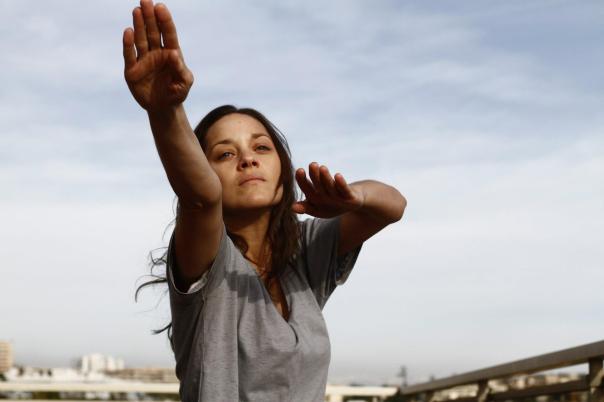
Rust and Bone is the quintessential festival film: French, with a ‘name’ director, a rising star and an art-house darling. It’s also muscular, brutal and frequently beguilingly beautiful. Jacques Audiard’s follow up to A Prophet was conceived as a response to that film; all open spaces and romantic entanglements.

Continue reading London Film Festival 2012 reviews II

Attack of the Killer Brummies: Ben Wheatley’s Sightseers

Steve Oram and Alice Lowe in Sightseers

Ben Wheatley’s eagerly anticipated new film, Sightseers, is a black comedy about a couple on a caravanning holiday across England who start a killing spree.  Written by its two stars, Steve Oram and Alice Lowe, the film is receiving regular comparisons to Mike Leigh and Natural Born Killers.  What’s interesting is that, although he did not originate the project, the film is so clearly the work of the man who last directed Kill List.

In September, Mostly Film’s Gareth Negus attended a press conference with Ben Wheatley, Alice Lowe and Steve Oram, who talked about the creation of the film, its production and their choice of eccentric tourist spots.

Continue reading Attack of the Killer Brummies: Ben Wheatley’s Sightseers

London Film Festival reviews

Mostly Film’s intrepid reviewers have been out and about at the London Film Festival.  Here is the first of two reports this week of what they’ve been watching.

John Dies At The End

Reviewed by Clare Dean 

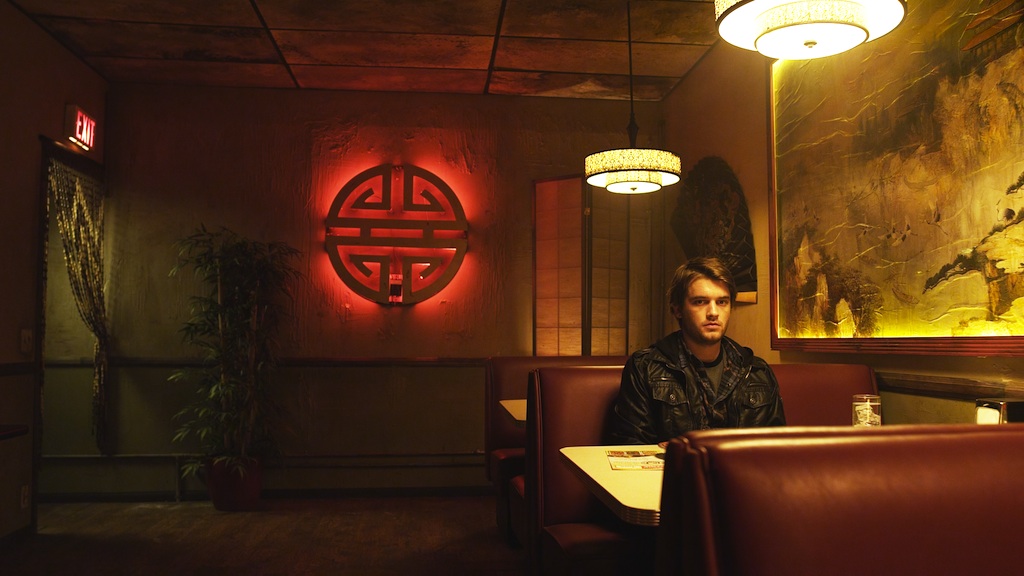
During his introduction to the late night screening of John Dies at the End, director Don Coscarelli told how he was mulling over a sequel to 2002 cult hit, Bubba Ho-Tep, when he received an email from a ‘robot’ – one of those automated Amazon messages that recommends on past purchases, ‘you bought this, so you might like this’ etc.  The suggestion was David Wong’s book, John Dies at the End and for once, the robot was spot on.

John Dies at the End is a fun midnight movie.  Told in confessional flashback as a potential story to journalist Arnie Blandstone (Paul Giamatti), two paranormal investigators (Chase Williamson and Rob Mayes) have to save the universe from a gigantic evil demon called Korrock, helped by a mind opening drug called (and looks like) Soy Sauce.  Once the Soy Sauce takes hold, nothing is as it seems.  Characters develop psychic abilities and cross time and reality. The dead have telephone conversations with the living.  At least, I think that’s what happens.

Continue reading London Film Festival reviews

London Film Festival: Best of British

With the 2012 London Film Festival in full swing, Siobhan Callas of Britflicks.com looks at the British productions in this year’s programme.

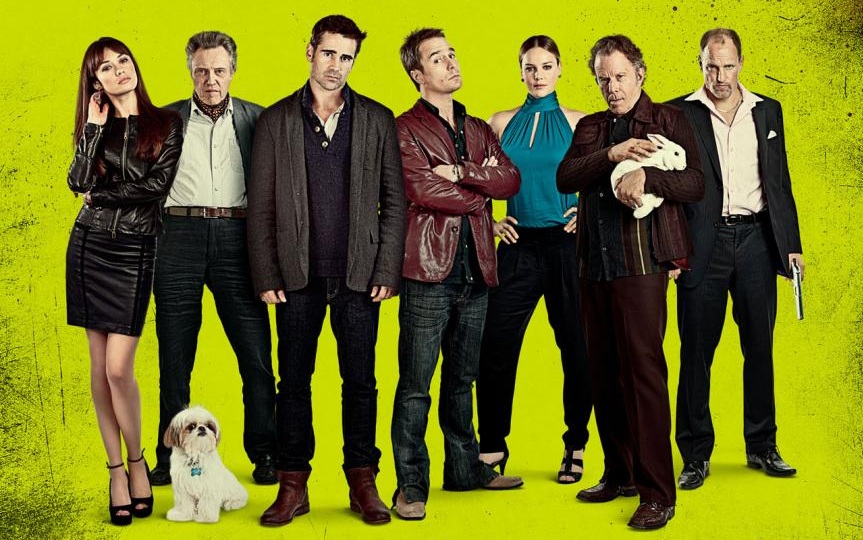
Seven Psychopaths

It’s time once again for the UK’s biggest (and possibly longest titled) film event of the year, The 56th BFI London Film Festival in partnership with American Express.

The festival sees a total of 225 feature films from 68 different countries playing across the capital city’s cinemas for 12 days throughout October. And much to my own personal joy, one sixth of this year’s chosen screen outings are home-grown.

Continue reading London Film Festival: Best of British